Biography
Gregory the Illuminator
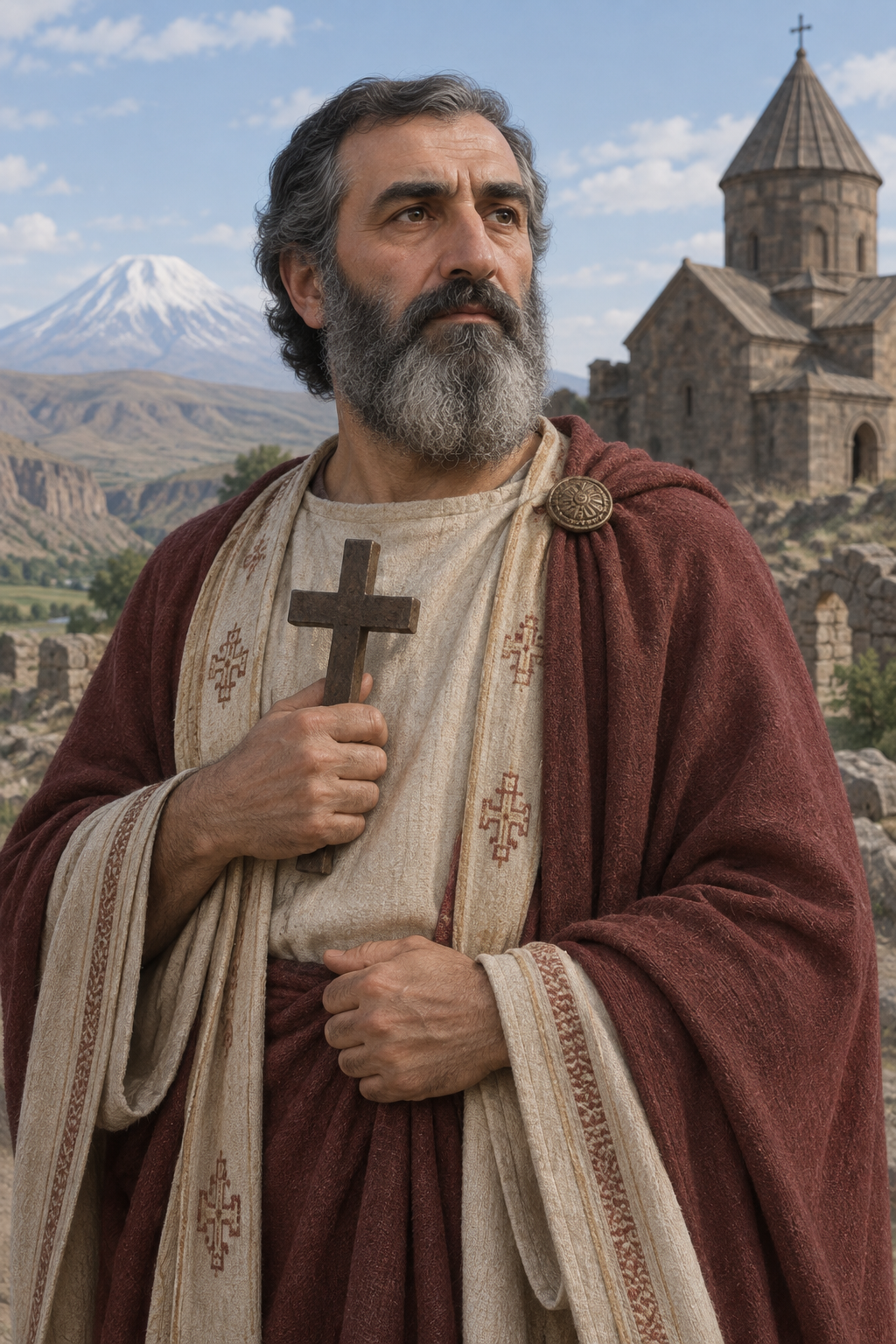
About Gregory the Illuminator
Gregory the Illuminator belongs to the early history of Christianity in Armenia, but much of his familiar life story comes from a later account rather than records written during his lifetime. The History attributed to Agathangelos took its Armenian form in the second half of the fifth century. It presents Gregory and King Tiridates III as central figures in the conversion of the Armenian court. That gap between events and surviving narrative is why the account here distinguishes what the churches remember from what historians can establish.
In Armenian church tradition, Gregory was the son of Anak, whose killing of an Armenian king led to the destruction of his own family. A nurse saved Gregory and brought him to Caesarea in Cappadocia, where he was raised as a Christian. The Eastern Diocese of the Armenian Church of America also preserves the account of his marriage and two sons, Vrtanes and Aristakes. These details belong to the received Life; they do not establish a secure birth year or birthplace for a modern catalog.
The Mother See of Holy Etchmiadzin recounts Gregory’s service at the court of Tiridates and his refusal to join a sacrifice to Anahit. It says the king ordered him tortured and confined in a pit near Artashat, where he survived for thirteen years. The same tradition makes his confinement a defining episode of resistance to royal pressure. Later commemorations of his descent into the pit show how that story became part of Armenian worship and memory.
The account of Gregory’s release follows the killing of Hripsime, Gayane, and their companions. The Mother See describes Tiridates as gravely ill and says that Gregory’s prayers accompanied his recovery and support for Christian preaching. The king’s transformation into a wild boar and Gregory’s vision of the future cathedral are elements of the devotional story, not independently verified medical or architectural reports. Church tradition presents the court’s change of religion as a turning point for the people of Armenia.
John Paul II noted that Christianity had reached Armenia before Gregory’s time, while the conversion of the kingdom is traditionally dated to 301. The anniversary letter treats Agathangelos’s account as a symbolic narrative and recognizes its legendary features. Its account describes Gregory’s episcopal ordination in Caesarea and the building of churches under the king’s patronage. The public adoption of Christianity mattered beyond the court, although a single ceremonial date cannot describe how every Armenian community changed.
Scholarly histories place Gregory’s consecration as bishop in Caesarea probably around 314. It cautions that the Agathangelos narrative overlays memories of Gregory with biblical and hagiographic patterns. The same study places Gregory’s episcopal see at Ashtishat in western Armenia and questions the later association of his lifetime with the cathedral at Vagharshapat. This does not erase the cathedral’s importance; it limits what can responsibly be said about Gregory’s direct role in its earliest construction.
Armenian church tradition says Gregory eventually withdrew from active leadership and that his son Aristakes succeeded him. A Greek Orthodox notice also remembers a later ascetic retirement, but its approximate birth and death years are not secure enough to resolve differences among sources. The Armenian Apostolic Church continues to mark both his descent into and emergence from the pit on movable feast days. Gregory remains a key figure in the Armenian Church’s account of its beginnings, while the survival of a later, layered biography calls for care with exact details.
Wondering how to weigh the stories and sources? Learn how to read a saint biography.