Biography
Hippolytus of Rome
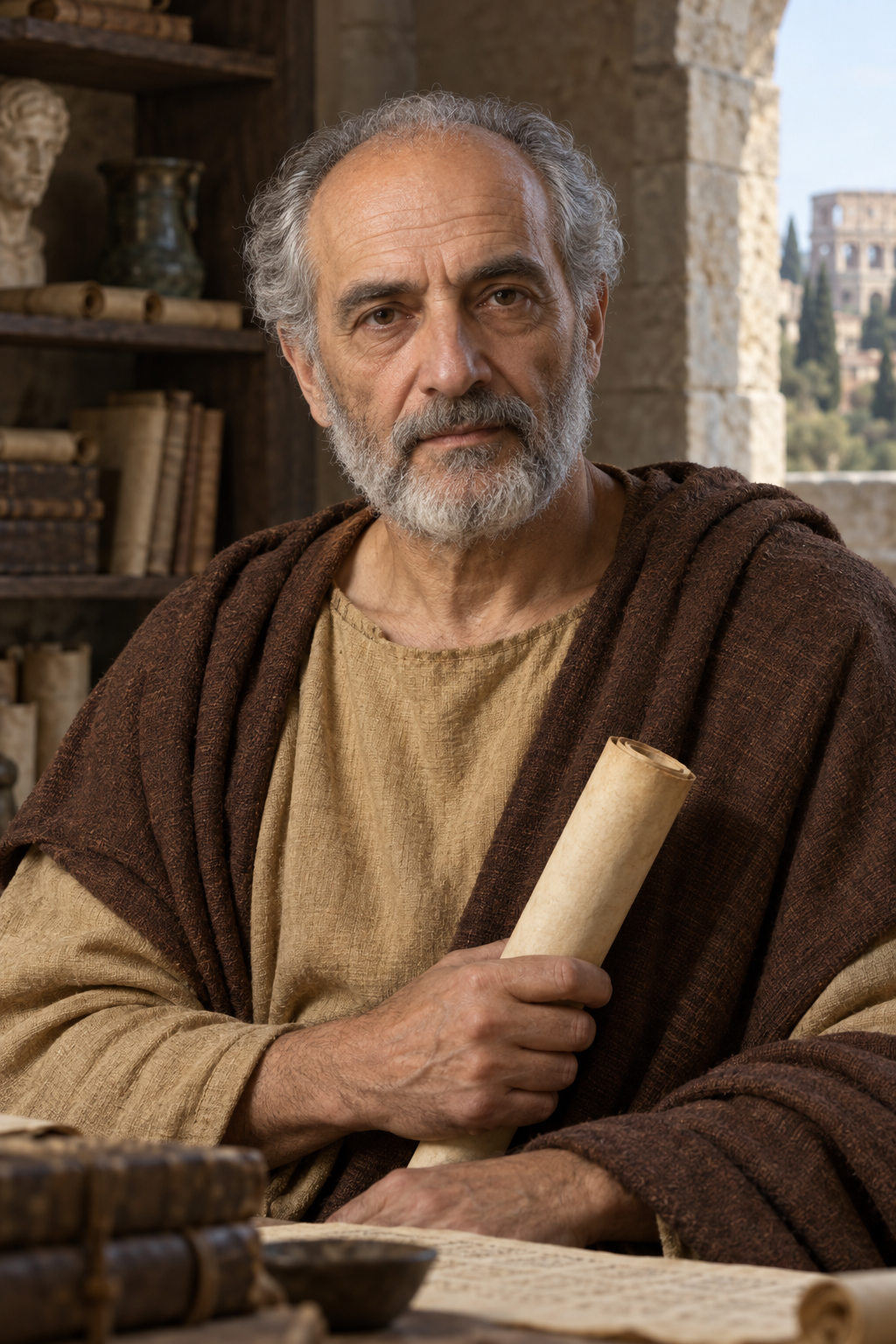
About Hippolytus of Rome
Hippolytus was a Roman priest sent into exile with Bishop Pontian in 235. The Liberian Catalogue preserves this brief record, naming the two men together and identifying their destination as Sardinia. It calls Hippolytus a presbyter, not a pope. For a life surrounded by competing accounts, this shared deportation is an important point of reference.
The conventional estimate places his birth around 170 and his death around 235. These are approximate years, not known birthdays or anniversaries established by a contemporary death record.
A familiar reconstruction makes him a severe critic of the Roman bishops Zephyrinus and Callistus. He opposed their theology and what he regarded as Callistus's excessive leniency toward penitents, then led a rival church. Ronald Heine's historical survey presents that reconstruction while emphasizing the difficulties surrounding both the man and the writings attached to his name. Even the reconciliation with Pontian before death is an inference from their later shared reception, not a surviving account of their conversation in exile.
Jerome knew a considerable literary legacy under the name Hippolytus, but could not identify the city where its author had been bishop. He lists biblical commentaries, works against heresies and calculations for the Easter festival. Among the subjects were Daniel, the Psalms, Genesis and the Song of Songs. He also describes a sermon delivered in Origen's presence. This portrait of a writer and preacher is valuable testimony to the name's literary history; Jerome's own uncertainty prevents it from settling the writer's identity as the exiled Roman priest.
The Roman commemorations preserved in the Chronography of 354 remember Hippolytus on August 13 at the Via Tiburtina, while Pontian is remembered at Callistus's cemetery. The entry records a day of remembrance and separate burial settings. It does not say that both men died on that date.
Damasus's poem tells of a priest associated with a schism who, when facing death, urged the people to follow the Catholic faith. It honors him as a martyr, but closes by acknowledging that Damasus is relating what he has heard. The poem preserves a tradition of return to communion; it is not an eyewitness description of a meeting with Pontian.
The modern Roman calendar joins Pontian and Hippolytus in an optional memorial on August 13, distinguishing the pope from the priest.
The Orthodox Church in America commemorates Hippolytus on January 30. Its account describes a bishop thrown into the sea and places the associated martyrs under Claudius II, decades after the Sardinian exile. That calendar tradition belongs in the record, but its death story cannot simply be joined to the chronology of 235.
The Roman collect asks for increasing love and constancy in faith. It offers a way to pray with the commemoration without requiring a settled answer to every question about the martyr's life.
Wondering how to weigh the stories and sources? Learn how to read a saint biography.
Explore similar vocations
Prayers for Hippolytus of Rome
Hippolytus: collect excerpt
always prompt in our hearts constancy in the holy faith.