Biography
Hudson Stuck
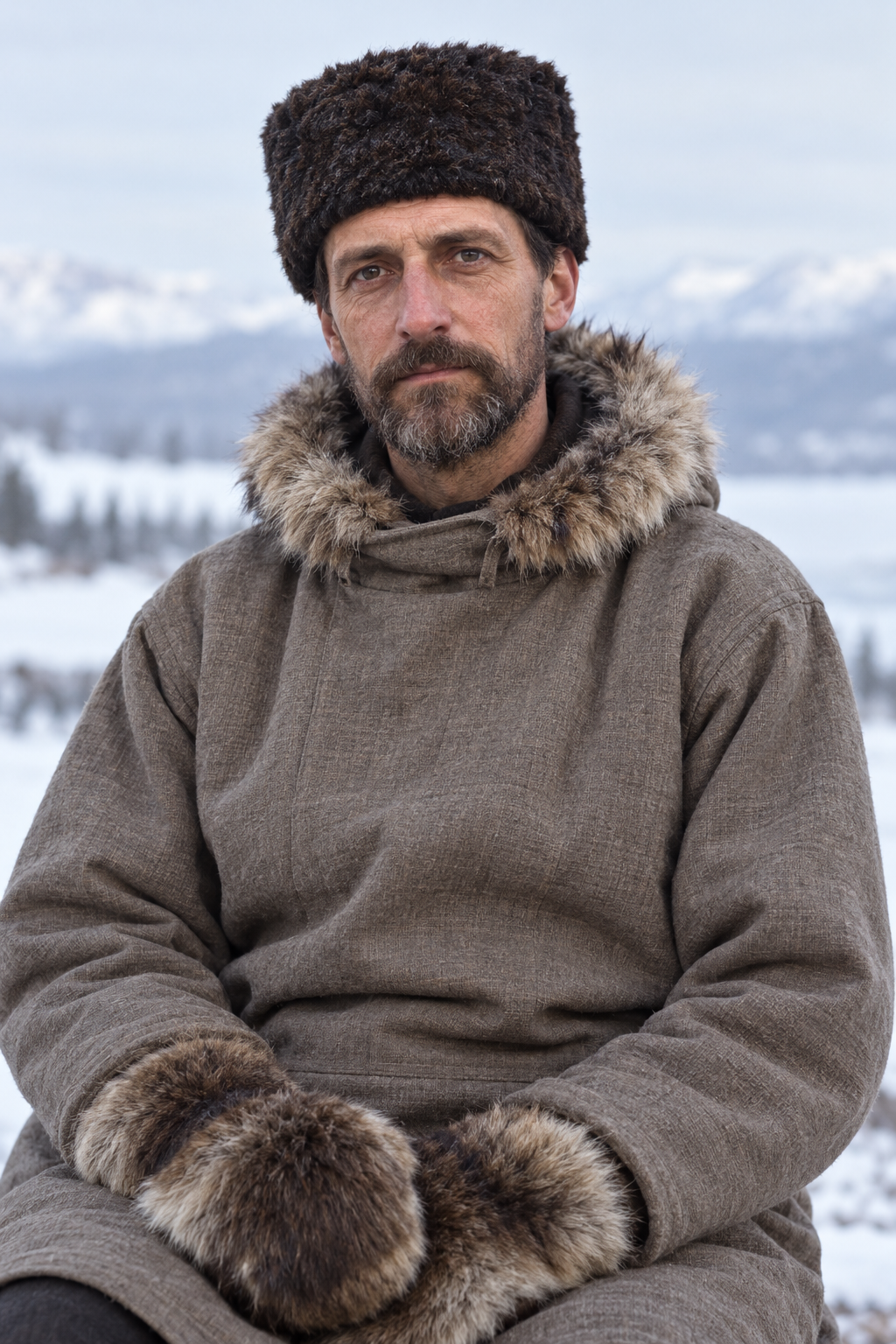
About Hudson Stuck
Hudson Stuck was an English-born Episcopal priest whose ministry took him from Texas to Alaska. He grew up in Paddington, London, and emigrated to the United States in 1885. In Texas he worked as a cowboy and taught in small schools before entering the University of the South in 1889. He was ordained in 1892, served at Grace Church in Cuero, and later became dean of St. Matthew’s Cathedral in Dallas. His public preaching addressed lynching, the responsibilities of wealth and the need for places of recreation. He also helped establish a night school for millworkers and homes for women and children in need. His reform work included support for legislation restricting child labor in Texas in 1903.
In 1904 he moved to Alaska as archdeacon of the Yukon and the Arctic. The Episcopal Church already had missions there. Its work on the lower Yukon had begun at Anvik in 1887, while Canadian Anglican missionaries had earlier visited the upper Yukon. Bishop Peter Trimble Rowe’s ministry included hospitals serving miners and Native communities affected by disease. The church also operated boarding schools for Native children at several settlements. Stuck entered this existing network of institutions and relationships; he did not begin Christianity in the region. The diocesan history remembers both his ministry and his later mountain ascent.
His responsibilities required travel between widely separated communities. A later account published by Sewanee describes his visits to mission churches by dogsled and his work establishing a mission and hospital in Fairbanks. That account draws on Patrick Dean’s research into Stuck’s papers and career. Stuck maintained ties with the university where he had studied theology, sending books, notebooks and letters. These surviving materials preserve interests beyond mountaineering. Among them is his criticism of the time that university football travel took away from study. His life in Alaska remained connected to questions about education and institutional responsibility.
The expedition of 1913 brought him wider attention. Stuck, Harry Karstens, Walter Harper and Robert Tatum reached the mountain’s highest summit. Their achievement depended on more than the four climbers. Esaias George, who was Koyukon, and John Fredson, who was Neets’ai Gwich’in, provided essential hunting, freight and basecamp support. Fredson remained at basecamp while the others climbed. The National Park Service’s history restores these contributions to an account often centered on the summit party. It also records a troubling aspect of Stuck’s educational influence: he changed John Fred’s surname to Fredson when the young man applied to Mount Hermon, believing this would help him assimilate. Advocacy and paternalism existed together in his relationships with Native people.
Stuck’s own narrative acknowledged his dependence on others. In the preface to The Ascent of Denali, he credited Karstens with leadership in danger and thanked the entire party. During the final climb, Harper took over the barometer when Stuck struggled to breathe. Harper reached the summit first; Stuck described himself arriving last and briefly losing consciousness. The climbers prayed in thanksgiving and then made their scientific observations. These details place his participation within a collective undertaking, with different people supplying the strength, skill and care needed to succeed.
The book also appealed for recognition of Indigenous place names. Stuck argued that naming the mountain after William McKinley had disregarded names already used by the people of the region. He wanted the authority gained through the ascent to support restoration of the name Denali. His preface combined this argument with concern about the dangers confronting Alaska Native communities. It remains a statement of his convictions, expressed in language that also carries the assumptions of a missionary of his period.
In the prefaces to Ten Thousand Miles with a Dog Sled, Stuck explained the public concerns behind his travels. He criticized weak enforcement of laws intended to protect Native communities from liquor sellers, and called for salaried magistrates and a police force independent of political appointments. He also argued that exploitative trading practices required government action, while warning against combining missionary religion with commercial trade. These were his proposals, shaped by both protective intentions and paternalistic assumptions.
Writing again in 1916, he contrasted federal railway spending with inadequate support for medical care. He credited Rowe and the clergy with raising money for hospitals at Fort Yukon and Tanana. His account also warned readers against treating Alaska as a single uniform region: his own experience chiefly concerned the Yukon valley and its tributaries, whose conditions could not represent the whole territory.
Stuck died at Fort Yukon in October 1920. His published travel writing preserved accounts of Alaska’s rivers, communities and missionary life as well as the climb.
His Episcopal remembrance continues alongside that of John Muir. In 2015, St. Alban’s Church in Monroe, Louisiana, announced an April 22 Eucharist commemorating the two men. That observance identifies a particular Christian tradition of remembrance; it does not establish recognition in other churches.
Wondering how to weigh the stories and sources? Learn how to read a saint biography.