Biography
Ivo of Kermartin
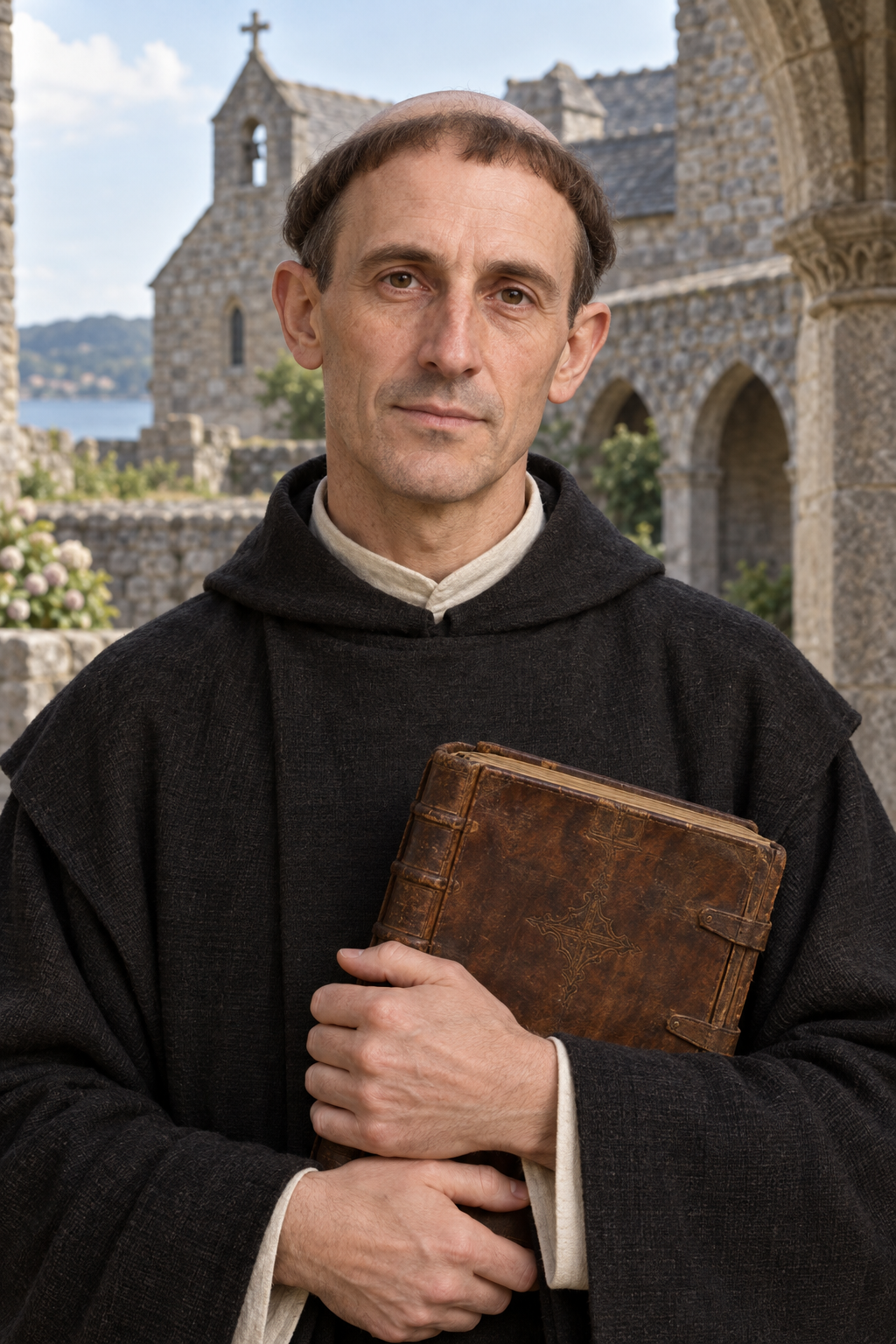
About Ivo of Kermartin
Ivo of Kermartin, better known in France as Yves Hélory, was a Breton priest and ecclesiastical judge remembered for serving people who could not afford legal help. He was born around 1253 at Kermartin, near Tréguier; the precise birthday found in some devotional accounts is not securely established. His education took him to Paris and Orléans, where he studied theology and law. A tutor, Jean de Kergoz, accompanied him and later gave testimony about his life. Those years of study prepared him for work that required knowledge of both church law and the civil law taught at Orléans.
His first judicial appointment was in Rennes, where he served the archdeacon as an official, or church judge. In 1284 he returned to the diocese of Tréguier. There his responsibilities included parish ministry as well as judicial work; the two were not simply successive careers.
As a judge, Ivo sought a settlement wherever the parties could be reconciled. The testimony discussed by legal historian François Christian Semur describes him listening to people without allowing wealth or social standing to decide whose account deserved attention. His aim was not to make poor litigants win regardless of the merits, but to give them a fair hearing. Reconciliation also spared people the time and expense of prolonged proceedings. A modern comparison with mediation helps explain this aspect of his work, provided it does not turn a medieval church court into a modern legal service. He promoted access to justice; he did not invent free legal assistance.
Advocacy required more than sympathy. The account summarized by Jean-Louis Charvet describes Ivo first considering whether a poor person’s cause was just, then defending it without expecting payment. Widows, orphans and other people with little protection could therefore obtain the help of someone trained in law. The same account remembers his composure when other advocates insulted him. His work as a priest was equally public: he preached repeatedly, sometimes in more than one place on the same day.
His concern for clients extended beyond the church court. Notre Dame’s devotional account remembers him representing them in civil proceedings, paying expenses and visiting people in prison. It also describes his refusal to accept gifts that might compromise his independence. These are remembered actions of care, not surviving accounts from every case he handled. The tradition gives a particularly vivid picture of hospitality in a story about a man sleeping on his doorstep. Ivo brings the man inside and gives him his own bed, taking the outdoor place himself. The episode belongs to the devotional telling of his life and is retained as such, not as an independently verified incident.
At Trédrez and later Louannec, Ivo’s parish responsibilities kept him close to people whose needs were not primarily legal. The diocesan biography remembers his preaching in Breton, hearing confessions and taking the Eucharist to the sick. It describes him carrying a small silver container so that he could bring communion without unnecessary delay. His house was open to people who needed food and shelter, and he served guests rather than treating them as an interruption. He gave away clothing as well as money. The practical details of meals, visits and shared possessions explain why care for poor people became so central to his reputation.
His later years brought a gradual withdrawal from judicial office, although accounts do not agree on a single retirement date. He continued to be remembered as a priest whose preaching and hospitality reached beyond one official appointment. He died at Kermartin on May 19, 1303, and was buried at Tréguier. His life had joined learned work with a household made available to people in need.
After his death, the effort to secure his canonization produced an unusually substantial body of testimony. Arthur de La Borderie’s study distinguishes the inquiry into his life and reported miracles from the subsequent report prepared for the pope. The inquiry took place at Tréguier in 1330, after petitions from Brittany had sought formal investigation. Its written record was submitted at Avignon in 1331. These proceedings belong to the reception of Ivo’s life, not to journeys he made himself. They also require discrimination: a witness’s recollection of his work and a reported miracle are different kinds of evidence, even when preserved in the same process.
Clement VI canonized Ivo on May 19, 1347. In a message marking the seven-hundredth anniversary of his death, John Paul II recalled his service as magistrate, advocate and priest, and his patronage of legal professionals. That continuing remembrance rests on the connection between justice and concrete help for other people. The anniversary message remembers service to the poor as the thread uniting those different responsibilities.
His Catholic commemoration on May 19 is listed as an optional memorial in France. Catholic remembrance also connects his preaching with sustained prayer, the Eucharist and study of Scripture, rather than treating his public service as separate from worship.
Wondering how to weigh the stories and sources? Learn how to read a saint biography.
Explore similar vocations
Prayers for Ivo of Kermartin
Ivo — invocation excerpt
Écoute aujourd’hui notre prière.