Biography
Jacques-Désiré Laval
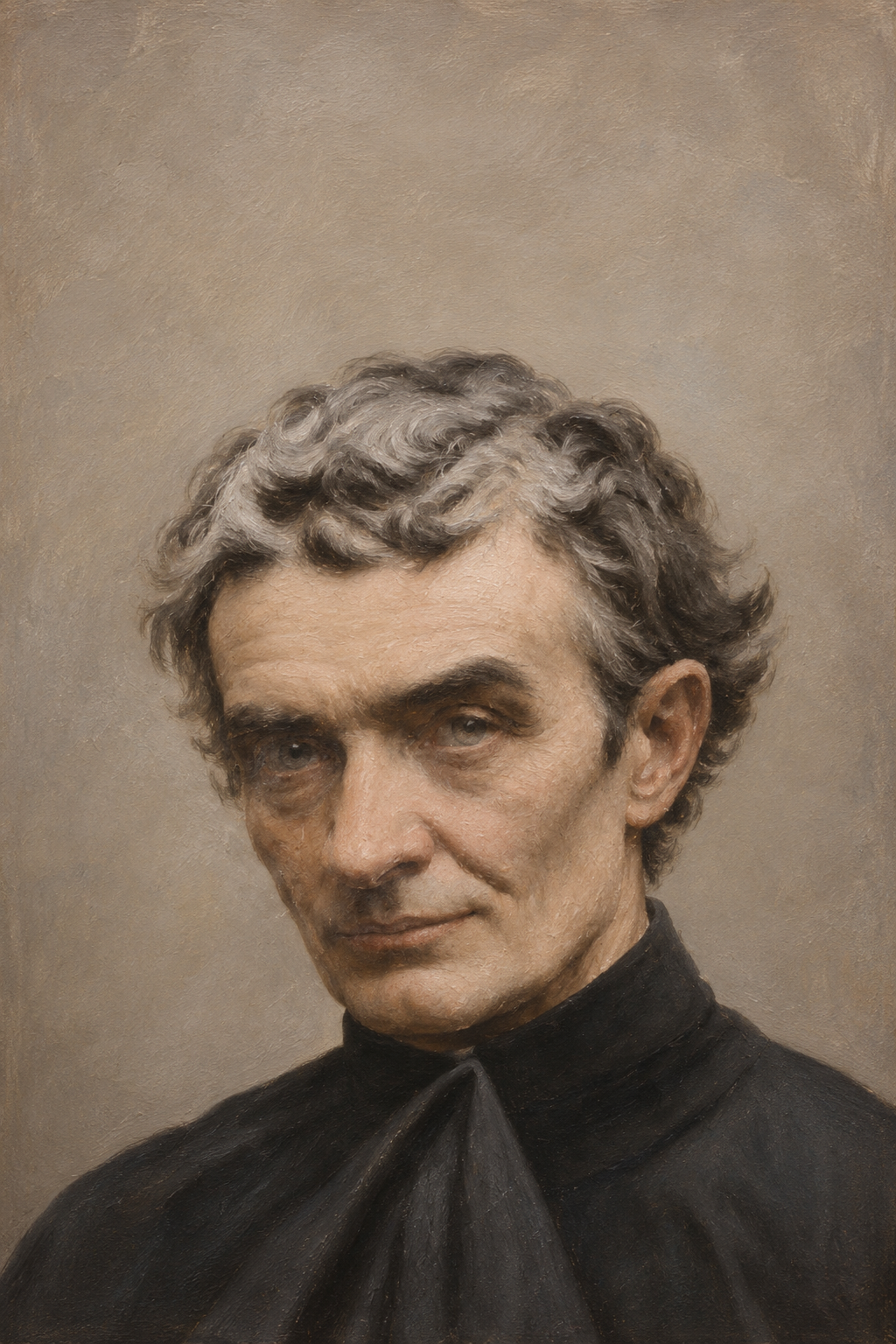
About Jacques-Désiré Laval
Jacques-Désiré Laval was born on 18 September 1803 at Croth, in Normandy. His education eventually took him to Paris, where he studied medicine and received his doctorate in 1830. He began practising in the region of Évreux and established a successful professional life. The later priest and missionary therefore first knew the work of caring for patients as a physician. His decision to leave that profession followed a period in which religious commitment again became central to his life.
The biographical tradition connects that change with a serious riding accident. In 1835 he entered Saint-Sulpice Seminary in Paris, where he became acquainted with François Libermann. Ordained in 1838, he served the parish of Pinterville before leaving France. He later joined Libermann’s Congregation of the Holy Heart of Mary, a community directed toward missionary work. In 1841 he travelled to Mauritius with its new vicar apostolic, William Collier. He would spend the rest of his life on the island.
Mauritius had abolished slavery in 1835, but legal freedom had not removed the hardships faced by formerly enslaved people. Spindler describes a population whose religious needs had received little attention from the white clergy. Laval’s mission developed chiefly among these communities. His work must therefore be understood within the social aftermath of slavery, where poverty and unequal treatment continued after emancipation. The people he served were also participants in building the religious life that emerged around the mission.
His methods depended upon local collaboration. He used a catechism in Creole, trained catechists and women advisers, and encouraged a relief fund managed by Christians themselves. Chapels built by the faithful extended the work into rural areas. These arrangements gave people responsibilities in teaching, prayer and material assistance. Rather than relying only upon the presence of a priest, small communities could sustain regular activities through the work of their own members. The account also records cooperation with other missionary groups.
John Paul II’s beatification homily emphasized the character of Laval’s teaching. He returned to essential Christian beliefs and prepared people in small groups before admitting them to baptism or first Communion. The pope also recalled men and women who led prayer, visited sick people and guided local communities. His remembrance placed education within daily life, with chapels distributed across the island making worship more accessible. These details preserve the importance of lay workers within a mission often remembered under one priest’s name.
The same homily connected his service with prayer before the Blessed Sacrament and devotion to Mary. It also remembered his efforts to improve people’s medical and social conditions. The former doctor’s care was thus expressed through several forms of assistance, even though his principal work had become religious. His congregation’s identity changed when Libermann’s community merged with the Congregation of the Holy Spirit. Laval remained part of that missionary family while working far from its leadership in Europe.
Archival records preserve further details of his place in Mauritian life. A nomination prepared by the country’s archival and cultural institutions lists correspondence about his appointment as prison chaplain. It also identifies the ordinance for his naturalization in 1860. These records connect a remembered missionary with the ordinary documents of public administration. They show his work touching institutions beyond the parish, while also recording his wish to remain permanently on the island to which he had come from France.
His health declined during his final years, but he remained in Mauritius. He died at Port Louis on 9 September 1864. Two days later he was buried at Sainte-Croix, where a chapel had been established through the initiative of Zamor, a formerly enslaved man. The place of burial linked Laval’s memory with a community that had helped provide the material setting for worship. The continuing history of that site belongs both to Catholic devotion and to the island’s broader social memory.
John Paul II beatified Laval with the Dominican Francis Coll on 29 April 1979. They were the first people he proclaimed Blessed during his pontificate. In his address after the ceremony, the pope recalled Laval’s medical work, priesthood and twenty-three years in Mauritius. He spoke of France as his birthplace and Mauritius as his adopted country. The recognition therefore brought together the two settings of a life whose decisive change had carried him from a Norman medical practice to a very different society.
That day’s papal address also drew attention to catechists throughout the Church. It thanked lay men and women, religious and priests who gave their time to teaching the faith, and included parents among those with an essential role. This wider emphasis fitted the collaborative work associated with Laval. His remembrance offered an example through which the Church could recognize people whose regular teaching and care sustained communities without attracting the same public attention as their clergy.
When Francis visited Mauritius in 2019, he again presented Laval’s legacy through closeness to poor people. He recalled the missionary learning the language of formerly enslaved people and helping form small communities that later became parishes. His homily connected that history with the need to listen to young people and make room for them. In this continuing Catholic remembrance, Laval’s work serves as a call to encounter people in their own circumstances, and to allow their participation to shape a community’s future.
Wondering how to weigh the stories and sources? Learn how to read a saint biography.