Biography
James Lloyd Breck
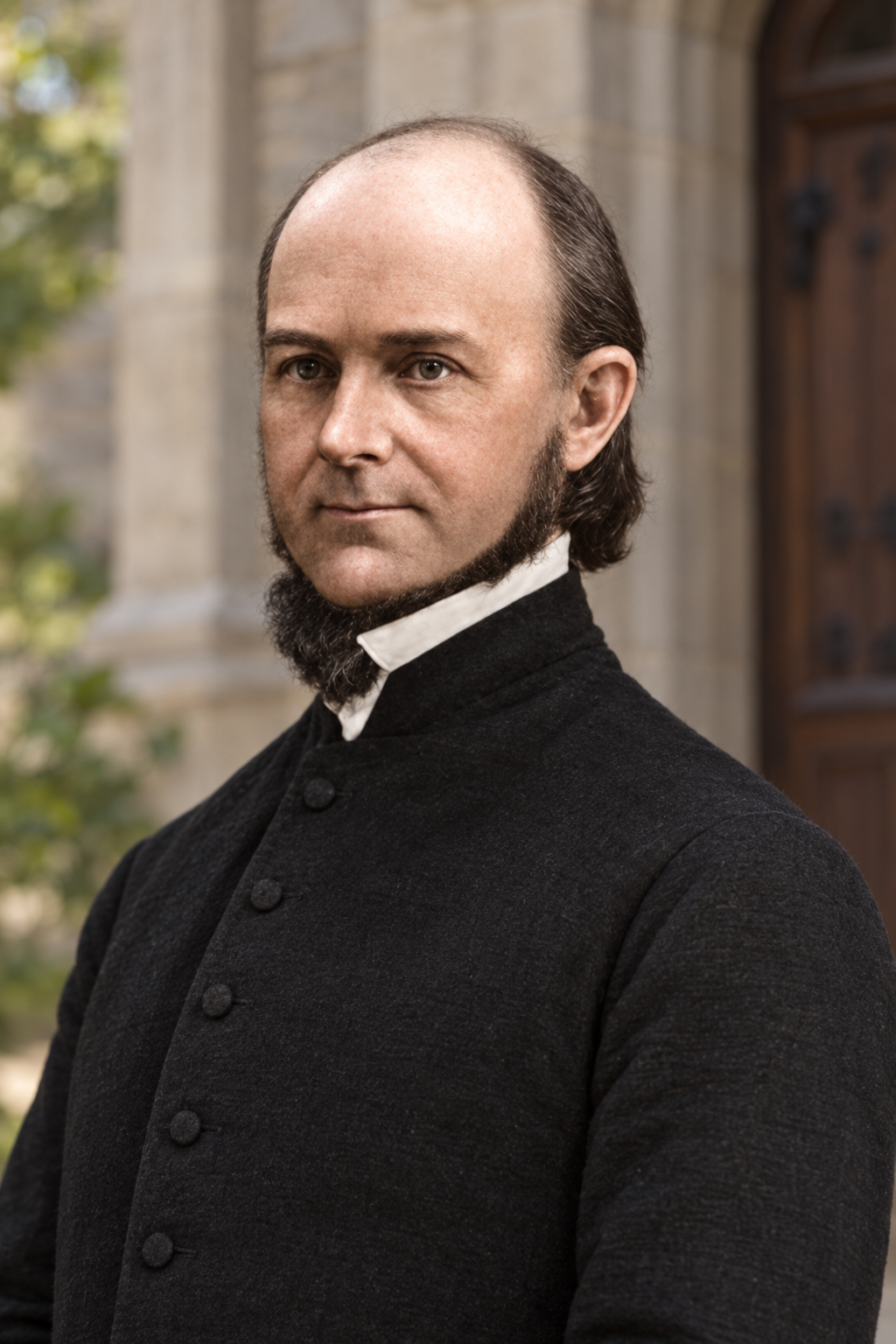
About James Lloyd Breck
James Lloyd Breck was an Episcopal priest whose ministry linked parish work with the education of future clergy. In 1841 he went to Wisconsin with fellow missionaries, working under Bishop Jackson Kemper. Their mission first centered on Prairieville, now Waukesha, before moving to Nashotah in 1842. There they taught students preparing for ministry while visiting nearby settlements to preach, baptize, and care for parishioners.
Breck had grown up in Philadelphia County. An inheritance and his aunt’s financial support helped him study at William Augustus Muhlenberg’s school and the University of Pennsylvania. He then attended General Theological Seminary. He hoped to share a common religious life with other clergy rather than work alone.
The missionaries’ common life joined teaching and pastoral service. Their students were being prepared for work in the same region where the teachers themselves traveled. Breck moved to Minnesota in 1850 and helped establish another associate mission in St. Paul. Work among Ojibwe communities followed, before he moved to Faribault and eventually California. A Wisconsin memorial written soon after his death celebrated this succession of institutions, reflecting the admiration of colleagues who had known his early ministry.
At Gull Lake, Breck’s work depended on Indigenous leadership. The Minnesota church’s history credits him and Enmegahbowh jointly with establishing St. Columba in 1852, at the invitation of Chief Hole in the Day. It describes a chapel and a village day school teaching reading, writing, arithmetic, and religion. The mission’s later history continued under other leaders, including Enmegahbowh. Breck was one participant in this work, and the congregation’s story cannot be reduced to his travels.
His own plans also reveal an effort to reshape Indigenous life. Writing in December 1851, he proposed residential training for children, separated from home routines he described contemptuously. Religious instruction and practical labor were central to that plan. It expressed his assumptions about cultural superiority as well as his commitment to Christian teaching; a proposed program should not be mistaken for a complete account of what each child experienced.
Historian Mattie Marie Harper places these missions within the political choices of Ojibwe communities. Leaders and families sought educational opportunities and useful alliances while facing growing pressure on their lands. Their interest in missionaries did not mean agreement with every missionary aim. Harper also connects the failure of Breck’s later Leech Lake mission with the divisions created by land treaties. Civil leaders who supported the mission and people angered by the surrender of their country did not necessarily share the same priorities. This context complicates accounts that explain resistance only through alcohol or hostility to Christianity. The mission belonged to a contested relationship involving land, leadership, household practices, and education. Harper’s analysis also draws attention to women’s work in schooling and domestic instruction, which missionary narratives often treated as part of a general program of transformation rather than as skilled labor with its own demands.
At Faribault, Breck worked with Solon Manney and Bishop Henry Whipple. Whipple later recalled modest school buildings, debts for land purchases, and salaries paid from donations. Teachers carried several responsibilities: theological instruction belonged alongside missionary visits to surrounding communities. The schools developed through the contributions of staff, donors, and local residents. Breck later served as dean of the schools before leaving for California in 1867. Whipple’s account makes clear that their development was a shared undertaking, rather than the accomplishment of one founder.
Whipple’s recollection names people whose labor could disappear behind the institutions’ better-known founders. George Tanner and James Dobbin taught in the parish school, assisted by Mary Mills and Mary Leigh. Theological teaching covered languages, church history, and law, while the same teachers served outlying stations. Whipple also credited his wife and Sarah Darlington with the development of the girls’ school. These recollections locate Breck within a network of teaching and practical support. The bishop remembered public celebrations, local hospitality, and donations as parts of the schools’ life, alongside the buildings and formal offices that survived in institutional records.
The congregation continued after Breck had left Minnesota. Schaitberger’s history records its move to the White Earth reservation in 1868 and identifies Enmegahbowh and Joseph Gilfillan with the formation of Indigenous ordained and lay leaders. St. Columba became a center from which other congregations developed. That later history belongs to those communities and their ministers; it helps distinguish the continuing life of the church from the career of an individual missionary.
Breck’s final years were spent in Benicia, California. He died there on March 30, 1876; his funeral took place on April 2.
The Minnesota school now bearing his name began later. Breck Mission and Farm School was incorporated in 1886 and opened in 1888 to educate children of immigrant farmers. Naming the school for him honored his educational work; it does not mean that he personally established it.
The Episcopal Church commemorates him on April 2.
Wondering how to weigh the stories and sources? Learn how to read a saint biography.