Biography
James of the Marches
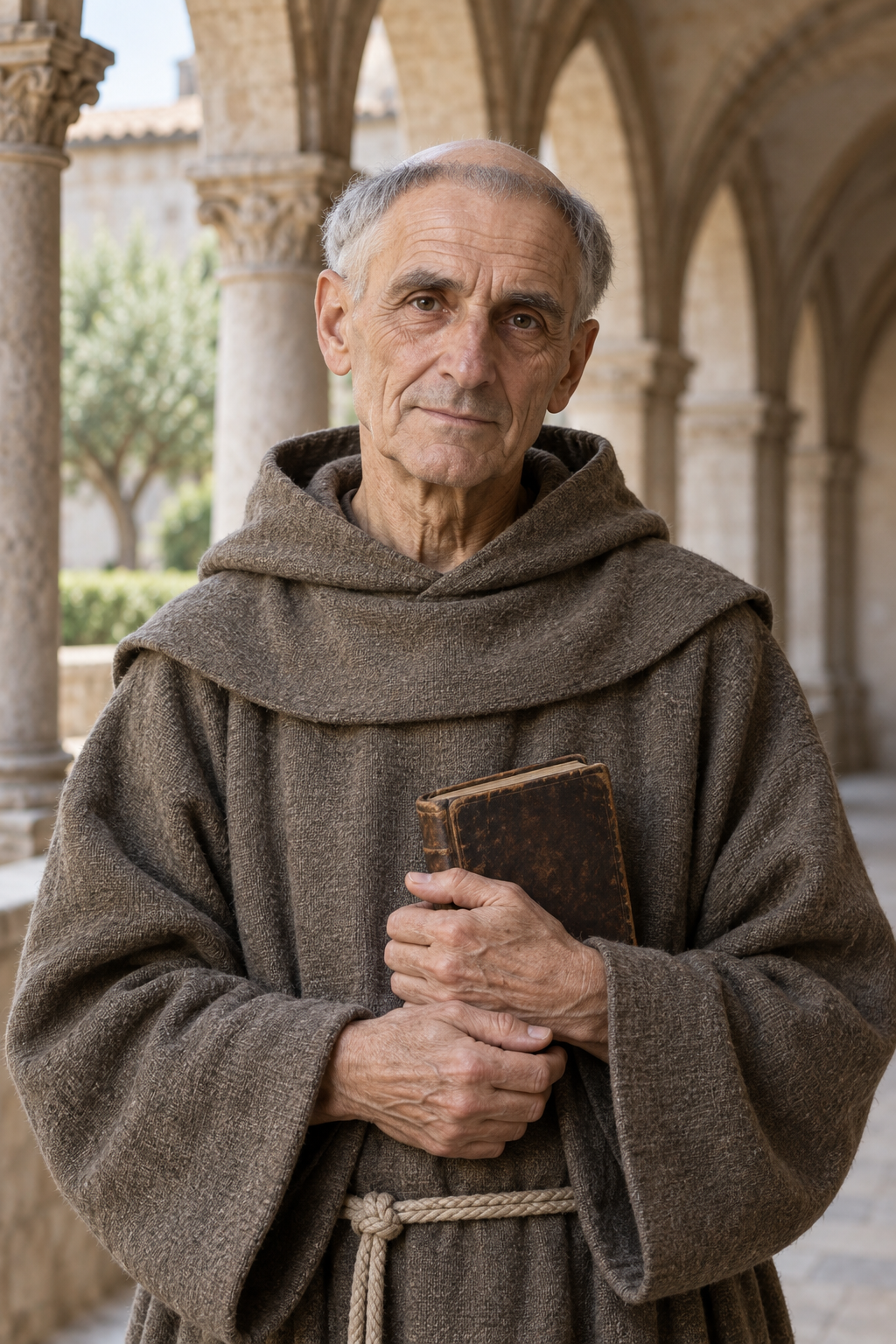
About James of the Marches
James of the Marches was a Franciscan priest whose work took him from central Italy into eastern Europe. Born at Monteprandone, he was baptized Domenico and later took the religious name Giacomo, or James. Vatican News places his birth in 1394; other accounts give 1393. His life became closely associated with preaching and devotion to the name of Jesus.
Before entering religious life, he studied law at Perugia. He supported his studies by tutoring the children of the jurist Francesco di Baldo degli Ubaldi, then accompanied his employer to Florence. Vincenzo Cognigni’s regional historical survey describes his legal service in Florence and Bibbiena. This early career preceded his entry into the Franciscans at Assisi in 1416 and further study at San Salvatore in Florence. The survey also places his preaching under the guidance of Bernardino of Siena, who became an important teacher and friend.
The Vatican News account describes an initial attraction to the Carthusians before he chose the Franciscan community at Santa Maria degli Angeli. He made his religious profession in 1416. His formation continued in Florence, where the account places his first Mass and first public sermon. He subsequently preached in Tuscany, Umbria and the Marches, and his travels extended beyond Italy.
His work also involved religious coercion. Appointed inquisitor in Austria and Hungary in 1436, he later held the same office in the Marches. Carla Casagrande’s scholarly biography records his participation in repression of the Fraticelli and his presence at their execution by burning in Fabriano. Alongside these activities, he mediated civic disputes, including the peace between Ascoli and Fermo in 1446. These different roles belong to the same historical record.
His preaching affected Jewish communities as well. Historian Lorenzo Turchi documents his support for discriminatory rules concerning distinctive badges, lending and trade. At Recanati in 1427, James and the bishop pressed for enforcement of the badge requirement. Enforcement was not uniform: at Sansepolcro, James accepted legal privileges exempting some Jews from wearing the mark. These exceptions did not remove the discriminatory framework within which he worked. Turchi also cautions against attributing every later restriction to James; the claim that he established a separate Jewish quarter at Ancona in 1427 rests on evidence that does not establish that conclusion.
James himself became the subject of a theological dispute after preaching at Brescia on Easter Sunday in 1462. He argued that the blood Christ shed during the Passion, separated from his body, should not receive divine worship. The Dominican inquisitor Giacomo Pietri challenged him, and the disagreement widened into a conflict between Dominican and Franciscan theologians. Pope Pius II called representatives of both orders to Rome to examine the question. Historian Roberto Capuzzo traces the debate through papal correspondence, theological writings and other contemporary records, including evidence for sessions in January 1463. James also wrote on the question and sought opinions from specialists in medicine and natural philosophy. The discussion did not produce an immediate settlement. In August 1464, Pius prohibited further controversy on either side until the Holy See gave a decision, threatening excommunication for disobedience. The episode placed a preacher who had opposed others’ religious positions under scrutiny himself. It also left a substantial written record of his efforts to defend his teaching and of the pope’s attempts to contain the conflict.
The sanctuary’s biography describes his contribution to the Monte di Pietà at L’Aquila in 1466, including its regulations and statutes. These institutions provided assistance to people in need, and James helped promote them rather than single-handedly inventing the movement. The same account records that in 1467 he stopped his regular preaching ministry as his strength declined, although he could still preach on occasion. Illness increasingly limited the travel that had occupied so much of his life.
Books were another lasting concern. At Santa Maria delle Grazie in Monteprandone, he assembled a library of nearly two hundred manuscripts for preaching and study. He obtained books by copying, commissioning copies and purchasing them, and sought rules to protect the collection. A papal bull in 1462 restricted lending and threatened penalties for removing volumes. His surviving sermon materials include scriptural passages and theological and legal authorities.
James eventually went to Naples at the request of King Ferdinand and Pope Sixtus IV. The sanctuary account places his preaching at Santa Maria la Nova and his usual residence at Santa Croce outside the walls. His final years brought serious illness, but occasional preaching continued, including visits to nearby towns. Venanzio of Fabriano, his companion, left an account of his final illness and death. James died in Naples on November 28, 1476.
The Catholic Church beatified him on August 12, 1624, under Urban VIII and canonized him on December 10, 1726, under Benedict XIII. His liturgical commemoration is November 28. Monteprandone honors him as its patron, an association the municipality continues to name in its cultural celebrations.
Wondering how to weigh the stories and sources? Learn how to read a saint biography.