Biography
James Otis Sargent Huntington
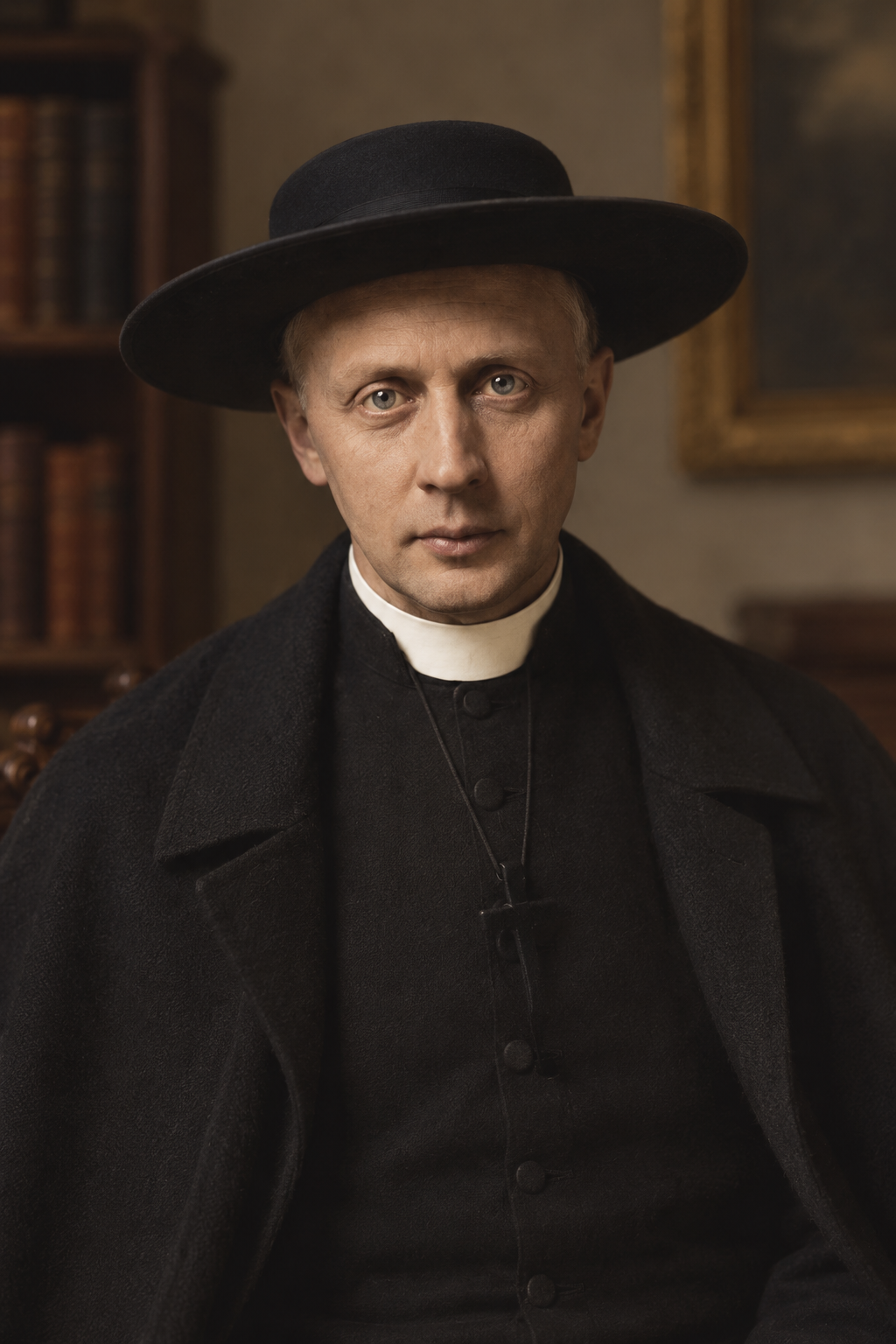
About James Otis Sargent Huntington
James Otis Sargent Huntington combined Episcopal parish ministry with the work of forming a religious community. Born in Roxbury, Massachusetts, on July 23, 1854, he studied at Harvard and then at St. Andrew’s Divinity School in Syracuse. His father, the bishop of Central New York, ordained him priest in 1880. After serving Calvary Mission in Syracuse, he moved to New York City in 1881. There he helped establish the Order of the Holy Cross, making his profession before Bishop Henry Codman Potter on November 25, 1884.
The undertaking did not begin with Huntington alone. In a later account, Holy Cross monk Adam McCoy identifies Robert Stockton Dod as an important early organizer who consulted established religious communities in England and wrote the community’s first monastic rule. James Cameron also joined them. Both companions eventually left, and Huntington remained. McCoy’s account complicates the familiar title of founder by remembering the other people involved in the community’s beginnings.
Monastic vows were controversial within the Episcopal Church. In December 1884, Presiding Bishop Alfred Lee wrote to Potter objecting to Huntington’s admission to a religious order. Lee believed that such commitments departed from the church’s Reformation inheritance. His letter reflects that theological position, rather than an agreed judgment by all Episcopalians about the legitimacy of religious communities.
Potter’s reply defended the undertaking in practical as well as theological terms. The men intended to live among the poor in tenement neighborhoods, rather than visit occasionally from more comfortable surroundings. He compared their commitments with those already accepted in women’s religious communities. He also explained that their promises could be released by episcopal authority or at their own request. For Potter, this was neither a new ordination nor a withdrawal from useful work. The exchange shows that Huntington’s vocation required explanation even to senior leaders of his own church.
His concern for workers extended beyond individual pastoral care. The family genealogy records his association with the Knights of Labor, advocacy of the Single Tax, efforts concerning labor disputes, and participation with other clergy in establishing the Church Association in the Interests of Labor. It also describes a ministry of missions, conferences, and retreats across the country.
The community’s move toward a permanent monastery brought further disagreements. According to McCoy, Potter later criticized what he saw as a turn away from service among the poor. In 1902, while the West Park monastery was being built, Huntington received an invitation to become rector of the Church of the Advent in Boston. He decided to remain with the order. McCoy also recounts the chapter’s election of another superior in 1930 and its designation of Huntington as Father Founder, an honor Huntington himself had not sought.
Huntington’s own explanation of communal life survives in a letter dated November 6, 1915, reproduced by the monastery. Writing as superior to someone who had inquired about joining, he argued that religious work needed the cooperation and organization already familiar in other human enterprises. His proposed answer to scattered effort was a body of people sharing responsibility, discipline, and a common purpose. He connected this practical cooperation with the Christian calling to grow in love of God.
He did not describe membership as an easy refuge. His letter set out early rising, food without personal selection, prayer four times daily, assigned work, and obedience to decisions a member might dislike. Poverty, chastity, and obedience were presented as ways of following Christ together. Although the appeal was urgent, he acknowledged that a person might instead be called to marriage or another occupation. These were his convictions about vocation, expressed to a prospective member, rather than requirements he imposed on every Christian.
His ministry also reached people outside the monastery. Francis C. Lightbourn later recalled Huntington conducting a quiet day at General Theological Seminary in 1932 or 1933. The elderly priest began by asking whether everyone could hear him, then demonstrated that he could speak much more loudly. Lightbourn’s remembered scene conveys the directness of a teacher still leading others near the end of his life. It is a later recollection, not a transcript of the occasion.
Huntington died in 1935. The exact date differs among published sources, so the year is retained here without choosing an uncertain day. His community commemorates him on November 25. Its calendar preserves his name within the continuing rhythm of worship rather than treating the founding of the order as a completed episode.
At the order’s ninetieth anniversary in 1974, Episcopal reporting described houses in several parts of the United States as well as Canada and Liberia. The community that began with work among New York’s poor had continued beyond its original setting. Huntington’s lasting importance lies in the combination he sought: disciplined common prayer, practical ministry, and a religious community capable of carrying that work beyond one person’s lifetime.
Wondering how to weigh the stories and sources? Learn how to read a saint biography.