Biography
James Zhou Wen-mo
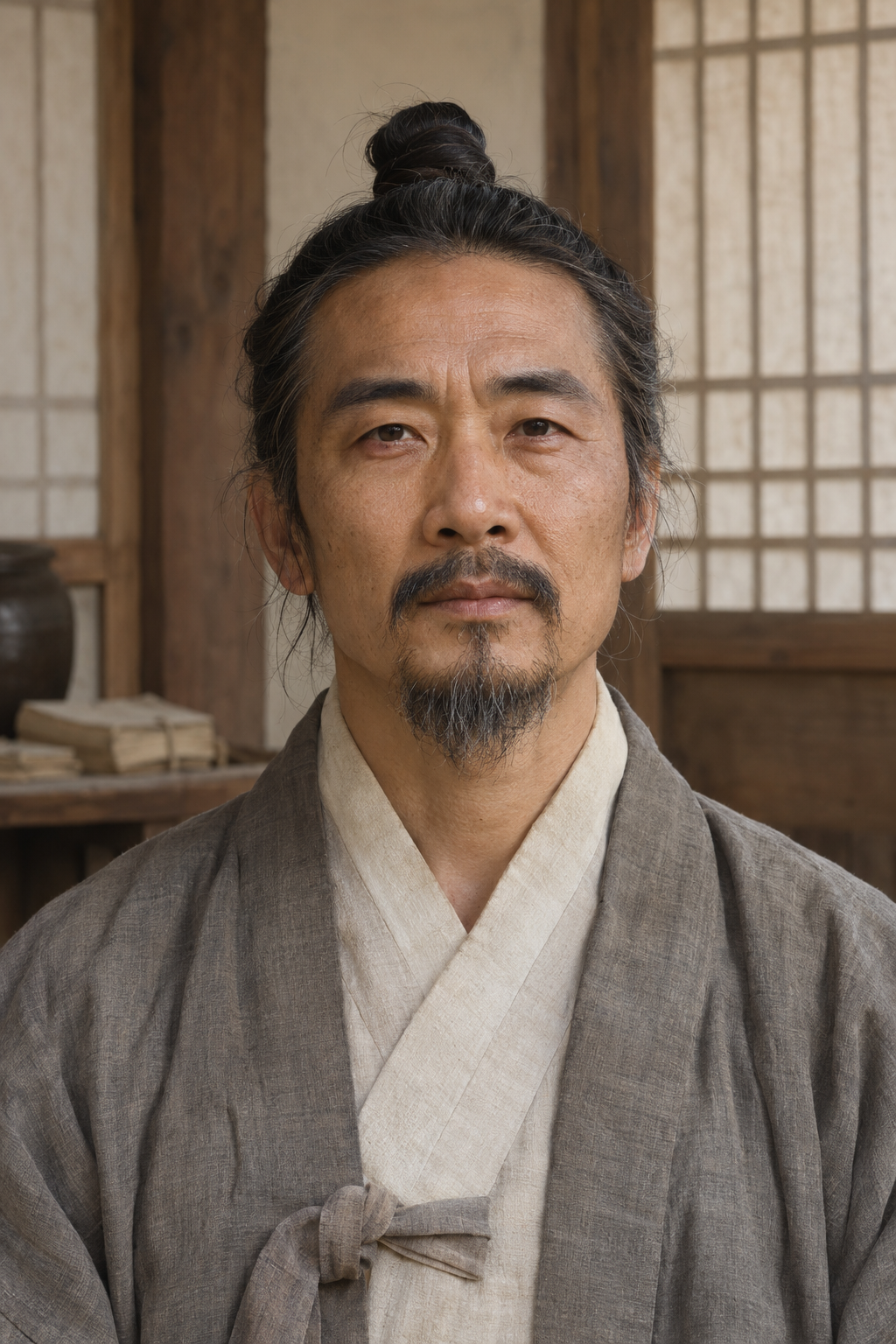
About James Zhou Wen-mo
James Zhou Wen-mo was born in 1752 in Kunshan, near Suzhou in China. He lost his mother and father within a year of each other while still a boy. The Korean Catholic Encyclopedia says his father’s sister supported him by doing embroidery during the day and taught him to read at night. He married as a young man. His wife died three years later, and he did not marry again. After several unsuccessful attempts at the civil examinations, he gave up that course of study.
Zhou travelled to Beijing and entered St Joseph’s Seminary. He belonged to its first graduating class and was ordained a priest. His work would take him far from both the city where he had studied and the part of southern China where he had grown up. In Korea he would be remembered as the first priest to come to the Catholic community that had formed there.
Korean readers had already formed a Christian community before any priest had come to live among them. Their messages to Beijing described a particular difficulty. They had people who could teach from books, but they had no ordained priest to celebrate the sacraments. Some of them had hoped that a European missionary familiar with science or medicine might win a hearing from King Jeongjo. The bishop chose a Chinese priest who could travel less conspicuously. By then Catholics had faced investigations in Korea on more than one occasion.
Zhou left Beijing in February 1794. His guides included Saba Ji Hwang and another Korean Catholic named John Pak. The first meeting did not get him across the Amnok River. He spent the interval visiting Catholics in Liaodong, then returned to meet the guides as winter set in. On the night of December 24, wearing Korean clothes, he crossed into Korea.
In Seoul a layman, Matthias Choe In-gil, had made his house available for the priest. It stood in the northern part of the city, in the neighbourhood that Gahoe-dong parish commemorates today. The house gave Zhou somewhere to begin learning Korean. On Easter Sunday, April 5, 1795, Catholics gathered in a home for the Mass they had spent years asking a priest to celebrate.
During Holy Week he baptized people and completed the baptismal rites for others. When spoken language was still an obstacle, he heard confessions by communicating in writing. After Easter he also visited Catholics outside the capital. His guides took him through Yanggeun and on to households at Gosan and Jeonju before he came back to Seoul.
In June 1795 an informer disclosed Zhou’s presence. He escaped, but three of the people who had made his journey possible were caught. They included Matthias Choe, whose house he had shared, Saba Ji, who had helped him cross the border, and Paul Yun Yu-il, who had travelled to Beijing on church business. All three died after their arrest. The search for him continued. Zhou travelled south into Chungcheong and returned to Seoul as circumstances permitted.
Zhou kept in touch with the bishop in China through messengers travelling with Korean embassies. Hwang Sim, a Catholic from Yeonsan, was chosen for the journey in 1796. Later journeys involved Hwang and Kim Yu-san. Another courier, John Ok Cheon-hui, met Zhou in Kang Wan-suk’s home and carried a letter to Beijing. He returned with the bishop’s reply and silver, but learned of the persecution at Uiju and hid the letter. The surviving account does not establish its delivery to Zhou.
Zhou established a lay association called the Myeongdohoe, modelled on one the bishop had founded in Beijing. Members learned Catholic teaching and passed it on to others. A person seeking to join gave a name to the priest and spent a year studying and teaching before being admitted. Scholars place its foundation at different points in the late 1790s. Letters addressed to members in 1827 show that the association’s name and purpose outlived its founder.
In 1801 Catholics were arrested and questioned about where Zhou was hiding. He considered returning to China. Instead he came back to the capital and surrendered on April 24. The bishops’ account says that, knowing others had suffered for sheltering him, he wanted to share their fate. He was beheaded at Saenamteo beside the Han River on May 31.
Zhou’s death raised a question between two governments. The Korean court knew from questioning him that he was Chinese and had considered sending him back. Later that year officials discovered that a Korean Catholic writing to Beijing had described his execution. The government decided to send its own version of events. An envoy carried a memorial prepared by Yi Man-su to the Qing court, along with a shortened version of the Catholic account the authorities had seized.
In 2025 Gahoe-dong parish commemorated the Mass of 1795 with an exhibition of stained glass. A lecture at its opening recalled the homes in northern Seoul where the city’s first Catholics had worshipped. The gathering marked 230 years since Matthias Choe had opened his door to the priest and the people who came to pray with him.
Wondering how to weigh the stories and sources? Learn how to read a saint biography.