Biography
Jan Beyzym
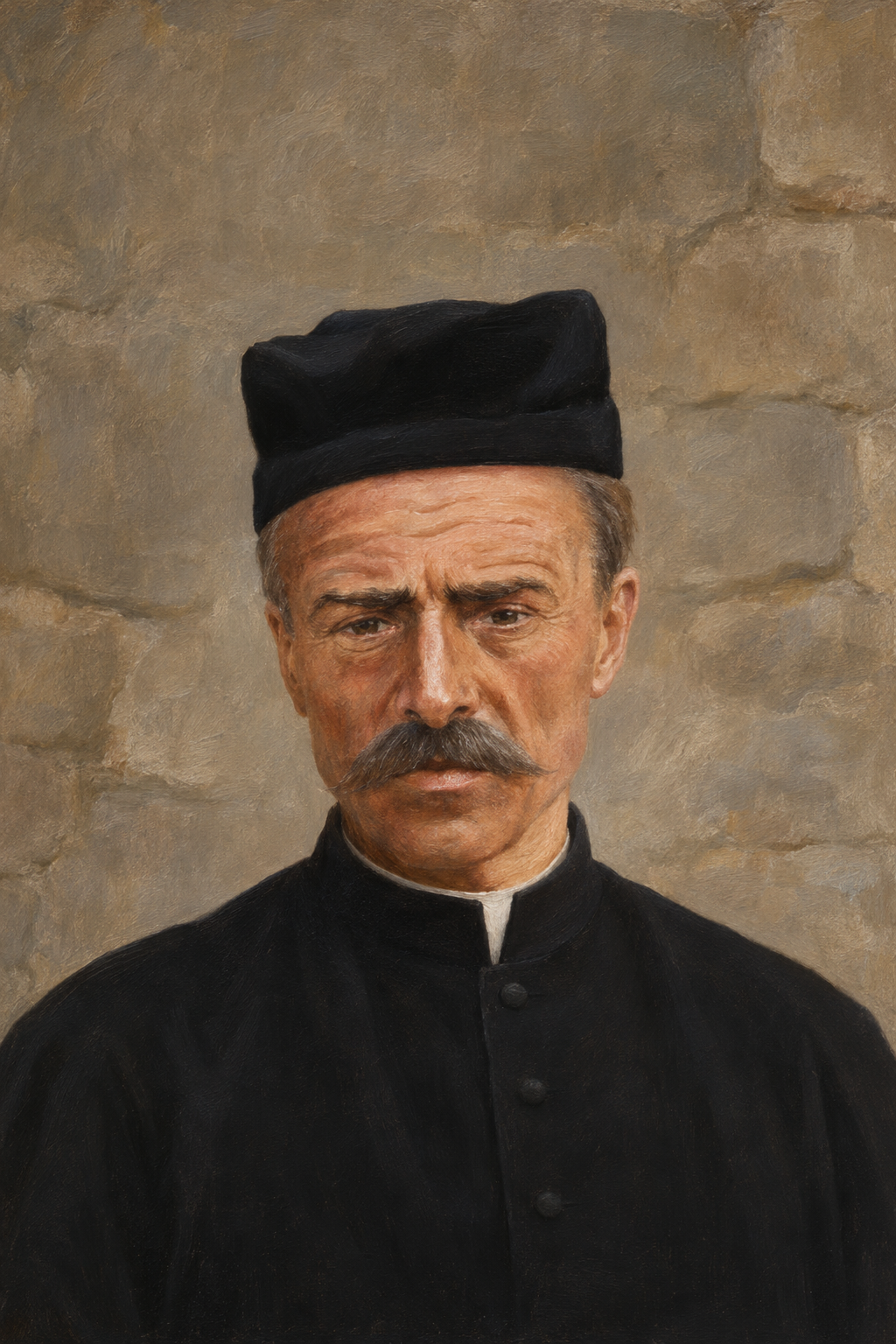
About Jan Beyzym
Jan Beyzym grew up in a Polish family whose life was disrupted by the uprising of 1863. His father’s participation led to exile and separation from the family. His mother, Olga, cared for their five children with help from relatives. The historian Ludwik Grzebień describes these circumstances as important to understanding Beyzym’s later commitment to simplicity. He also warns that early biographies left much of the family’s difficulty unexplored. The surviving picture is therefore more complicated than an uninterrupted childhood of comfort.
After education at home, Beyzym attended school in Kyiv. He had first imagined working as a parish priest in the region where he grew up. His father encouraged him to consider the Jesuits. He entered their novitiate at Stara Wieś in 1872. Grzebień emphasizes the practical character of his abilities and his formation for pastoral and educational service. The future missionary was not principally a speculative theologian. His preparation developed through the work of a religious community and the care of other people. In 1879 he had unsuccessfully sought permission for clandestine missionary work among Eastern Catholics in Podlasie.
After ordination, his work among young people included responsibility for sick students. The Clairval account describes him going from bed to bed in the school infirmary, using stories and games to encourage boys who were ill or recovering. It also remembers his interest in flowers and small animals. These details show a form of care that attended to loneliness and fear as well as physical discomfort. His experience in an infirmary preceded the very different conditions he would encounter in Madagascar.
After seventeen years in Jesuit colleges, he left for Madagascar in 1898. At Ambahivoraka, near Antananarivo, he found people with Hansen’s disease living in badly deteriorated shelters. Food and basic care were inadequate. He chose to live among the residents. The Vatican biography describes his efforts to obtain supplies and improve their living conditions. His work involved organization and fundraising as well as direct attention to patients. It answered the isolation of people who had been pushed away from the wider community.
Learning to communicate was another practical need. The Clairval account says that Beyzym recognized the limits of his Malagasy and spent time at another mission to improve it. He continued returning to celebrate Mass with the people he served. Better knowledge of the language helped him organize religious instruction and a retreat. The account also preserves his homesickness for the school infirmary and the young people he had left behind. Missionary commitment did not erase those earlier relationships or the cost of separation.
He sought a hospital that could offer more dependable accommodation and care. Building it required years of fundraising. In his later account of the project, Marek Wójtowicz draws on Beyzym’s letters to show both persistence and disagreement. Some fellow missionaries considered the plan too ambitious. Beyzym continued to explain what he believed the patients needed and appealed for help through correspondence and mission publications. Polish donors supplied much of the support. The work depended on a network extending far beyond the place where the hospital was taking shape.
The hospital at Marana, near Fianarantsoa, opened in 1911. The Vatican account places its completion within a sustained effort to obtain money and equipment from Europe. Beyzym died the following year. He had seen the institution begin its work, but its completion came near the end of his own life. The hospital gave durable form to a ministry that had begun with visits, food and wound care.
His ministry also retained a specifically priestly character. Wójtowicz describes regular worship, the administration of sacraments, catechesis and preparation of catechists. Beyzym understood physical care and religious ministry as connected responsibilities. His correspondence kept supporters informed about daily conditions and the slow progress of the hospital. The letters also reveal difficulties and frustration, rather than only the smooth success of a finished institution. This record helps preserve the labor behind the later public recognition.
John Paul II beatified Beyzym at Kraków on 18 August 2002. At the ceremony, the pope connected his service in Madagascar with the Christian duty of mercy. The pope recalled how supporters in Kraków, elsewhere in Poland and among Polish communities abroad had collected money for the hospital. He named Brother Albert among those who promoted the help. The institution’s dedication to Our Lady of Częstochowa also linked the Madagascar mission with the religious life of the donors who had supported it.
Czesław Tomaszewski’s commemoration returns to the physical closeness of that service: living alongside patients and dressing their wounds. It remembers the hospital as part of an effort to restore hope and dignity. Beyzym’s significance rests in that sustained companionship as well as in the institution he helped bring into being. His work made room for people whose disease had exposed them to hunger, isolation and neglect.
Wondering how to weigh the stories and sources? Learn how to read a saint biography.