Biography
Jean-Charles Cornay
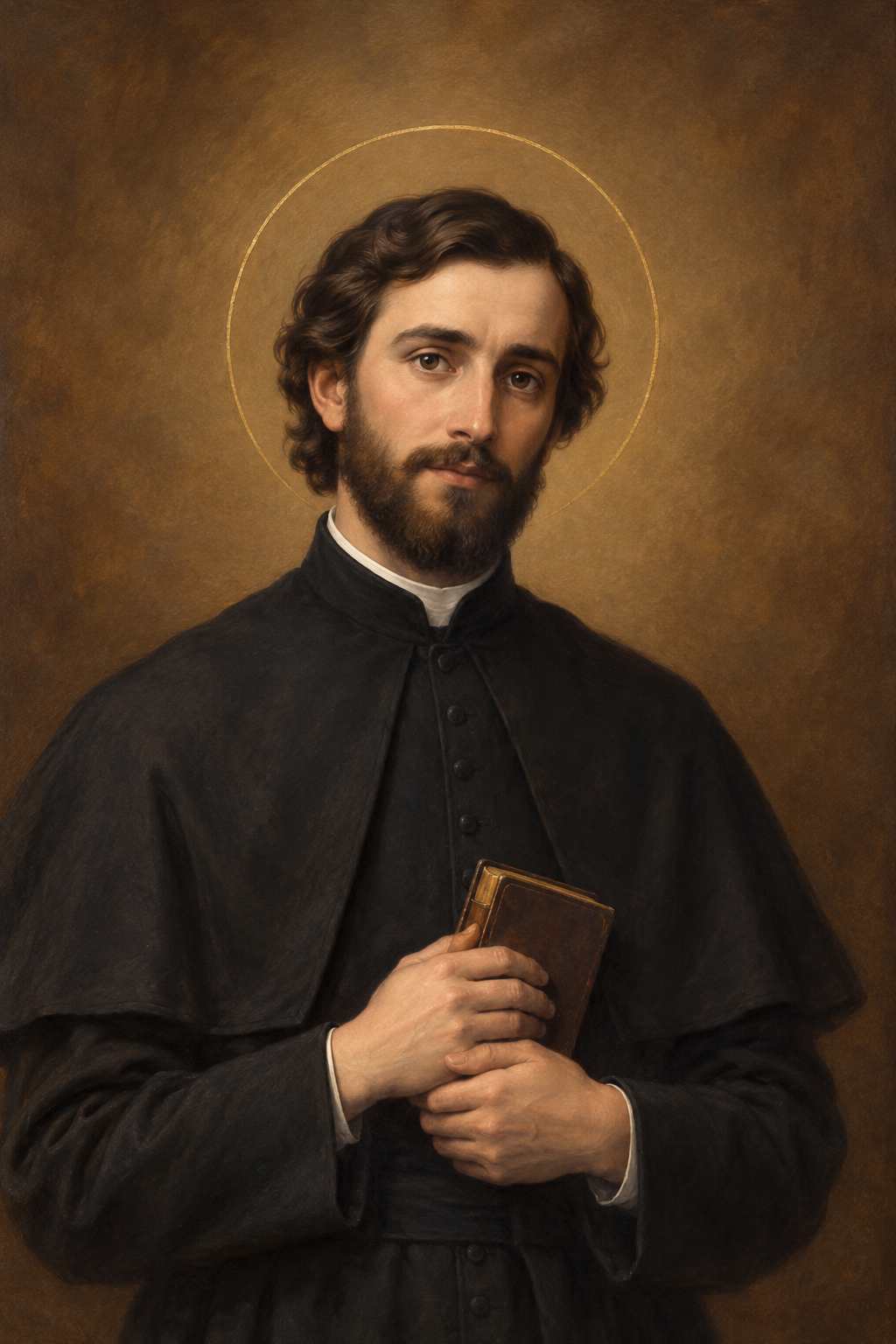
About Jean-Charles Cornay
Jean-Charles Cornay was a French priest of the Paris Foreign Missions Society who served in Tonkin. Born in Loudun on February 27, 1809, he entered the society’s seminary after studies in western France. His intended destination was Sichuan in China, but the journey did not unfold as planned.
Loudun’s municipal account follows his education through Saumur, Montmorillon and the major seminary at Poitiers. There he heard about overseas missions. He entered the Paris seminary in 1830 and was sent abroad while still a deacon.
The IRFA biography explains that the guides sent to take him onward to China died in Hanoi. Cornay remained in western Tonkin, where he was ordained in 1834. When offered a later opportunity to seek another route, he chose to stay and continue his ministry despite poor health.
A parish account from his home region describes the physical cost of this work: fever, pain and eye trouble accompanied his efforts to learn Vietnamese and serve local Christians. It places his ministry under the restrictions that followed an imperial anti-Christian edict in 1833. His arrest in 1837 brought imprisonment in a bamboo cage and repeated beatings.
The wider setting was more varied than a single story of uniform enforcement suggests. In a research summary, historian Makino Motonori describes differences between local administrations in northern Vietnam. Some authorities enforced the government’s restrictions vigorously, while others offered Christians covert protection. This regional variation helps explain how communities continued to exist during a period of severe repression.
Cornay’s letters also reveal his concern over how his arrest would be understood. A 1991 review of his published correspondence notes his repeated objections to accusations he considered false. The reviewer quotes his distress at facing death with the reputation of a criminal. This preserves his own interpretation of the charges; it does not replace an examination of the original court record.
A letter to his parents, dated July 2, 1837, survives in an excerpt reproduced by his namesake parish. In it he acknowledges their sorrow and the uncertainty they had endured since his departure. He offers his sufferings for them and expresses the hope of continuing to pray for his family after death. The letter gives his public story the voice of a son addressing people he loved.
He was executed near Sơn Tây on September 20, 1837. John Paul II canonized him with the Vietnamese martyrs on June 19, 1988.
His home parish commemorates him on September 20.
Wondering how to weigh the stories and sources? Learn how to read a saint biography.