Biography
John Boste
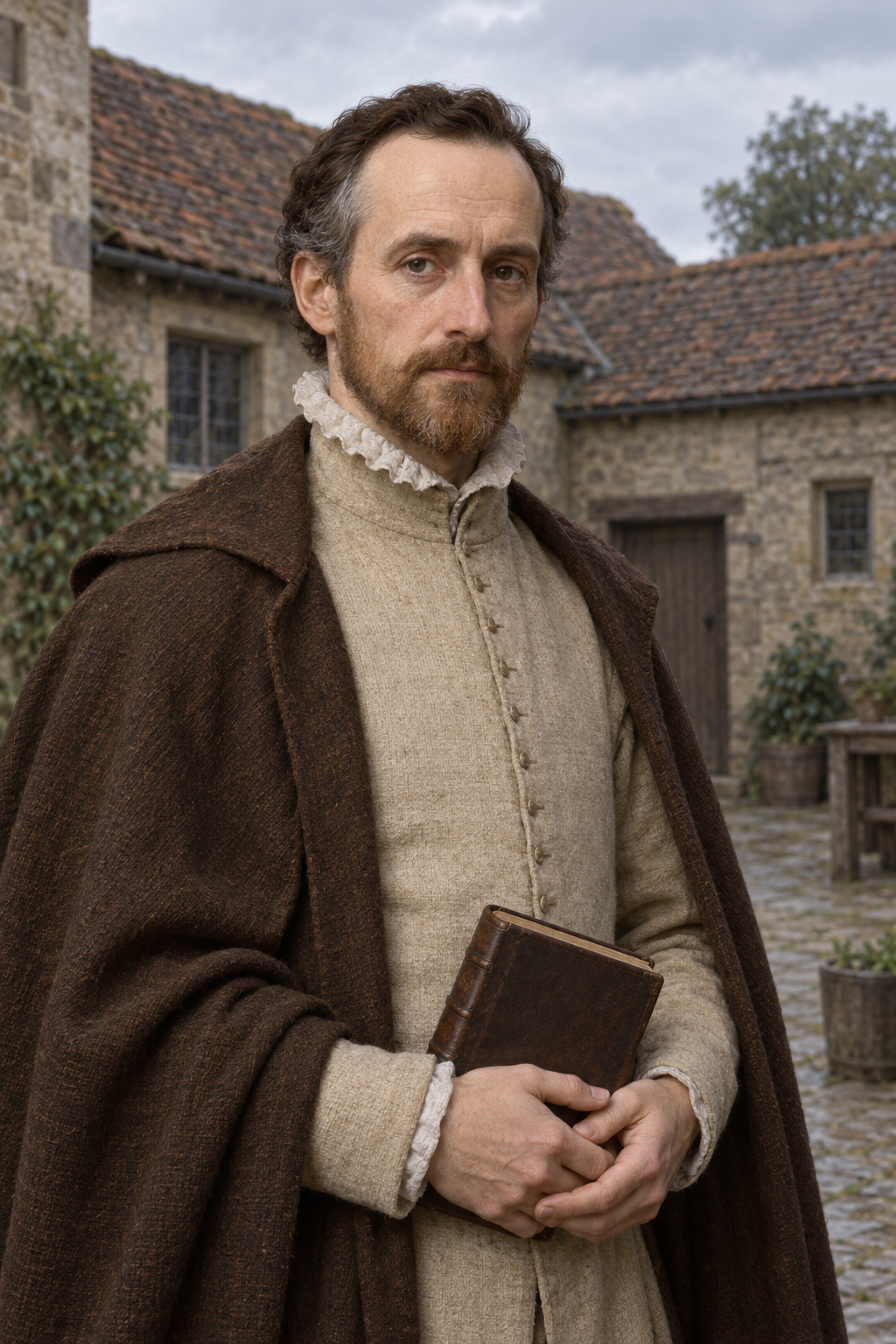
About John Boste
John Boste was a priest from Dufton in Westmorland who spent more than a decade serving Catholics in England before his execution at Durham in 1594. He is also known by the spellings Boast and Bost. His early path led through Oxford and teaching before his conversion to Catholicism and preparation for the priesthood abroad. His subsequent ministry belonged chiefly to the northern counties, where travel, trusted households and help from other Catholics made continued pastoral work possible.
The university records give a more definite outline of his academic life than of his childhood. Joseph Foster’s Alumni Oxonienses lists him as a scholar at Queen’s College in 1568–69, with a bachelor’s degree in 1569 and a master’s degree in 1572. He became a fellow in 1572. These dates establish a sustained period of higher study before the years of missionary work for which he is now principally remembered, rather than a direct passage from school into a clandestine mission.
Francis Rice’s study adds his connection with Appleby Grammar School. Boste had attended the school himself and was appointed its schoolmaster in 1574. Later he returned to Oxford, where he again held a fellowship and taught in the college school. The surviving institutional outline shows an established academic vocation being interrupted by religious change. Rice records his eventual expulsion, while noting that the personal influences behind his conversion cannot be established with the same precision as the stages of his education.
Camm’s Catholic Encyclopedia account dates his reception into the Catholic Church to 1576 at Brome in Suffolk. In 1580 he left the Oxford position and went to the English College at Rheims. He was ordained on March 4, 1581, and sent back to England that spring. Landing at Hartlepool began the missionary phase of his life. The return followed a substantial education and a definite religious commitment, placing his learning at the service of Catholics whose clergy worked under increasing legal restrictions.
The work reached beyond individual visits. Rice describes Boste helping to arrange passage for candidates preparing for the priesthood and welcoming newly ordained men back to England. Ursula Taylor’s house at South Shields served as a place of reception. Boste helped direct returning priests toward places where they could be sheltered or where their ministry was needed. The same network circulated imported books on faith and devotion. His work thus included maintaining the human connections and religious resources on which other people’s pastoral service depended.
Forster’s account follows his movement through several districts, sometimes disguised as a serving man in Lord Montacute’s livery. It names visits in the south before the northern counties became the principal field of his work. His activities took him through Westmorland, Cumberland, Durham and Yorkshire. The disguise belonged to the practical conditions of movement and concealment. It did not change the function that made him sought by Catholics and watched by the government: he was a priest available to communities without open access to his ministry.
After repeated escapes from capture, he was betrayed and arrested near Durham in 1593. The Earl of Huntingdon, president of the council in the north, sent him to London for examination by the Privy Council. Imprisonment then brought him to the Tower, where he was repeatedly tortured. Cooper’s Dictionary of National Biography records that the injuries left him needing a staff to walk. Only after he could travel was he sent north again for trial. The account preserves his courage in the face of those proceedings.
At Durham the indictment concerned his ordination abroad and return to England as a Catholic priest. Forster records that he declined to plead, saying he would not make a jury responsible for his blood. He also denied that his priestly work involved knowledge of a foreign invasion. The defense distinguished the religious purpose of his mission from political conspiracy. Nevertheless, he was condemned for high treason under the law directed against priests trained overseas.
The trial also joined his story to George Swalwell, a former Protestant minister who had embraced Catholicism. Camm remembers Swalwell faltering through fear and Boste encouraging him to stand firm, then giving him absolution in court. Boste was executed at Dryburn outside Durham. The account recalls him praying the Angelus as he approached death, and identifies Christopher Robinson as an eyewitness who recorded the proceedings. That remembered support for a frightened companion stands beside the accounts of his own endurance.
The church’s received death date is July 24, 1594, although Cooper’s older entry leaves the day as July 19 or 24. Boste was beatified by Pius XI in 1929 and canonized by Paul VI on October 25, 1970, among the Forty Martyrs of England and Wales. Their common commemoration preserves his witness with those of priests, religious and lay people whose lives unfolded in different places and circumstances.
Wondering how to weigh the stories and sources? Learn how to read a saint biography.