Biography
John of Dukla
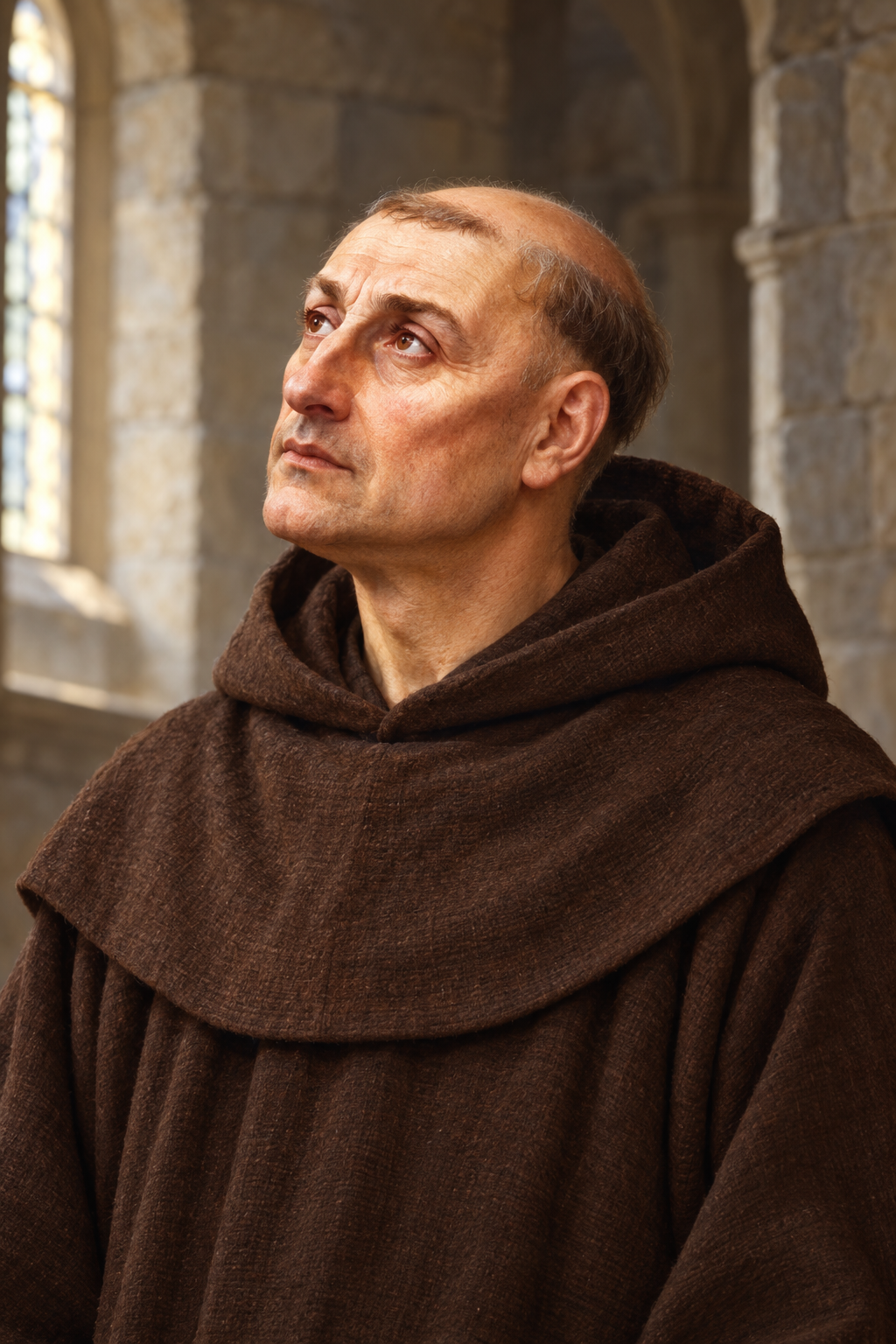
About John of Dukla
John of Dukla was a Franciscan priest remembered for preaching and hearing confessions. Much of his life was spent in Lviv, where John Paul II identified him as patron of the city and its surrounding area. At his canonization, the pope placed his work within the Franciscan tradition of poverty, learning and service.
His early years are less certain. The historian Aleksander Krzysztof Sitnik explains that the familiar birth year, about 1414, is an estimate inferred from a chronicler’s account of his old age. His name connects him with Dukla, but the precise circumstances of his schooling are unknown.
Cecylian Niezgoda’s historical essay also challenges the confident stories sometimes told about his education. A late account placed him at the Kraków Academy, yet the university register did not record him. The supposed relationship with John of Kęty likewise rests on an unreliable chronology. Niezgoda treats the elaborate tale of a forest hermit discovered by that saint as legend. These cautions matter because the familiar image of John’s youth can otherwise seem better documented than it is. His later Franciscan career offers firmer ground for a biography.
As a Conventual Franciscan, John served as superior in Krosno and Lviv and held regional responsibility as custos. In 1461 he preached to the German-speaking congregation at the Holy Spirit church in Lviv. He also joined an act reducing burdens on peasants at Czyszki. In 1463 he moved to the Observant Franciscans, known in Poland as Bernardines, seeking stricter observance of the Franciscan rule.
In his address at Dukla in 1997, John Paul II recalled him as a preacher and confessor whom people approached for counsel. The pope especially remembered his perseverance after losing his sight: accounts described others reading material aloud so he could continue preparing sermons. The address presented this work as service sustained by faith and prayer. It also recalled the transition from Conventual Franciscan life to the Bernardine community, where he spent the final part of his life.
The surviving record has further limits. Sitnik reports that a later search for John’s sermons found no manuscripts, despite testimony that he had composed them. Their exact wording remains unavailable.
John died in Lviv on September 29, 1484. His grave became a center of devotion.
Centuries later, John Paul II visited the shrine in Dukla on June 9, 1997. He greeted the Bernardine custodians of the relics and those who had gathered from the town and farther away. The visit joined local remembrance with the canonization that would follow the next day.
The canonization took place at Krosno on June 10, 1997. In the homily, the pope described service as the center of John’s religious life. He also addressed the people of the region, connecting the celebration with responsibility toward those in need and encouraging charitable work. This was a modern interpretation of the saint’s example, offered to the community gathered for his canonization.
His patronage also has a specific institutional expression. The Lublin oncology center records that its director entrusted the staff, patients and friends of the institution to John’s care in May 2007. Pilgrimages and a relationship with the Bernardines followed. On July 17, 2010, the center formally adopted his name, and its chapel received relics. The hospital’s own account documents that dedication; it does not make him a patron of every cancer patient or establish a medical effect from devotion.
Wondering how to weigh the stories and sources? Learn how to read a saint biography.