Biography
John of Lycopolis
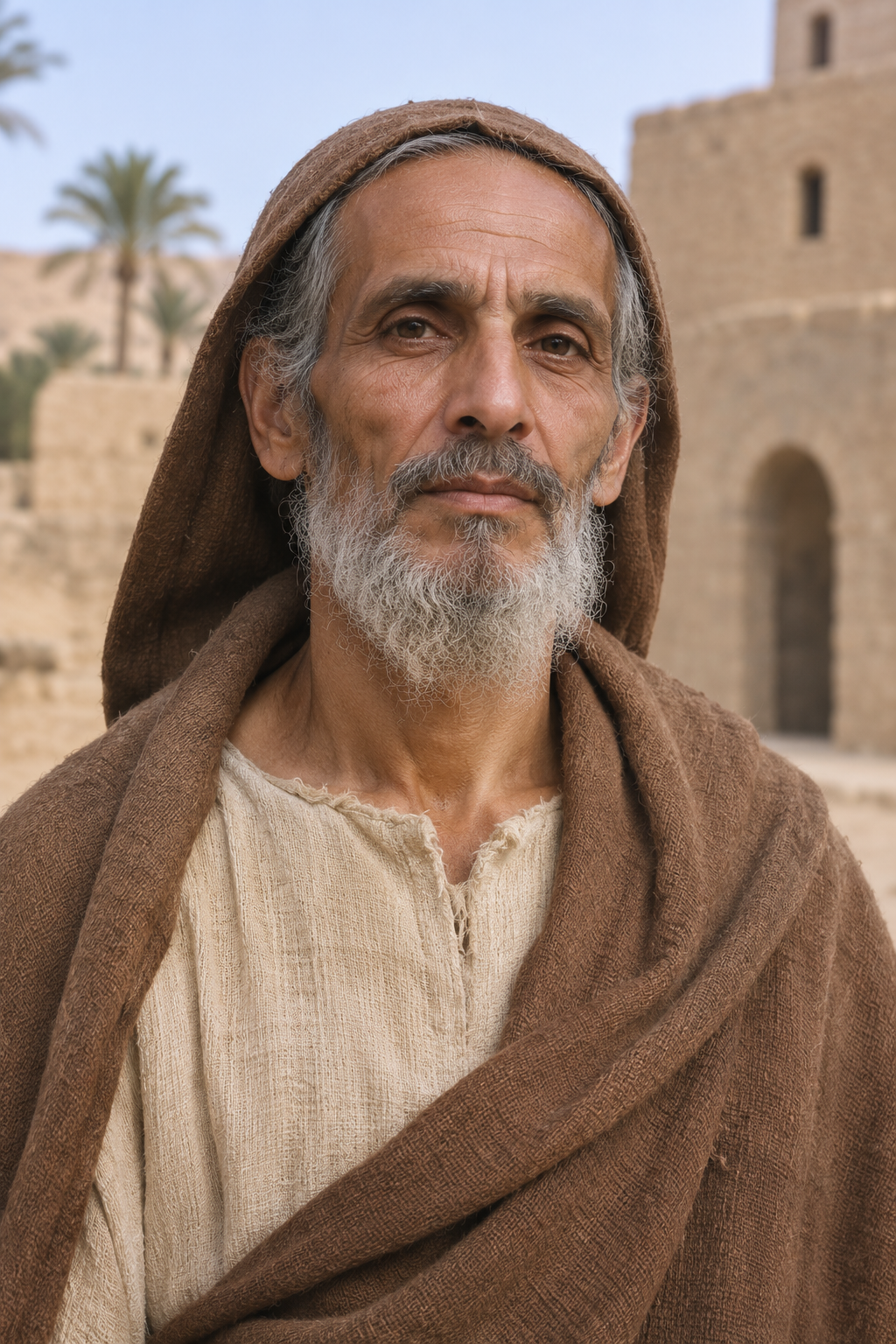
About John of Lycopolis
John of Lycopolis took his name from Lycopolis, the ancient city now called Asyut in Upper Egypt. The Coptic Encyclopedia places his birth probably in the first or second decade of the fourth century and his death near the end of 394 or beginning of 395. Those dates are scholarly reconstructions, not dates supplied consistently by the ancient witnesses. John became one of Egypt’s best-known recluses. His reputation reached visitors from other regions and even the imperial court, while his life was recorded by travelers who came to consult him shortly before his death.
Palladius’s Lausiac History says John learned carpentry as a boy and had a brother who was a dyer. Around age twenty-five, he renounced ordinary life and spent five years in different monasteries before withdrawing to a mountain near Lycopolis. Palladius describes three cells: one for bodily needs, one for work and meals, and one for prayer. John lived enclosed and received necessities through a window. The Historia Monachorum gives a different account, describing him as ninety years old and enclosed for forty. Palladius and the Historia Monachorum give differing rounded ages and periods of enclosure, leaving no secure precise chronology.
John’s enclosure did not end all contact. Palladius recounts an eighteen-day journey from Nitria with Evagrius and companions to visit him. When they arrived, they had to wait for the day on which John received visitors. Palladius spoke to him through an interpreter named Theodore. During their conversation, the local governor Alypius arrived, and John turned first to the official. Palladius felt slighted and considered leaving. John noticed his irritation and explained that Alypius needed a brief respite from public responsibilities, whereas a monk could find counsel from other elders. The encounter offers a rare glimpse of how John balanced strict enclosure with an organized schedule of consultation.
Palladius presents John’s counsel as practical and direct. When Palladius spoke of wanting to return home to help his father and siblings, John questioned whether this desire was truly charity or a sign of wavering commitment. He urged Palladius to remain in the desert. Palladius later connected the advice to his own experience of loneliness in a cell. He recounts that John had predicted he would endure a period of discouragement before finding consolation. This is Palladius’s retrospective spiritual narrative, not a transcript of a recorded conversation, but it shows how the author understood John’s role: the recluse read a visitor’s motives and helped him persist in his vocation.
Other late-fourth- and early-fifth-century writers also preserve John’s reputation. The Historia Monachorum gives extended conversations with a group of visitors from Jerusalem and connects his announcement of Theodosius’s victory over Eugenius with the Battle of the Frigidus in September 394. John Cassian recalls an elder John whose obedience was associated with prophetic insight and the trust of rulers. Augustine, relying on the same developing tradition, mentions John’s prediction about Theodosius in City of God. The Coptic Encyclopedia compares these accounts without treating them as identical reports; they show the range of stories associated with the recluse soon after his lifetime.
John also received officials, travelers, and women pilgrims, although his rule of enclosure restricted direct meetings. Palladius tells of a woman named Poemenia who was given warnings through intermediaries. Other sources mention officials who consulted him. The contrast between his remote cell and these visitors is significant: John’s withdrawal was not a rejection of social life so much as a boundary around it. People sought his advice precisely because his secluded life appeared to free him from ordinary political and economic pressures.
Cassian’s Institutes attach a story of obedience to John: an elder told a novice to water a dry stick for a year, and the novice obeyed even though it did not grow. A later episode ends when the elder removes the stick. The Coptic Encyclopedia discusses this and other accounts to show how John’s reputation was used in monastic teaching. The sources attribute prophecy, healing, and miraculous obedience to John in different ways. Palladius, the Historia Monachorum, Cassian, and Augustine nevertheless attest to the early reach of his reputation among monks and civic leaders.
John’s death is placed around 394–395, close to the transition between the reigns of Theodosius I and his sons. The surviving sources do not supply one agreed age or length of enclosure. His significance instead rests on the unusually rich evidence from visitors who recorded his life and teaching, on the network of consultation surrounding his cell, and on the way later monastic writers used him as an example of solitude joined to discernment. He remained a recognizable figure in accounts of Egyptian monasticism because his life connected desert practice with the political and spiritual concerns of the wider late Roman world. Palladius’s visit remains the fullest personal encounter preserved in the sources.
Wondering how to weigh the stories and sources? Learn how to read a saint biography.