Biography
John of Sahagún
About John of Sahagún
John of Sahagún was an Augustinian priest whose preaching became closely associated with peace in Salamanca. The city remembers him as one of its patrons, and the diocese shares his patronage with Teresa of Jesus. His feast there is celebrated on June 12.
His birthplace was Sahagún, in León. The historian Ángel Martínez Cuesta places his birth around 1430, while explaining how little direct evidence survives from his own hand. John left no surviving body of writings. An early biographer, John of Seville, gathered recollections from people who had known him.
Accounts of his early vocation describe a disagreement over church income. His father secured a benefice for him, but John rejected the arrangement on grounds of conscience. The Augustinian account remembers the disappointment this caused his family. The episode places his later preaching about conduct alongside a decision affecting his own prospects.
John trained for the priesthood under Alonso de Cartagena, bishop of Burgos. His subsequent move to Salamanca can be traced through notes in a book he owned: one records him in Burgos in February 1457, another as a canon-law student in Salamanca in January 1458. He served as a chaplain at the college of San Bartolomé and later preached for the city.
After a serious illness, he entered the Augustinians in 1463. His religious profession followed on August 28, 1464. The surviving profession text, reproduced in Juan Manuel Cuenca’s historical study, commits him to obedience and perseverance in the community for life. Cuenca also records two terms as prior at Salamanca, beginning in 1471 and 1477. These responsibilities placed him within the government of his religious community as well as its public ministry.
Salamanca was divided by violent family rivalries. John preached reconciliation during these conflicts, which had resisted earlier efforts to end them. Martínez Cuesta describes the agreement reached by twenty-two families on September 30, 1476, and credits John with helping to make peace possible.
The Augustinian account of his ministry also remembers a preacher willing to challenge powerful people. It relates opposition from the duke of Alba and expulsion from Ledesma after his preaching offended local interests. Within the order, he served in community leadership and attended provincial chapters. The same account places devotion to the Eucharist at the center of his religious life. These themes explain why later generations remembered both his public courage and his life of prayer.
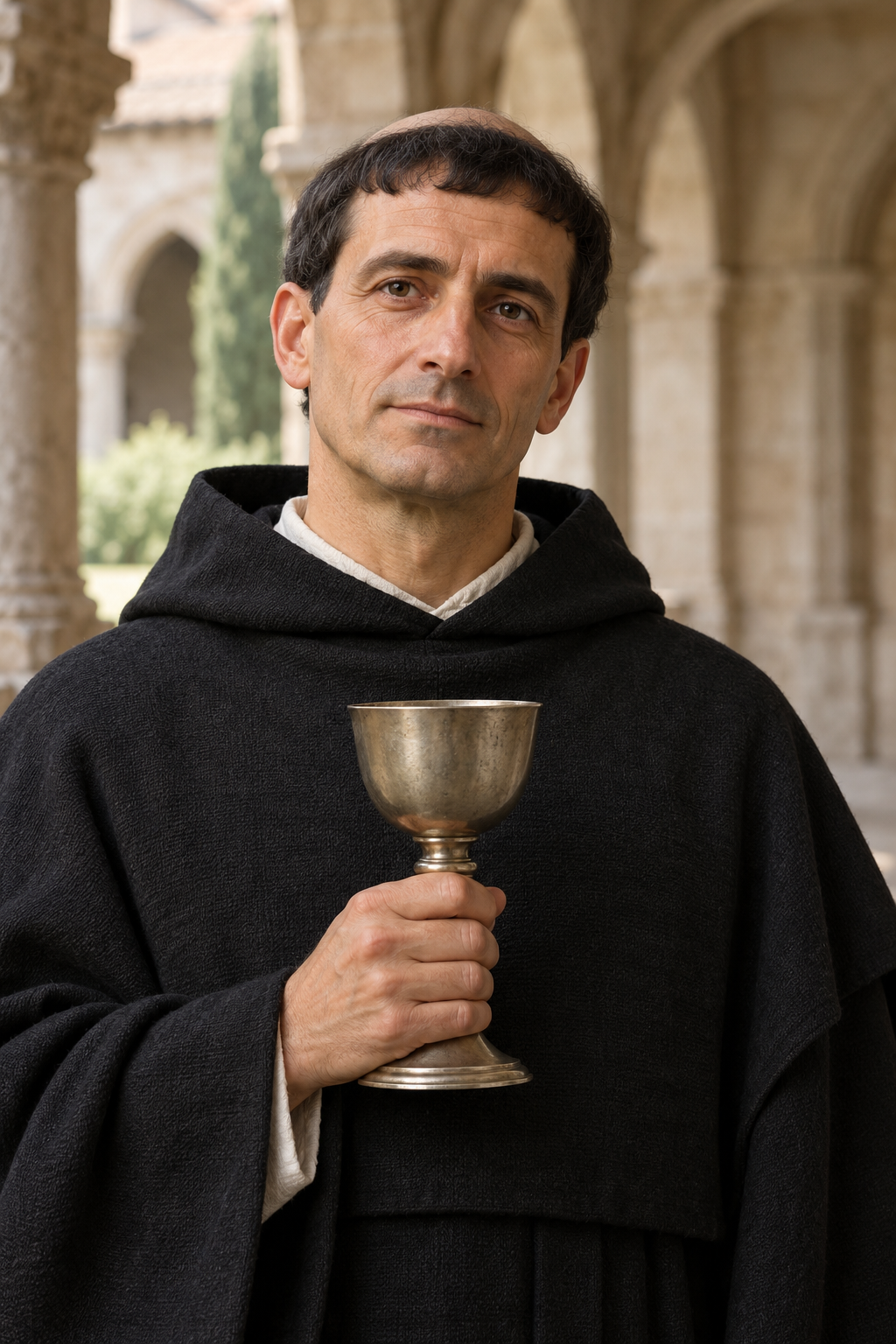
John died in Salamanca on June 11, 1479. A story that a woman poisoned him circulated in later accounts. The Catholic Encyclopedia explicitly warns that the poisoning claim appears only in later biographies; it should not be presented as an established cause of death. The same reference records his traditional artistic attribute: a chalice and host, expressing his Eucharistic devotion.
Alexander VIII canonized him on October 16, 1690. The later date sometimes attached to the canonization belongs to its written decree: Cuenca explains that Innocent XII issued the bull on July 15, 1691, after Alexander’s death. Distinguishing the ceremony from the subsequent document resolves an apparent disagreement between accounts.
His memory remains visible in Salamanca’s cathedral. A silver reliquary in the New Cathedral holds his remains, with keys entrusted to the bishop, the mayor and an Augustinian prior. Cathedral paintings also preserve stories of a child rescued from a well and a bull halted in the street. These are traditions of devotion represented in art, rather than independently established episodes of his life. The cathedral’s account connects those images with the city’s continuing celebration of its patron.
Wondering how to weigh the stories and sources? Learn how to read a saint biography.