Biography
John Paine
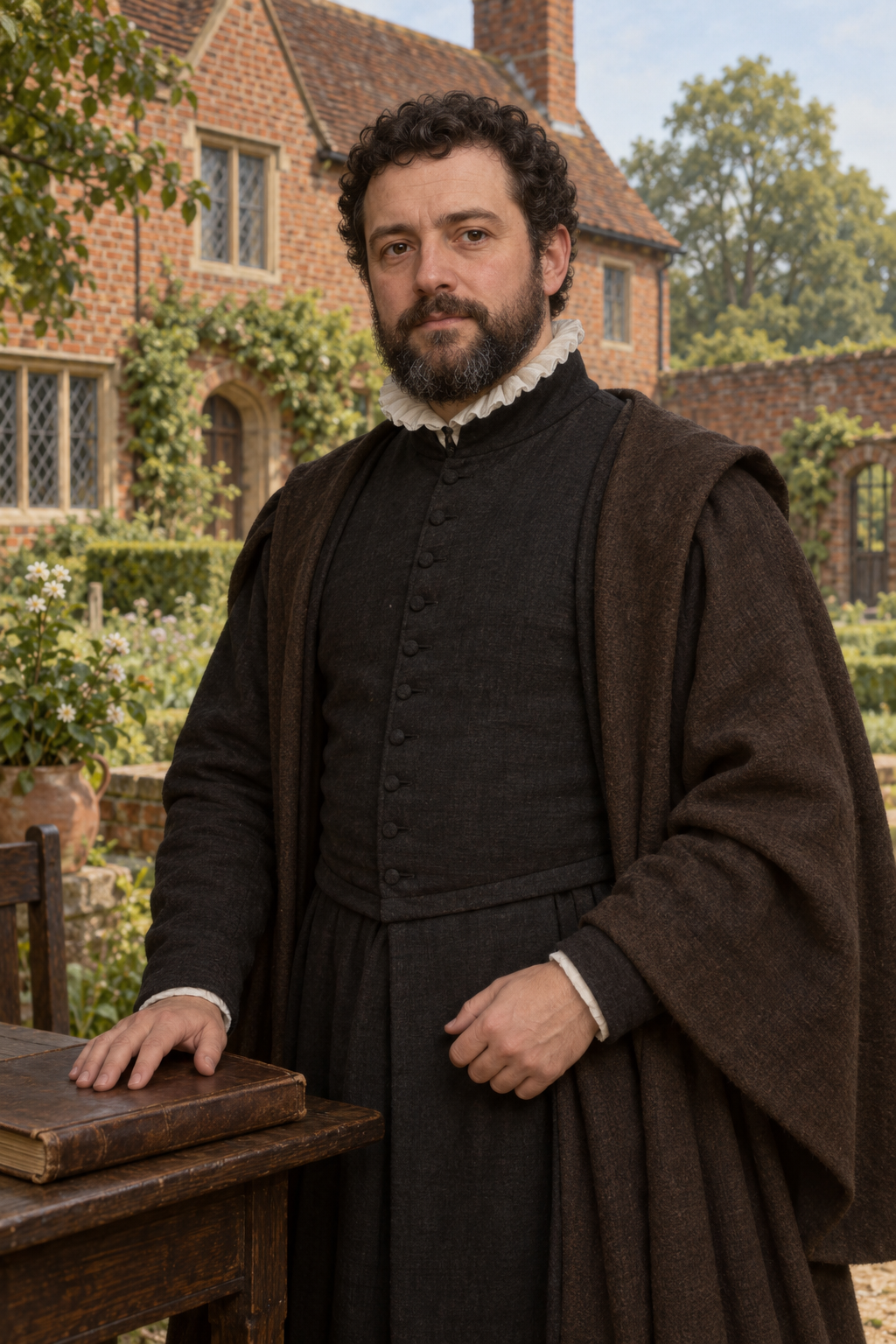
About John Paine
John Paine, also written Payne, was a Catholic priest from Peterborough whose ministry was closely connected with the Petre household in Essex. The date of his birth is uncertain, as are the time and circumstances of his conversion. The New Catholic Encyclopedia describes his family as probably Protestant. By 1574 he had entered the English College at Douai to prepare for priesthood, and for a time he served as its bursar. His work combined religious preparation with the practical responsibility of keeping the college’s accounts.
He was ordained on April 7, 1576, by the archbishop of Cambrai and left for England with Cuthbert Mayne later that month. Wainewright’s account places him chiefly at Ingatestone, in the household of Anne, the widowed Lady Petre, with work also in London. He helped George Godsalve, a deacon ordained in Mary’s reign, return to Catholic practice and sent him to Douai to prepare for priesthood. The movement between England and the college thus continued through the people whom Paine encouraged and directed.
At Ingatestone he appeared to work as a steward while ministering to Catholics who did not attend Anglican worship. The household gave him a base from which to serve a wider, scattered community. His first imprisonment came in 1577; after release he returned to Douai. The church notice remembers renewed work in Essex before his final capture in 1581. These interruptions belong to the course of the mission itself: a household appointment could provide shelter and access, but could not remove the risk attached to his religious work.
James Kelly’s study of the Petre network fills out the pattern of travel. Paine was back at Ingatestone by June 1578, when he witnessed Lady Petre’s will. That evidence is earlier than the return around Christmas 1579 suggested by some older notices. Kelly also traces his association with the developing Jesuit mission and argues that he acted as a link between Catholic supporters in England and those abroad. This is a historian’s interpretation of the contacts and movements, rather than evidence that Paine himself entered the Society of Jesus.
His years at Douai also generated a distinct religious tradition. A reported vision of Christ rising from the chalice during Mass was remembered as answering doubt about the Eucharist. Alexandra Walsham’s study situates the account in 1575 and examines its remembrance in the embroidered Bosworth Hall burse. Her published notes distinguish that object’s later private history from the years when it was lent to a museum. It was lent to Leicester Museum between 1949 and 1957; her archival note records it back at Bosworth Hall in 1977, rather than a permanent museum acquisition. The report belongs to the history of Paine’s faith and its later representation; it is not a surviving authenticated portrait of him.
In 1581 Paine was arrested through the informer George Eliot and examined by Francis Walsingham before imprisonment in the Tower. He was tortured there. Eliot accused him of a plan to kill Elizabeth and leading members of her government. Wainewright records the charge and the lack of corroboration for Eliot’s story. The accusation gave a political form to the proceedings against a missionary priest. It should not be repeated as an established plan merely because it appeared in an indictment.
Kelly notes that Paine was tried separately in Essex, although his alleged role had figured in the case against Campion and other prisoners. He proposes that the location and conduct of the prosecution were meant in part to send a warning to the Petres. The interpretation places Paine within a network of household, religious and political relationships. It also preserves the difference between studying why authorities chose a particular prosecution and accepting the informer’s allegations as true.
Paine was taken to Colchester Castle before trial and condemned for conspiracy against the queen. Fitzherbert records an offer of liberty if he would change his religion, which he refused. He was executed at Chelmsford on April 2, 1582. Before death he prayed and denied having devised or assisted treason. The crowd, familiar with him and sympathetic to him, intervened so that he was dead before the final mutilation of the sentence. The account remembers both his religious refusal and that public response.
Leo XIII beatified Paine in 1886, and Paul VI canonized him in 1970 among the Forty Martyrs of England and Wales. His church commemoration links him with people whose paths to martyrdom differed in vocation and circumstance.
In Chelmsford, the Catholic school bearing his name carries his memory into another form of community life. Its history begins in 1959 with 346 students, followed by growth into additional buildings. The bishop of Brentwood explicitly calls Paine the school’s patron and connects his witness with learning, faith and service. That local patronage gives a concrete setting to his continuing remembrance in the city where he died.
Wondering how to weigh the stories and sources? Learn how to read a saint biography.