Biography
John Roberts (Wyoming)
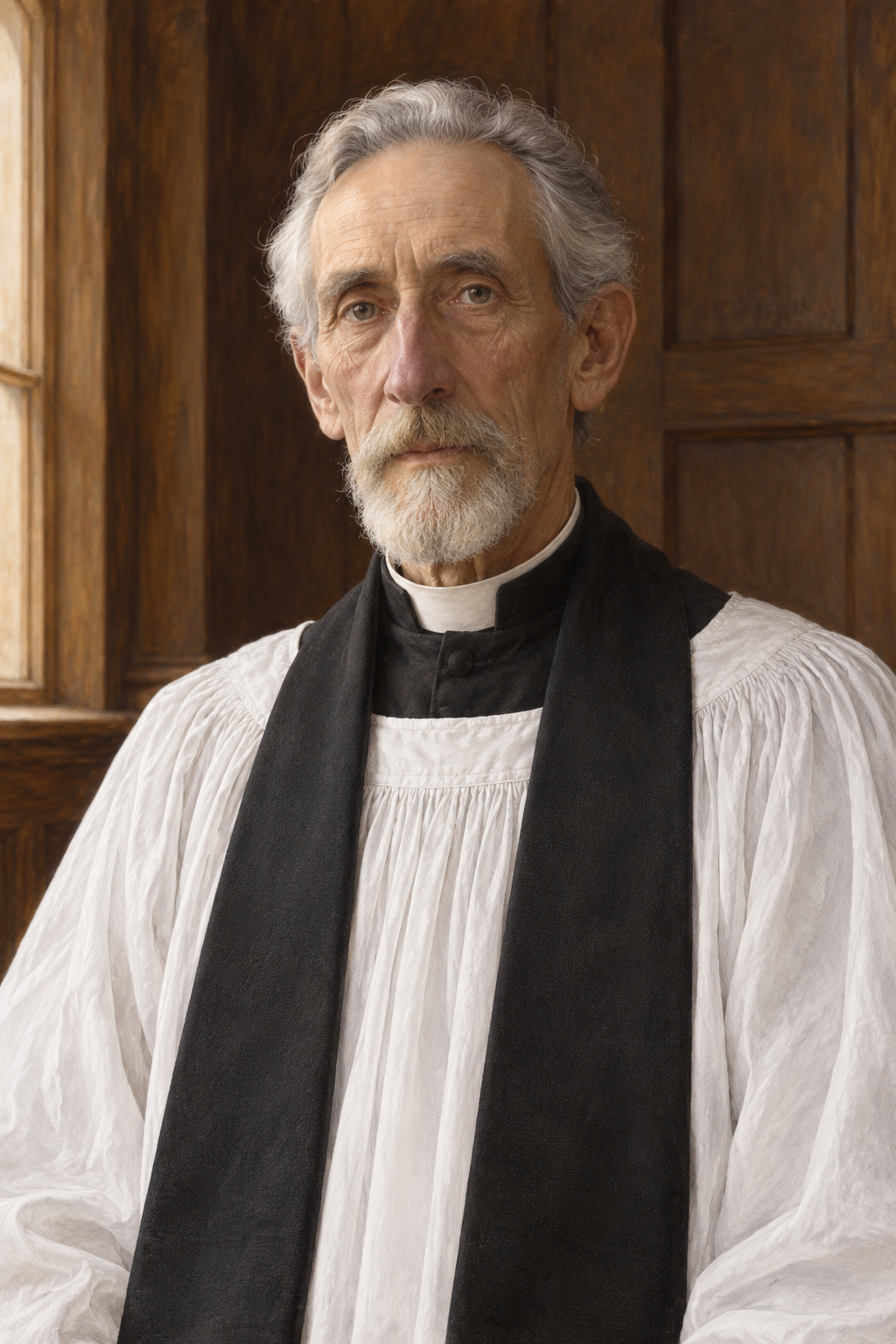
About John Roberts (Wyoming)
John Roberts was born in Wales on March 31, 1853. He became an Episcopal priest whose work in Wyoming extended across sixty-six years. Before reaching the American West, he served in Nassau in the Bahamas, where he was ordained priest. Bishop John Spalding subsequently assigned him to the Shoshone people. Roberts reached the reservation in 1883 and became superintendent of its government school. Attendance was compulsory, and many children entered against their wishes. This setting is essential to understanding a ministry later remembered for its personal friendships.
Roberts also served congregations beyond the reservation, riding between scattered communities to conduct services, weddings, baptisms and funerals. Laura Brown, whom he had met in the Bahamas, joined him in Wyoming; they married at Rawlins on Christmas Day 1884. Their family shared the demanding work of the mission. Roberts remained in Wyoming into old age, eventually becoming blind. He died on January 22, 1949, and was buried at Mount Hope Cemetery in Lander.
The mission depended on Indigenous leadership and knowledge. Washakie and Black Coal were among the tribal leaders with whom Roberts developed relationships. His translations of Christian texts were collaborative work: the Episcopal Diocese of Wyoming identifies Fremont Arthur, Michael White Hawk and Charles Lajoe as helpers in translating material into Shoshone and Arapaho. Their participation belongs in the account alongside that of the missionary. Language work was a substantial part of the ministry through which Roberts became known among the Eastern Shoshone and Northern Arapaho communities.
The school for Shoshone girls occupied land associated with Washakie’s support for education. A 1972 National Register nomination describes construction of its brick building in 1889–1890 and the later legal transfer of the land to the church. The nomination records a 1909 land patent, following tribal council approval and congressional action. It also describes a chapel and a log cottage associated with the Arapaho priest Sherman Coolidge. These buildings belonged to a network of people and institutions, rather than to the efforts of Roberts alone.
The buildings also show how teaching, worship and household work shared a small site. The nomination describes classrooms, a kitchen, a dining hall and a dormitory in the main school building. Nearby stood an orchard and the small log chapel.
Former pupils and families remembered the schools in different ways. In an interview preserved by History Jackson Hole, Bobeqee recalled that her daughter was taken to Roberts’s Mission School and that families faced losing food-ration tickets if they resisted sending children. Other recollections were affectionate: Vida Haukaas, who had lost her mother, remembered the mission as another home. These accounts describe different experiences within the same institution; kindness remembered by one pupil does not erase the coercion remembered by another family.
The mission required English in class, although pupils could use their own language during play. Dolly Rowan remembered Roberts warmly and contrasted his kindness with her teacher’s severity. The exhibit also reproduces his 1901 concern about pupils’ deaths and his request for visits home during the school year. His concern for children coexisted with continuing support for boarding education.
Even the 1972 nomination, written in language that treated European ways as superior, acknowledged that younger Shoshone and Arapaho people were having to relearn their languages and heritage. Its praise of the mission therefore sits beside evidence of cultural loss. The school’s history calls for attention to what children and families experienced, as well as to what church leaders hoped to accomplish.
Roberts’s papers preserve translations, personal documents and photographs. The University of Wyoming’s American Heritage Center announced the digitization of more than 1,300 items in 2010, making material from this ministry available for further examination.
The collection’s inventory gives a more detailed view of the language work. It lists working notes, manuscripts and printed versions of Christian texts in Arapaho and Shoshone. Among them are catechisms, prayer services and a printed Arapaho Gospel of Luke dated 1903. These records preserve several forms of a translation project, rather than a single finished book. The finding aid also identifies photographs of Fremont Arthur and Michael White Hawk. Its descriptions make their presence visible within a collection named for Roberts.
Family members helped preserve this record. Elinor and Charles Markley gave papers to the University of Wyoming between 1946 and 1954; further material came from Edward N. Roberts and Beatrice Crofts. The surviving collection includes correspondence, financial records and a notebook containing expenses, sermon texts and translations.
His ministry has also become a subject for contemporary art. The Diocese of Wyoming commissioned Brian Whelan to paint thirteen works about his life. The exhibition opened at Fort Washakie in June 2023 before touring Wyoming. That commemorative perspective belongs alongside the school testimony, which records experiences that a celebratory account alone cannot adequately convey.
A February 25 Episcopal commemoration was recorded by Anglican priest Patrick Comerford in 2013.
Wondering how to weigh the stories and sources? Learn how to read a saint biography.