Biography
John Stuart
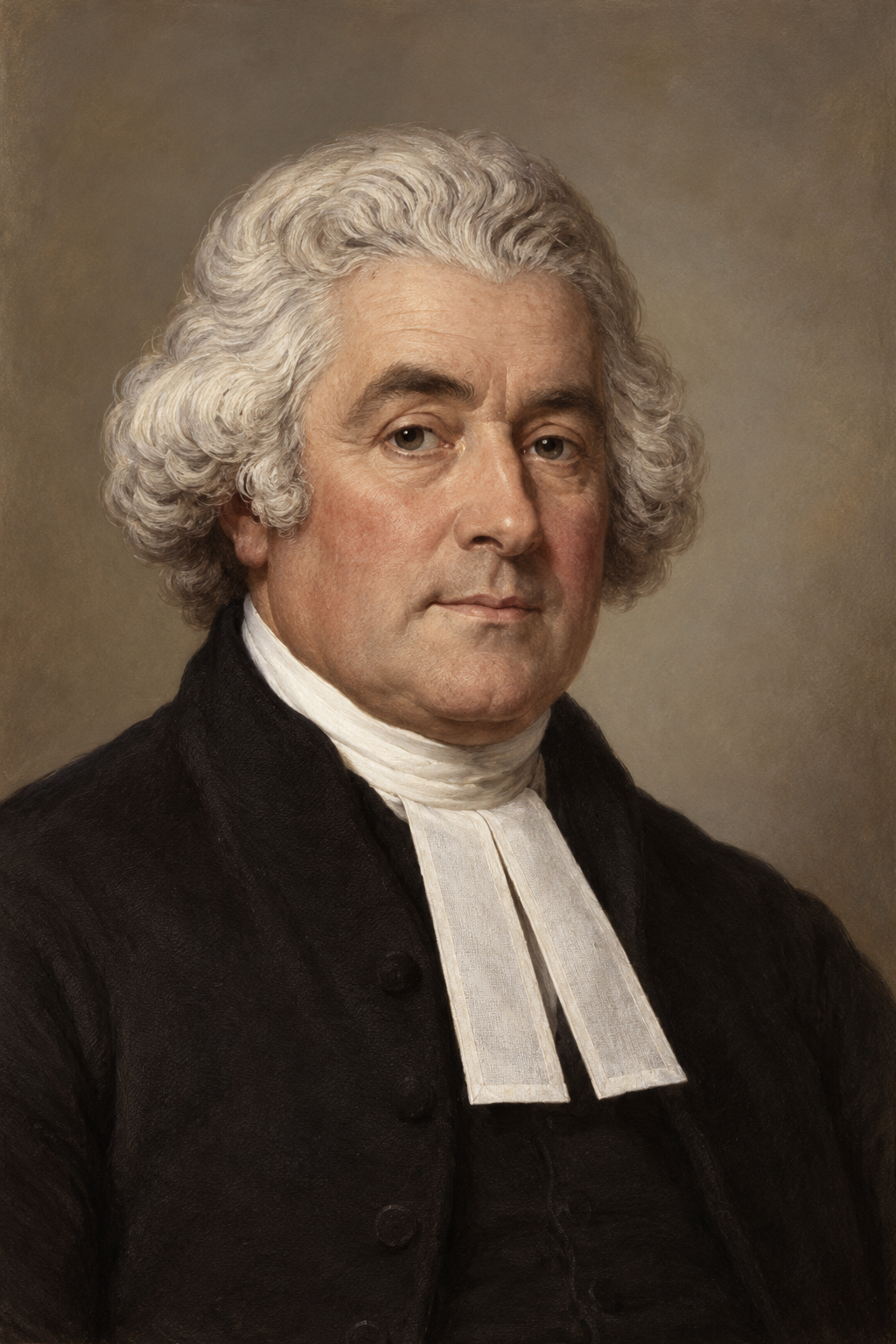
About John Stuart
John Stuart was a Pennsylvania-born Anglican priest who served Mohawk communities and loyalist settlers. Born in Paxton Township around 1740, he grew up Presbyterian before joining the Church of England. He was ordained in London in 1770. At Fort Hunter, New York, he conducted services and supervised a school. He also worked with Joseph Brant on a Mohawk translation of the Gospel of Mark, eventually printed in 1787.
His education and appointments can be followed in institutional records cited by A. H. Young. He received his bachelor’s degree in 1763 and master’s degree in 1770 from the College of Philadelphia. Ordination followed in two stages that August: first as deacon, then as priest. He later combined a military chaplaincy in Montreal with teaching and service as an evening lecturer.
His loyalty to Britain brought danger during the American Revolution. His property and church were plundered, and he was confined on parole. In 1781 he left for Quebec with his wife, children, and enslaved Black people. After several years in Montreal, he settled at Cataraqui, later Kingston, in 1785. His ministry extended beyond that settlement to Mohawk communities and other places in the region.
The surviving correspondence offers a closer view of the practical demands of his new life. The University of New Brunswick’s abstracts of his letters to William White describe concerns about property left in America, family finances, and the prospects for his children’s education. An August 1786 letter reported that he had opened a school the previous May with thirty pupils and government assistance. A later letter described a visit to a Mohawk village and church, followed by a visit to Niagara, where acquaintances tried to persuade him to settle. These records show that his work involved decisions about teaching, travel, income, and where his family could establish a home. They also preserve his continuing ties across the border: White remained a correspondent through years of political separation. The abstracts also record illness within the household and Stuart’s concern when reports of an epidemic reached him from Philadelphia, where White lived.
Stuart combined several church responsibilities. A. H. Young’s genealogical study records his service as a military chaplain, his role as a bishop’s official in Upper Canada, and his appointment as chaplain to the Legislative Council. His career belonged to a setting in which religious institutions and colonial government were closely connected. Young records his marriage to Jane Okill in 1775 and his death at Kingston on August 15, 1811. The same study supplies conflicting Old Style and New Style versions of his birth date; the catalog therefore retains an approximate year rather than presenting an uncertain conversion as an exact date.
A sermon he preached at St George’s in 1793 gives a direct account of his teaching. He defended the Church of England while insisting that religious profession required honest and just conduct. Correct belief alone, he argued, could not make dishonest dealing acceptable. He urged prayer within families, public worship, observance of Sunday, and frequent participation in communion. His discussion of communion addressed people troubled by doubts about their readiness: sincere efforts to live faithfully mattered more than setting aside a brief period of preparation while otherwise neglecting religious duties. He also urged charity, peace, and obedience to government. The sermon joined personal conduct to loyalty toward church and civil authority, reflecting the concerns of a priest whose life had been disrupted by revolution. Its promises and judgments express his religious convictions. He warned that the misconduct of professing Christians could discredit their religion. His conclusion called for lives that made belief visible through justice and love of neighbors. These exhortations describe his stated standards; they do not establish that his own actions consistently met them.
His conduct also included the coercion of slavery. Historians reproduce an 1802 letter describing his failed effort to recapture an enslaved man who escaped on skates to New York, where people refused to compel his return.
After Stuart died, his friend John Strachan preached a funeral sermon to the Kingston congregation. Strachan remembered a pastor who sought to correct faults through patience, valued his children’s education, and advised younger clergy. He described Stuart’s teaching as an important part of his service during the difficult years after leaving New York. The eulogy also presented steadfast loyalty to the Crown as a virtue and praised missionary work in language that assumed European superiority over Indigenous peoples. It is evidence of how a close colleague commemorated him, rather than an impartial verdict on everyone affected by his ministry. Its affectionate account of parish and family life belongs beside, rather than in place of, the record of people whom Stuart enslaved. Strachan’s description of him as a founding father of the provincial Episcopal Church helped express the place he held in Anglican memory.
The Anglican Church of Canada commemorates John Stuart on August 17.
Wondering how to weigh the stories and sources? Learn how to read a saint biography.