Biography
John Wesley
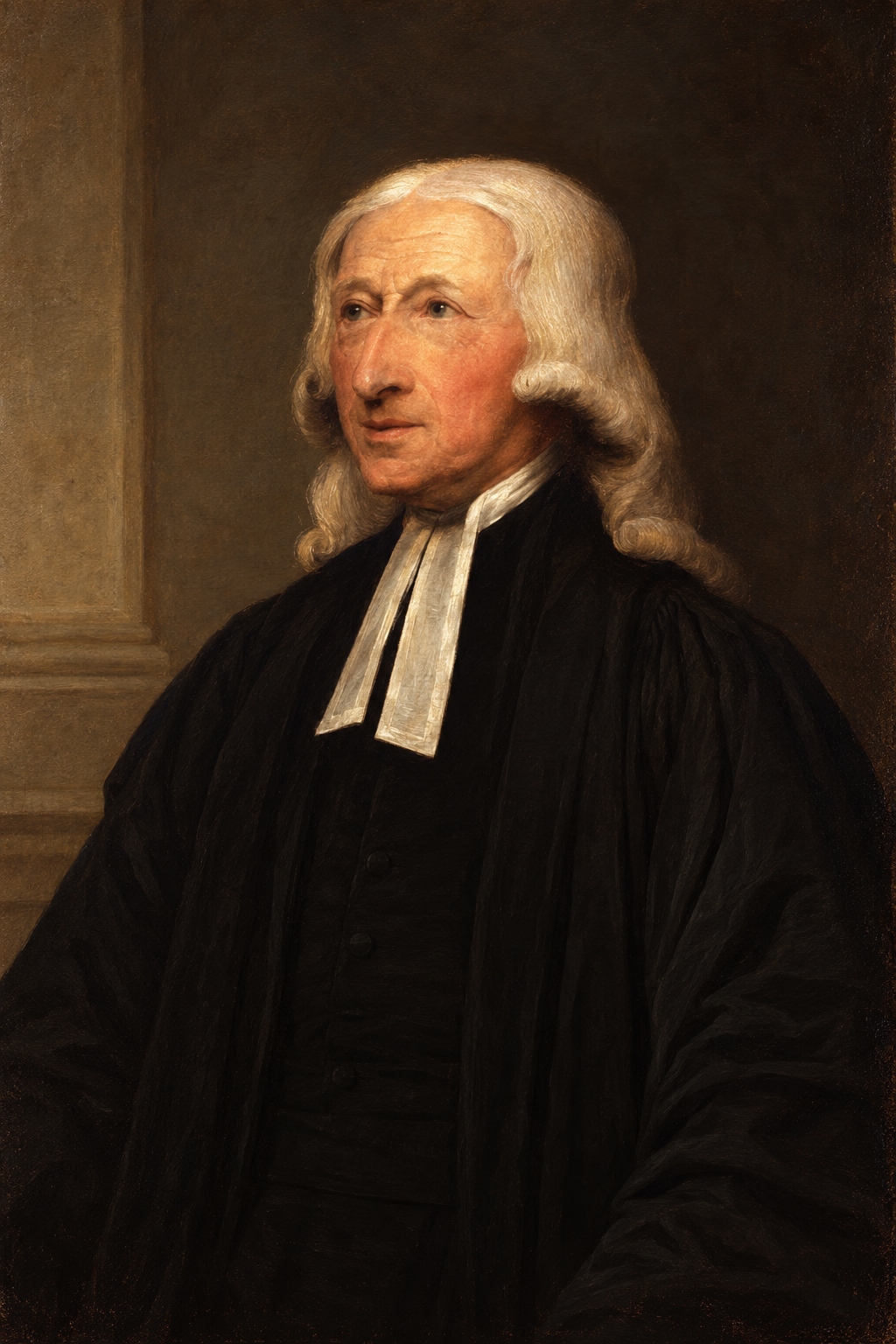
About John Wesley
John Wesley’s ministry crossed the Atlantic before the Methodist movement took shape under his leadership. In 1735 he accepted an invitation to serve the new colony of Georgia. His brother Charles went with him, as did fellow members of their Oxford religious circle. During the voyage, the faith of Moravian passengers made a lasting impression on John. He reached Georgia in February 1736 and began preaching in Savannah the following month. His hopes included a mission among Indigenous peoples, but that ambition was not realized during his stay. The experience instead exposed difficulties in his ministry and uncertainty about his own faith.
Wesley came from an Anglican clerical family in Epworth, Lincolnshire. Educated at Charterhouse and Oxford, he became a fellow of Lincoln College and was ordained priest in 1728. At Oxford he joined Charles in the religious society known as the Holy Club, whose members acquired the nickname Methodists. Study, parish ministry, and this circle of religious discipline preceded his departure for Georgia.
His work in the colony extended beyond Savannah. He visited Frederica five times while helping to supply ministry there after Charles’s departure. Relations with settlers were often strained. A particularly serious dispute followed his refusal to give communion to Sophia Hopkey Williamson, whom he had courted before her marriage. Some colonists understood the refusal as personal retaliation. The controversy brought court proceedings, and Wesley left Georgia in December 1737 believing that he would not receive a fair hearing. His departure ended a troubled colonial ministry, rather than a successful campaign of Indigenous conversion.
Back in England, Wesley experienced a profound religious change at a meeting in London’s Aldersgate Street in 1738. He subsequently became a widely traveling preacher and a prolific author. His writings helped give the growing Methodist movement its shared teaching and interpretation of Christian faith. The movement therefore depended on more than a succession of sermons delivered in person: printed teaching could guide communities and preachers beyond the places Wesley himself visited. In time, his directions would also help Methodists in the United States organize a separate church.
In his sermon The Scripture Way of Salvation, Wesley explained salvation as something already beginning in a person’s life, rather than only happiness after death. He distinguished forgiveness from the renewal of character, while holding that both depended on faith and God’s grace. Conversion did not mean that every harmful impulse had disappeared. Pride, anger, and self-will could return, making continuing repentance necessary. He described the goal of Christian growth as a life filled with love, and insisted that believers should keep examining how they lived.
That teaching had practical demands. The same sermon placed prayer, reading Scripture, communion, and appropriate fasting alongside feeding hungry people, welcoming strangers, and visiting sick or imprisoned people. Wesley did not describe these actions as a way to purchase divine favor. He treated them as necessary expressions of a faith that continued to grow, joining religious devotion with attention to other people’s needs.
His correspondence reveals how closely he followed the work of individual clergy. In a 1782 letter, he advised James Creighton to remain in a difficult Irish curacy until called elsewhere. Wesley presented Methodism as an effort to change people’s dispositions and conduct, rather than chiefly to alter opinions or forms of worship. He also asked Creighton to encourage younger preachers who might leave their work. This was Wesley’s own account of the movement’s purpose. Creighton later joined him at City Road Chapel and assisted in the 1784 ordinations connected with ministry in North America.
Wesley’s public religious life also contained sharp tensions. His Irish journeys combined preaching with supervision of Methodist societies. Although his 1749 letter to a Catholic reader sought common ground, a later letter concerning Catholic civil principles expressed distrust of Catholic political loyalty. The Dictionary of Irish Biography notes the damaging effect of that intervention on relations with Catholics. His wish for Methodists to remain within the established church did not prevent a separate denomination from emerging.
His 1774 Thoughts upon Slavery condemned enslavement and appeared in both London and Philadelphia. Bridwell Library’s account traces how American Methodist rules initially incorporated an antislavery position, then retreated from it after his death. By 1804, editions of the discipline intended for southern readers omitted the subject. Wesley’s published opposition therefore needs to be distinguished from the later conduct of churches that inherited his name and teaching.
The British Methodist Church has also acknowledged complications within the earlier movement. Its account of research by historian Clive Murray Norris reports that John received donations for Methodist work from wealthy enslavers, while businesses connected with the trade supplied further income. The institution’s financial connections cannot be erased by citing his antislavery tract. This evidence concerns the support received by his movement; it does not, by itself, establish that Wesley personally owned enslaved people.
Wesley died in London in 1791.
The Church of England remembers John and Charles together on May 24.
Wondering how to weigh the stories and sources? Learn how to read a saint biography.