Biography
John West
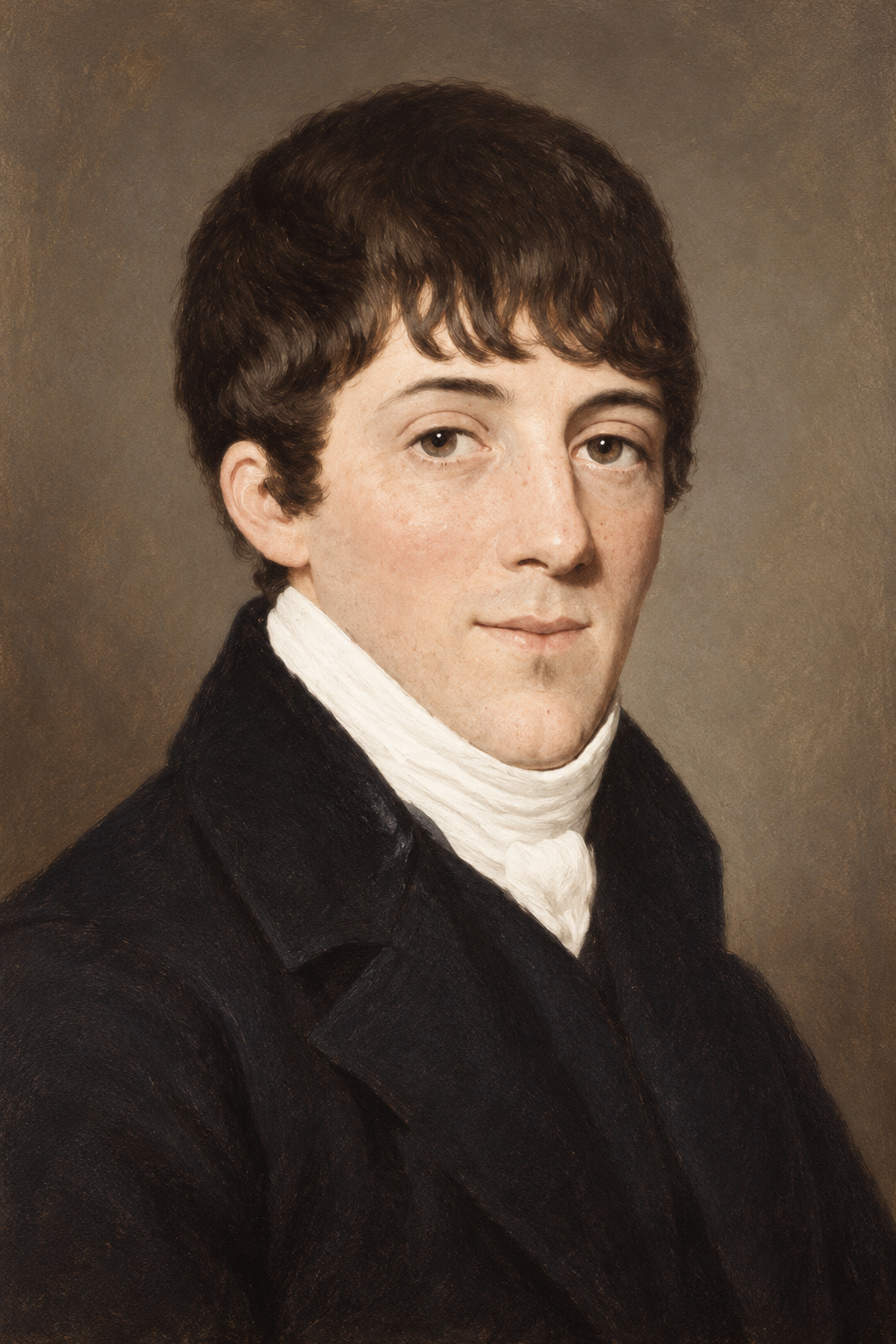
About John West
John West arrived at Red River in 1820 as a priest employed by the Hudson’s Bay Company. His ambitions extended beyond serving company employees: he wanted to establish a wider mission among Indigenous peoples. Born in Farnham, England, he had studied at Oxford and served in English parishes before accepting the chaplaincy. He sailed with the schoolteacher George Harbidge, leaving his wife and young children behind. The company and the Church Missionary Society supported different parts of his work, creating expectations that were not always easy to reconcile.
At Red River, a school in a log cabin also served as a place of worship. The Manitoba Historical Society’s account describes Harbidge teaching Christian and practical subjects there. West travelled widely, but his relationship with the settlement became strained. He opposed marriages made according to local custom and pressed company officers to formalize their relationships with Indigenous women. His refusal to baptize a child born outside marriage also caused offence. His convictions shaped the pastoral care he offered and the conditions he placed upon it.
Schooling was central to his missionary plan. The Truth and Reconciliation Commission describes how he recruited Indigenous children during his journey from Hudson Bay to Red River. One became known as Henry Budd. English instruction and Christian teaching were closely joined, while agricultural work was intended to encourage a settled way of life. The commission places these early initiatives within the history that preceded Canada’s formal residential school system. West did not operate that later national system, but his belief that education should change Indigenous children’s relationship to their families and cultures formed part of its foundations.
Families did not simply accept the school on his terms. The commission records that some parents moved to Red River to be near their children. West initially encouraged visits, then tried to limit them because he believed close family ties interfered with school routines. It also describes the tension between parents’ reluctance to part with children and the pressures of poverty or bereavement.
West’s own journal makes his aims plain. He described a father carrying his son to the canoe before their departure from York Factory, and treated that separation as encouragement for recruiting other children. In another passage, he recalled a conversation with Peguis, conducted through an interpreter. Peguis asked what would happen to the children after their schooling. West said they could return to their parents, while expressing his hope that they would adopt farming, European clothing, and Christian practice. This record preserves the questions put to him, but it remains West’s account of the exchange. It cannot be treated as an independent transcript of Peguis’s words or intentions.
West also described his departure from Red River in June 1823. He recalled a crowded farewell service, tears, and the hope that he would return. His published journal presents both his religious commitment and his interpretation of the community’s response. He wrote that settlers called out wishes for a safe voyage as he passed.
The return did not happen. His employment ended in 1824, after disagreements over his ministry and relations with the company. Later journeys took him through eastern North America on behalf of religious societies. He eventually continued parish work in England and died at Chettle in 1845.
The Manitoba Historical Society records his continuing interest in education and missionary work after leaving Red River. He published an account of his northern residence and later a journal of travel in New Brunswick, Nova Scotia, and Upper Canada. In England he served at Chettle, with the nearby parish of Farnham added later, and devoted attention to schooling among Roma communities. His short stay at Red River was therefore one part of a longer clerical career.
Another record of his encounters survives in the Indigenous objects he collected. Historian Laura Peers studied beaded bags, a pipe bowl, a bear-claw necklet, and other pieces acquired during his years at Red River. Their early date makes them valuable evidence of the region’s material culture. Passed through his family, the collection was donated to St John’s Cathedral in Winnipeg in 1956. Peers emphasizes that the objects had meanings for their original owners that West did not necessarily understand. Some acquisitions involved exchanges, while others may have involved gifts, diplomacy, or hopes of assistance. Those possibilities should not be flattened into one explanation. The collection preserves the work of Indigenous makers as well as evidence of the missionary who gathered it. Its history calls for attention to both sides of those encounters, including the unequal power and differing religious assumptions that shaped them. Peers identifies influences from Ojibwa, Assiniboine, northern Cree, Great Lakes, and Plains traditions. The pieces show connections across communities, rather than a single uniform culture defined by an outsider.
The Canadian Book of Common Prayer commemorates West on December 31.
Wondering how to weigh the stories and sources? Learn how to read a saint biography.