Biography
José Calasanz Marqués
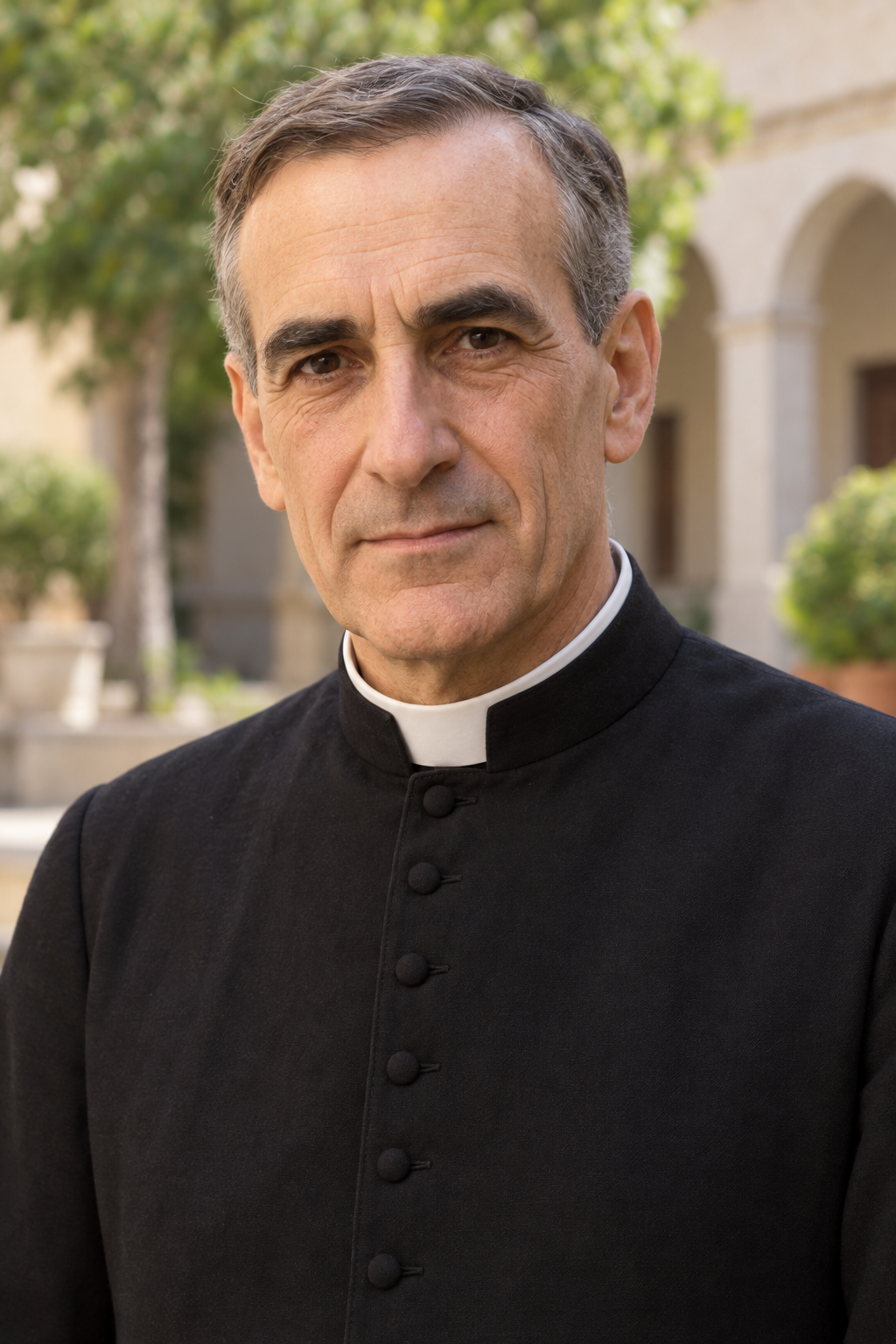
About José Calasanz Marqués
José Calasanz Marqués was a Spanish Salesian priest whose work included schools in Catalonia, missionary service in Cuba and responsibility for religious communities in South America and Spain. His years in the Caribbean placed him among the early Salesians working with poor young people there. He later returned to Spain as a provincial superior. He was killed in Valencia during the religious persecution accompanying the Spanish Civil War and is recognized by the Catholic Church as a blessed and martyr.
He was born in Azanuy, in the province of Huesca, on November 23, 1872. His parents died while he was still a child. His older sister Dolores helped bring him to Barcelona, where Salesian supporters enabled him to study at Sarriá. There he encountered John Bosco during the founder’s visit in 1886. The school that received him became the setting of his own religious formation, and he made his profession as a Salesian in 1890.
He was ordained a priest in 1895 and worked under the guidance of Filippo Rinaldi, the future Salesian rector major. In 1903 he became director of a new educational undertaking at La Esmeralda. This developed into the Salesian school at Mataró, where he spent years as director before his assignment overseas. His later missionary work followed substantial experience in the organization and daily life of schools, rather than beginning immediately after his own training.
A contemporary notice in the Salesian Bulletin records his departure for Cuba aboard the Antonio López, which left Barcelona on January 25, 1917. He traveled with the priest Esteban Capra and two Salesian brothers to establish a new house at Camagüey. The brief announcement presents the undertaking as a shared mission and asks for news of its progress.
The Cuban project grew from the initiative of Dolores Betancourt Agramonte, a woman from Camagüey who wanted an educational institution for poor children in her city. She approached the Salesian leadership in Turin in 1915. The Cuban bishops’ conference describes the arrival of Calasanz and his companions in 1917 and their early use of the parish of La Caridad. Its sacristy became a classroom for about thirty children from the neighborhood while plans for a school were being developed.
Betancourt’s proposal preceded their arrival, and Bishop Valentín Zubizarreta entrusted them with the parish where instruction began. The work combined religious service with an effort to provide education to children who had few resources. The first classroom was an adapted parish space, rather than a completed institution ready to receive its pupils.
Calasanz later received responsibility for the Salesian province of Peru and Bolivia. Historian David Franco Córdova distinguishes his exploratory visit to Peru in 1922 from his arrival as provincial in 1923. The shortage of personnel and difficulties in the novitiate demanded attention. In 1924 he traveled to Europe to seek additional staff. His letters show that obtaining people for the schools and workshops was a practical concern, not merely an administrative formality. The province’s needs exceeded the personnel readily available.
The same archival history notes the limits of some titles attached to his service. Although officially appointed parish priest of Magdalena del Mar, he could not personally carry out that parish’s daily ministry while overseeing the wider province. Fortunato Chirichigno did that work. Forty surviving letters to Mauricio Arato provide important evidence for Calasanz’s leadership, particularly because records from that period are missing from the provincial council’s minutes. The distinction helps preserve the contribution of colleagues alongside the superior’s own responsibilities.
The early Cuban houses belonged to a wider network of Salesian communities. The congregation’s historical account explains that they initially shared provincial oversight with Tarragona in Spain. In 1924 they became part of the Mexican province, whose headquarters later moved to Havana because of religious persecution in Mexico. These changes followed Calasanz’s own departure for work in South America. They place his years in Cuba within an undertaking that continued through successive communities and changing administrative arrangements, rather than ending when one missionary received a new assignment.
After returning to Spain, he became provincial of the Tarraconense province in 1925. In July 1936 he was with Salesians making a retreat in Valencia when the community was arrested. The Salesian account describes a release followed by renewed detention. Calasanz was killed on July 29, 1936.
John Paul II beatified the group that included Calasanz on March 11, 2001. In the ceremony’s homily, the pope described the Church’s judgment that these men and women had died for their faith, and called for remembrance that rejected violence and resentment. Within that Catholic recognition, Calasanz’s significance includes both his death and the preceding work of education and religious leadership. His Cuban service remains part of the history of a mission begun through the cooperation of local benefactors, church leaders and a small community of teachers.
Wondering how to weigh the stories and sources? Learn how to read a saint biography.