Biography
José López Piteira
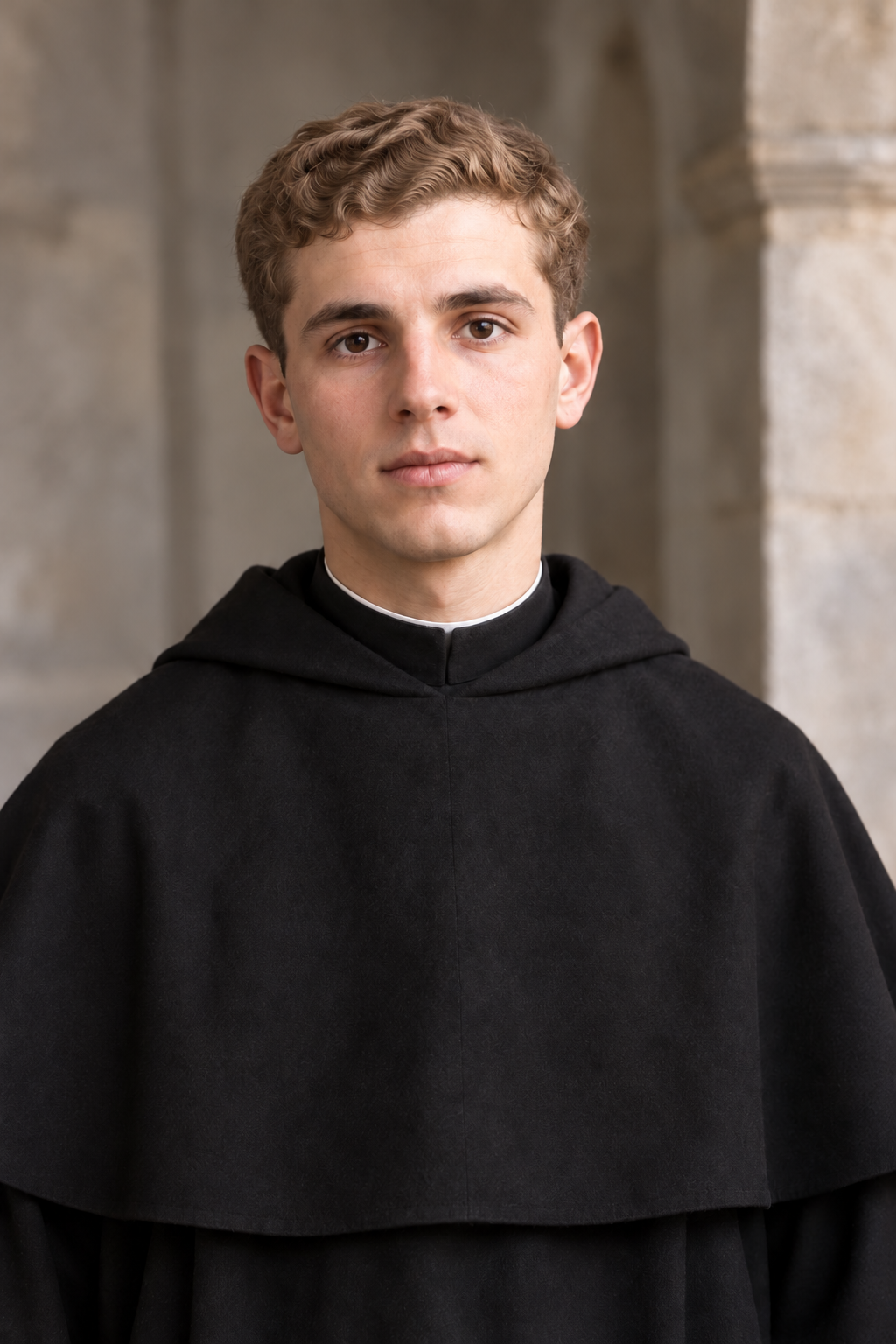
About José López Piteira
José López Piteira was born in Cuba to parents from Galicia who had emigrated from Spain. A Cuban diocesan account places his baptism in the parish of San José de Arroyo Blanco in November 1913. It reports that his parents took him to Spain while he was still a young child.
The former parish archivist Miguel Ángel Fernández González traces the family’s residence in Jatibonico through property records. His account also identifies gaps in the evidence for José’s childhood and the guidance that led him to the Augustinians. Pablo Panedas discusses conflicting birth records, citing a civil entry for February 2, 1912 and a later correction to the baptismal record. His account helps explain why some church publications gave a different date.
At sixteen he entered the Augustinian community of Our Lady of Good Counsel in Leganés, near Madrid. He continued his formation at San Lorenzo de El Escorial. Fernández González describes studies in philosophy at Leganés and El Escorial, followed by theology at the latter monastery. He made his simple religious vows in August 1929 and his later profession in July 1934. The diocesan account records his ordination as a subdeacon in April 1935 and subsequently as a deacon; he did not reach priestly ordination. His ordination as a deacon followed in September 1935.
On August 6, 1936, López Piteira was arrested with members of his religious community. Relatives approached Cuban consular officials and Spanish authorities in an effort to secure his freedom through his Cuban citizenship. The diocesan account remembers his decision to remain with his companions. He was killed with other Augustinians on November 30, 1936.
Fernández González identifies the place of imprisonment as San Antón in Madrid and the place of execution as Paracuellos del Jarama. He attributes the account of López Piteira’s decision to remain with his community to Natalio Herrero, who had known him since his novitiate. López Piteira was beatified in Rome on October 28, 2007, among a group recognized by the Catholic Church as martyrs of religious persecution in Spain.
The apostolic letter of beatification names him as a deacon and theology student among those killed at Paracuellos on November 30, 1936. It authorizes an annual November 6 celebration in the places and forms permitted by church law. That liturgical observance is distinct from the date of his death.
Wondering how to weigh the stories and sources? Learn how to read a saint biography.