Biography
José María de Yermo y Parres
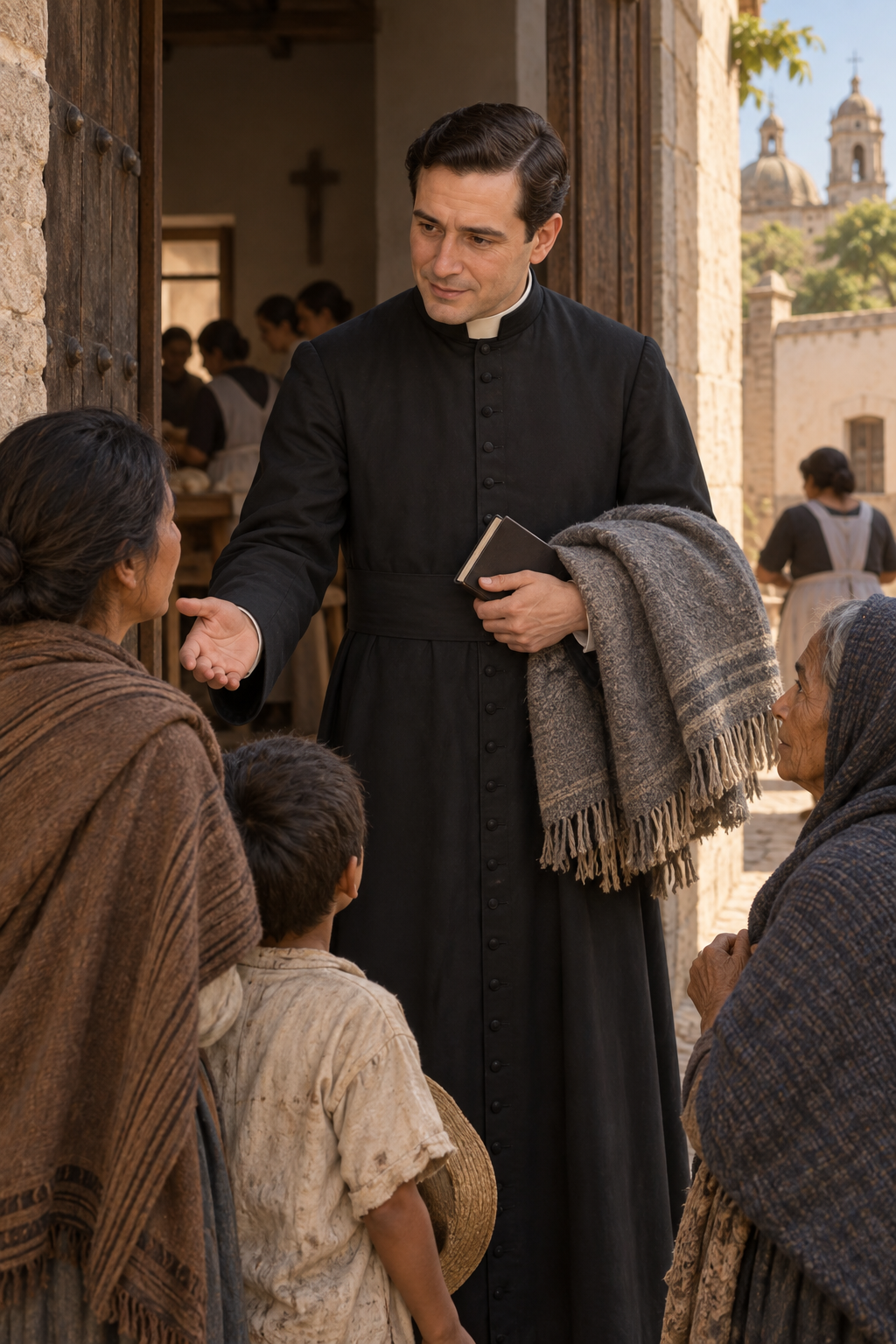
About José María de Yermo y Parres
José María de Yermo y Parres was born on 10 November 1851 at Jalmolonga in the State of Mexico. A Vatican cause decree names his parents as lawyer Manuel de Yermo y Soviñas and María Josefa Parres. The precise birth and family information is documented, while the later story of his vocation comes from retrospective accounts. His childhood in a household with resources matters for understanding the choices he later made about service to people with far less.
A reference entry in the *New Catholic Encyclopedia* describes his early education by tutors and his entrance into the Vincentian Congregation of the Mission while still young. The institution gave him a setting for study and a tradition of service among poor people. His path was not continuous: he later left the Vincentians and finished preparation for diocesan priesthood. The change should not be mistaken for abandoning religious life, nor should a brief encyclopedia entry be made to settle every reason behind his decision.
A Vincentian priest's account traces Yermo's formation through the Congregation of the Mission and then the seminary at León. His path was interrupted by poor health and by a difficult decision to leave the congregation, yet he continued toward priestly ordination. The experience with a religious community informed his later work with women who became the Servants of the Sacred Heart. The account is written from within the Vincentian tradition, so it illuminates that influence without supplying a transcript of his private vocational deliberations.
The Archdiocese of León records his ordination in its cathedral on 24 August 1879. Its historical chronology places the event within a young diocese still building its institutions. He had prepared through study and church service, then accepted priestly work among the people of León. The archdiocesan record is especially useful for the precise date and location, while later biographies supply the larger account of his assignments. It is not necessary to invent a dramatic final decision immediately before ordination to explain his perseverance.
Yermo preached and served in León after ordination. A Vincentian biographical account says he held cathedral offices before the new bishop assigned him two chaplaincies on the city's outskirts. One was El Calvario, where he later began a shelter. The account describes his priesthood from within the Vincentian tradition; it helps establish the sequence of assignments without proving his private response to each change.
The four women were not incidental helpers in a priest's solitary project. A reference entry describes them as the nucleus of the congregation that would staff the shelter and later works. The practical needs were varied: sheltering people, preparing food, maintaining a household and finding funds. Yermo's role was important, but the sisters made the service repeatable. The earliest house also had the assistance of a doctor, according to the reference. This beginning is best understood as the work of a small team and its neighbors.
On 18 June 1888 León suffered a severe flood. The archdiocese's chronology records widespread destruction of homes. The church-history dictionary says Yermo and the sisters opened shelter space and sought aid for displaced residents. That is a concrete instance of their community adapting to a public emergency. The available account does not prove a precise count of people they housed, so the event is better told through the actions it documents. Disaster relief also placed the young congregation within a network of families, donors and local institutions.
The community did not stay confined to León. The dictionary dates the sisters' arrival in Puebla to March 1888 and Yermo's own move to 1889. It describes new houses and services for older people, women and those needing medical care. These were different forms of support in distinct local settings, not one generic institution reproduced unchanged. The sisters' movement and Yermo's later move should remain separate in the chronology. By the 1890s, Puebla had become a major setting for both his work and the congregation's organization.
John Paul II's beatification letter singles out an undertaking in Puebla known as Christian Mercy, directed toward women in difficulty, and educational work among Tarahumara communities in northern Mexico. The document is an official statement of what the Church recognized in his life; it is not a measure of the experiences of every woman or Indigenous student. Such work should be described with attention to the people served and to the women religious who carried it forward. A later judgment of sanctity does not erase the unequal conditions in which the programs operated.
A study of Catholic circles in late-nineteenth-century Puebla places Yermo among clerics active in local education and charitable institutions. This context matters because his foundations required more than personal generosity. Buildings, permission, teachers, nurses, donors and public legitimacy connected them to wider civic and church networks. A historical account of association life helps avoid making every school or home a feat accomplished by one founder alone. It also situates his work in the complex Catholic response to social change in Mexican cities.
Yermo died in Puebla de los Ángeles on 20 September 1904. John Paul II's canonization decree recounts the end of his life and formally records the Church's later judgment of him. The decree says the community continued its service to poor people, children, older residents and women in difficulty. Those groups are not interchangeable. Their needs shaped different houses and forms of care, and the women who sustained them remain part of the legacy. His death did not end the institution he had helped establish.
John Paul II beatified him in Mexico City on 6 May 1990. The beatification letter names 20 September for his liturgical remembrance. Ten years later, on 21 May 2000, the pope canonized him in Rome. These dates can be checked in the pontiff's own acts rather than inferred from a saint list. The ceremonies express the Church's judgment of sanctity; a historical biography still has to distinguish that judgment from particular anecdotes whose first witnesses have not been located.
The canonization decree describes a community that continued its service after Yermo's death. Its work reached children, older residents and women in difficulty through institutions that depended on the daily labor of the sisters. His initiative remains visible, but the congregation's history is a collective one. Public records establish dates, institutions and broad forms of service more securely than later stories about a founder's private motives. Reading the source in that way gives the women who sustained his work a place in the account.
Wondering how to weigh the stories and sources? Learn how to read a saint biography.