Biography
Joseph of Leonessa
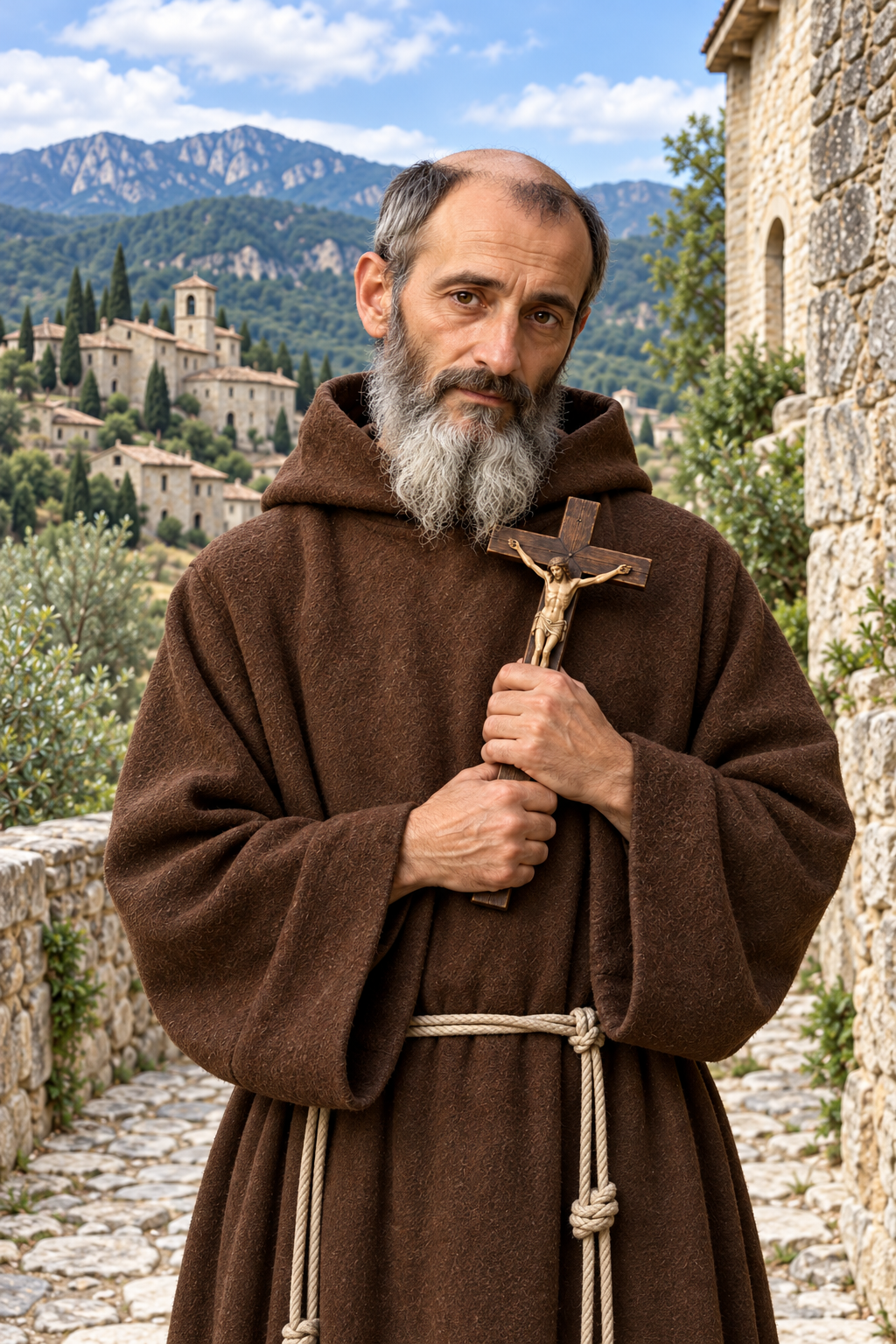
About Joseph of Leonessa
Joseph of Leonessa was a Capuchin priest remembered for preaching in small communities and caring for people in poverty. He was born at Leonessa on January 8, 1556, and entered the Capuchins as a teenager, taking the religious name Joseph. Ordained in 1580, he began a ministry that would take him from central Italy to Constantinople and back again.
After his parents died, an uncle helped continue his education at Viterbo. The New Catholic Encyclopedia identifies the uncle as a professor. Joseph’s preparation for religious life thus included family support for learning, before his later studies within the Capuchin order.
His early vocation required study as well as determination. Costanzo Cargnoni’s account describes his education in Viterbo and Spoleto, his interest in Bonaventure and his preparation in Scripture and theology. Joseph felt drawn to contemplative solitude, yet believed that what he received in prayer should be shared. He preferred preaching to farmers, shepherds and children in villages and mountain towns rather than seeking the prominent pulpits of large cities.
His writings give this preparation a personal voice. Cargnoni identifies a Latin statement written before ordination and three long letters composed near the end of his life. Across that interval Joseph affirmed attachment to the Church’s teaching. These texts place his public activity beside a sustained concern for the faith he professed.
In 1587 he joined the Capuchin mission in Constantinople. The friars cared for Christian prisoners, and Joseph continued visiting them despite the danger of epidemic disease. After other members of the mission died, he tried to enter the sultan’s palace in 1589. He was arrested, tortured and eventually expelled. Dario Busolini notes that this famous episode is poorly documented: Joseph did not leave a detailed account, while miraculous explanations of his survival circulated. The uncertain circumstances of his release should not be presented as an independently verified supernatural rescue.
Back in Italy, Joseph’s preaching was accompanied by practical help. He organized grain stores and charitable lending institutions, shelters for travelers and small hospitals. Cargnoni describes him finding clothing and shoes for people in need, washing them, tending wounds and sharing food received as alms. He also visited prisoners and worked to reconcile feuding families. These acts gave his preaching a concrete form: the people who heard about charity could also receive it through his hands.
The Capuchin office records repeated preaching journeys through Umbria, including Lenten assignments in Otricoli, Borbona and other small communities. In 1602 Bishop Napoleone Comitoli of Perugia invited him to preach throughout his diocese. His movements were therefore connected with local church responsibilities, rather than simply solitary wandering. The office also reproduces a prayer from 1580 in which Joseph asks forgiveness for possible mistakes in his rapidly written notes. He distinguishes careless expression from deliberate opposition to the Church. This concern for what his words might communicate provides another perspective on the preacher whose later reputation often centers on extraordinary events. The dicastery recalls that he traveled between Italian towns on foot.
His later years also included a painful dispute. Busolini records that Joseph claimed his brother’s inheritance in 1609, intending to use it for charity, but his brother-in-law opposed him in court. The question later arose during the beatification process because of his vow of poverty. The incident complicates a simple picture of effortless harmony and shows that charitable intentions could still lead to conflict.
Busolini also describes Joseph’s attention to libraries in Capuchin houses. After his death, Pasquale Rigo painted his portrait for Amatrice’s civic authorities. The painting and surviving preaching manuscripts preserve material traces of a ministry that depended on study as well as speech.
A sermon preserved in the Capuchin liturgical office offers a more direct view of his teaching. It asks Christians to make the Gospel visible in their conduct, comparing a person’s life to a book others can read. It also urges preachers to guide people gently and recognizes that the same approach will not reach everyone. Read alongside his practical care, this teaching connects spoken faith with the way a neighbor is treated.
Joseph died at the Capuchin friary in Amatrice on February 4, 1612.
The New Catholic Encyclopedia records that an operation preceded his death from cancer. It also notes his initial burial in Amatrice and the later transfer of his remains to Leonessa. The two towns thus retained different connections with his final years and subsequent remembrance.
Clement XII beatified him in 1737, and Benedict XIV canonized him on June 29, 1746. His feast is February 4.
In 1952 Pius XII named him patron of the Capuchin missions in Turkey.
Paul VI confirmed him as principal patron of the city and municipality of Leonessa in 1967. The declaration points to his courage and concern for others as examples for the community that continues to honor him.
Wondering how to weigh the stories and sources? Learn how to read a saint biography.