Biography
Joseph Pignatelli
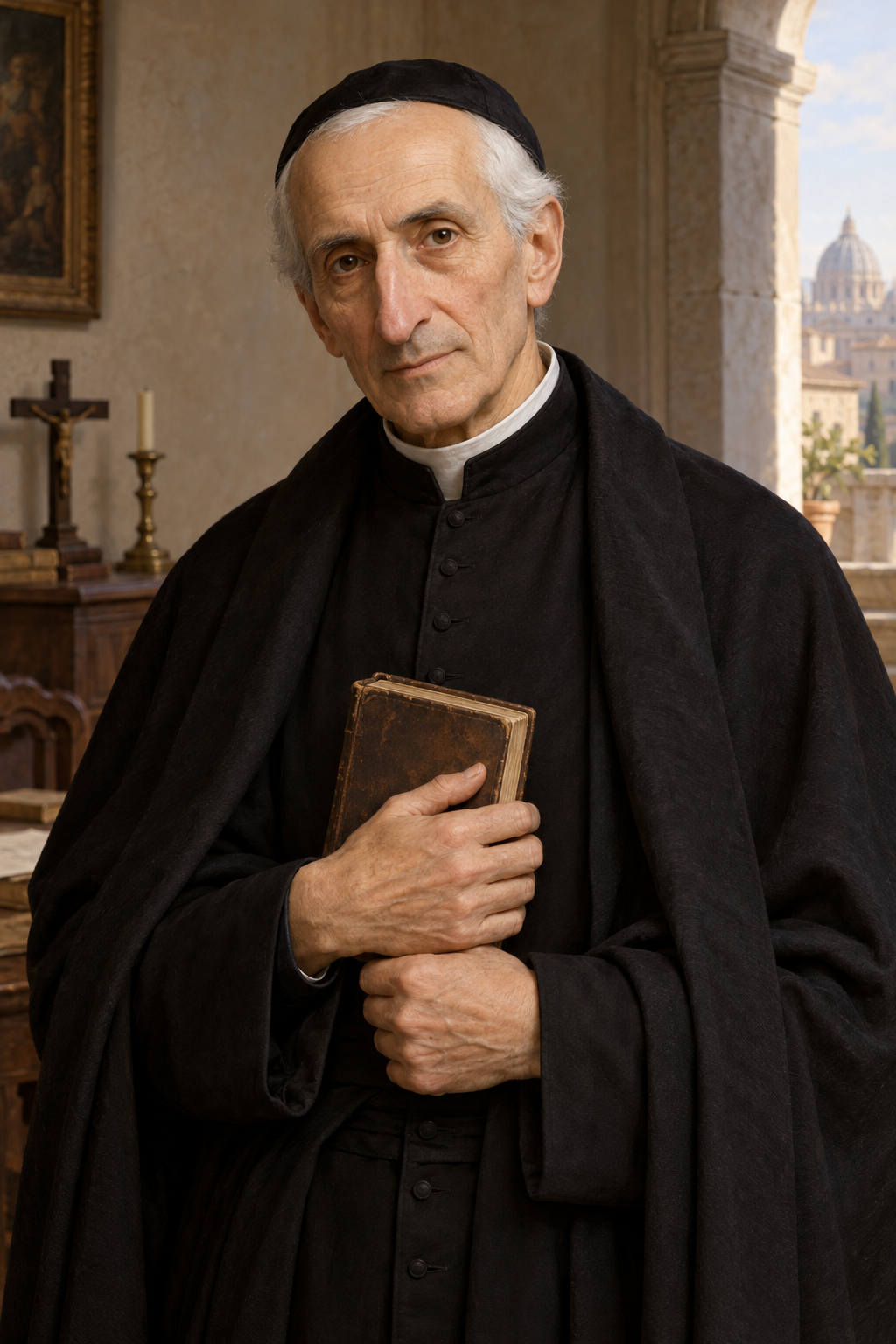
About Joseph Pignatelli
Joseph Pignatelli helped hold a scattered religious community together through decades of exile. Born in Zaragoza on December 27, 1737, he came from a powerful family with connections in Spain and Italy. Those resources later helped him support fellow Jesuits who had lost their homes and livelihoods.
He entered the Jesuit novitiate at Tarragona in 1753 and was ordained in 1762. In Zaragoza he taught grammar and visited prisoners, including people condemned to death. In April 1767, Charles III expelled the Jesuits from Spanish territories. Joseph chose to share their exile rather than seek an exception through his family.
The journey gave that choice a harsh practical meaning. Wenceslao Soto Artuñedo describes the Jesuits leaving Salou aboard cargo vessels and being refused entry at Civitavecchia. They were turned away again at Bastia. Ships gathered off Corsica while passengers endured heat, seasickness and shortages, unsure where they could land. Joseph and the Aragonese Jesuits finally reached Bonifacio in August, after nearly four months at sea. When his brother urged him to leave the Society, he refused.
Their refuge was temporary. After France took control of Corsica in 1768, the Jesuits were expelled again and eventually settled in Ferrara. In 1773, Clement XIV suppressed the Society of Jesus. Joseph moved to Bologna, where he maintained contact with former companions and sought a way for their common life to begin again.
Exile did not affect every former Jesuit equally. Historian Girolamo Imbruglia notes that Joseph’s rank and pension allowed him a comfortable life in Bologna, with books, paintings and university study. He also used his resources and family assistance to help companions in severe poverty. His service depended partly on privileges that many of those he supported did not possess.
During the years of suppression, Joseph also built a substantial intellectual life. Miguel Varela’s historical account describes a library of more than three thousand volumes, purchased from France, England and Germany and made available to former Jesuits. Joseph collected material about the Society’s history and encouraged companions to pursue scholarship. His interests included mathematics, literature, music and painting. Varela also records his visits to Bologna’s churches and galleries to compare paintings. The possessions listed after his death included musical scores, bound maps and a solar telescope. His study extended to political questions, including a short work on Dutch government.
A possible path forward lay with the Jesuits who had continued to exist in the Russian Empire. Joseph renewed his vows in 1797 and became novice master at Colorno two years later. In 1803 he was appointed provincial in Italy. These steps reconnected older members and prepared new ones for religious life.
At Colorno, formation involved both ordinary work and shared spiritual practice. Varela records Joseph joining household chores, including washing dishes and sweeping. Returning Jesuits and new members alike undertook the Spiritual Exercises. Joseph arranged for copies of the Rules and Constitutions to be printed and distributed. Former members seeking readmission were tested rather than admitted automatically; previous service did not entitle them to exemptions that disrupted common life. These details show how rebuilding took shape within a household.
His work also included bringing food and comfort to imprisoned people.
Rebuilding also brought disagreement. Imbruglia describes Joseph’s insistence on continuity with the Society’s earlier structures and training, alongside disputes with Jesuits who favored other approaches. Some companions criticized his preference for fellow Aragonese. The work that later earned him a reputation as a restorer was therefore contested within the community itself.
Historian Niccolò Guasti places these disagreements within the wider rebuilding of Jesuit communities at Parma, Naples, in Lazio and Sicily. His study identifies younger Italian priests associated with Gaetano Angiolini as opponents of the Spanish exiles’ approach to the restored order.
Imbruglia records that Joseph signed a declaration of loyalty to the new Napoleonic regime in June 1806. The Jesuits were nevertheless expelled the following month.
A renewed community in Naples was displaced again in 1806. Joseph spent his final years in Rome and died on November 15, 1811. He did not live to see the Society’s general restoration in 1814.
At his canonization on June 12, 1954, Pius XII remembered both his care for displaced companions and his preparation of new members. The pope presented him as a link between the Society before its suppression and the community that emerged afterward. This remembrance centers on patient work whose full results he never saw.
The Dicastery lists his commemoration on November 15.
The Jesuits and the Archdiocese of Zaragoza celebrate him on November 14.
In a 2020 reflection, Australian Jesuit provincial Brian McCoy named him patron of asylum seekers and refugees. McCoy connects his memory with companionship, care for others and attention to people on society’s margins. That devotional association gives his history of displacement a continuing place in prayer and service.
Wondering how to weigh the stories and sources? Learn how to read a saint biography.