Biography
Juan del Castillo
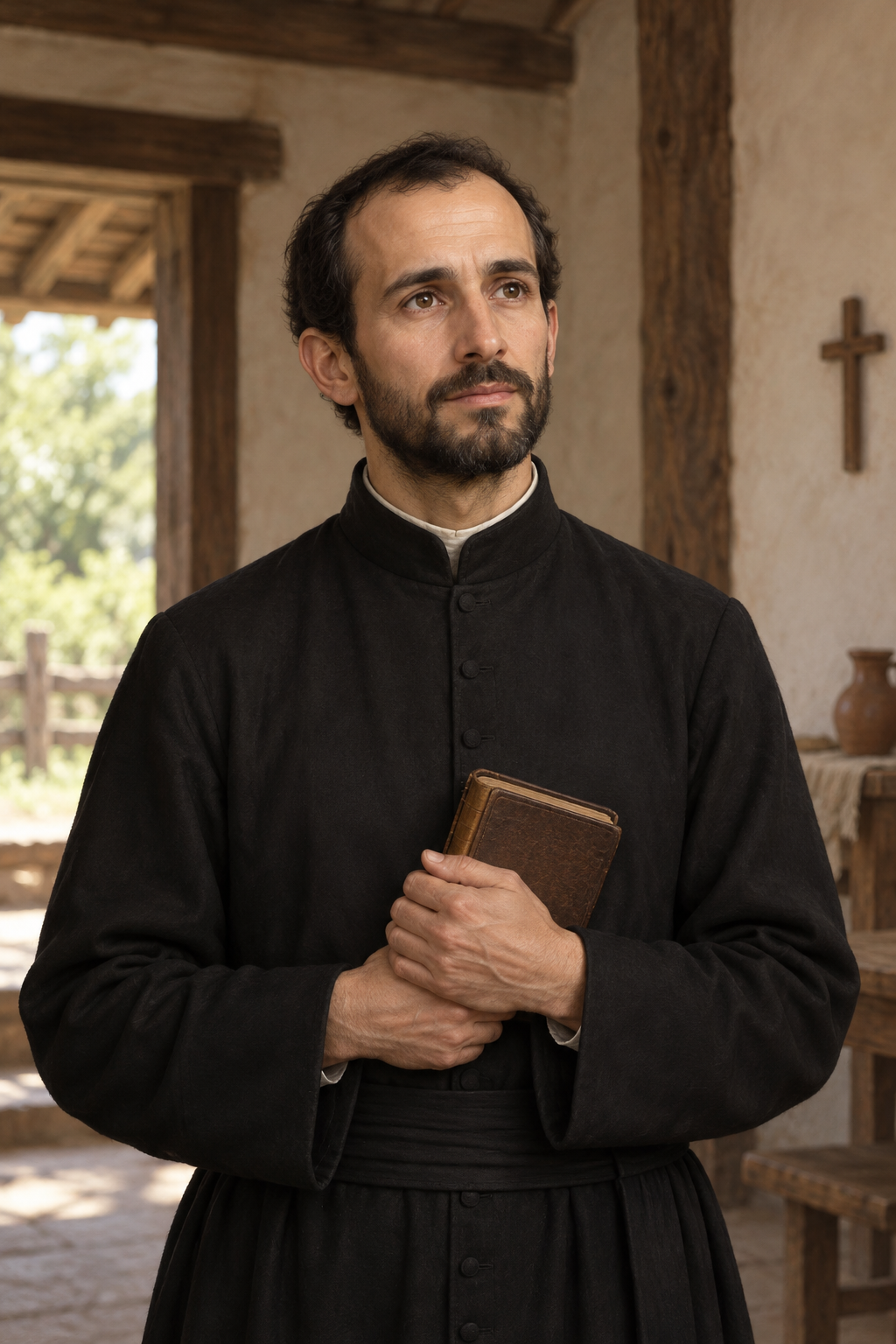
About Juan del Castillo
Juan del Castillo was a Spanish Jesuit priest whose brief missionary life ended in the Guaraní missions of South America. He came from Belmonte and studied law at Alcalá before entering the Society of Jesus in Madrid in 1614. In 1616 he sailed for South America with a group that included Alonso Rodríguez, another future missionary and martyr.
His training took him through several Jesuit institutions. The Real Academia de la Historia’s biographical entry records studies at Córdoba and a period teaching grammar in Concepción, Chile, before he returned to theology. After ordination he learned Guaraní and worked in the missions. These years of teaching and language study preceded the assignment for which he is chiefly remembered.
In August 1628 Roque González established the mission of Asunción de Ijuí and left Juan in charge. The Jesuit biography describes him organizing the new community while Roque continued establishing another mission. His service there lasted only a few months.
The expansion of the missions provoked resistance from Ñezú, a Guaraní religious and political leader. Historian Paulo Rogério de Melo Oliveira places this opposition within a struggle over authority, marriage practices and the preservation of an existing way of life. His study also cautions that the surviving accounts were written by Ñezú’s opponents, whose religious explanations often obscured the Indigenous perspective.
Roque González and Alonso Rodríguez were killed at Caaró in November 1628. Juan was killed soon afterward at Asunción de Ijuí. The academic biography describes attackers taking him outside the settlement, beating him to death and burning his body. Indigenous Christians later recovered his remains and brought them to Candelaria. The exact day is reported differently: the academic entry gives November 17, while the international Jesuit biography gives November 16.
The violence did not end with the missionaries’ deaths. Oliveira describes a retaliatory campaign involving Spanish forces and Indigenous Christian allies, followed by executions of captured participants. Ñezú himself escaped. This wider history prevents the episode from being reduced to a simple division between missionaries and an undifferentiated Indigenous population.
Eloy Mealla’s account for the Universidad del Salvador likewise distinguishes the hostility of particular Indigenous leaders from the missions’ relationships with other communities. He places the missionaries’ deaths alongside their conflicts with colonial interests that sought Indigenous labor.
John Paul II canonized Juan, Roque and Alonso together at Asunción on May 16, 1988. The pope recalled Juan’s origins in Belmonte and presented the three men’s remembrance within the Christian life of Paraguay.
The Jesuits celebrate the three martyrs on November 16; their regional website also records November 17 as the wider Church observance. These liturgical dates should be distinguished from the conflicting accounts of Juan’s death.
His memory also returned to Concepción, where he had taught. In a 1998 parliamentary tribute, José Miguel Ortiz Novoa described the recently established Fundación San Juan del Castillo and called Juan a patron of its educational and social works. This is a documented local association, rather than evidence of a universal patronage.
Wondering how to weigh the stories and sources? Learn how to read a saint biography.