Biography
Leopold Mandić
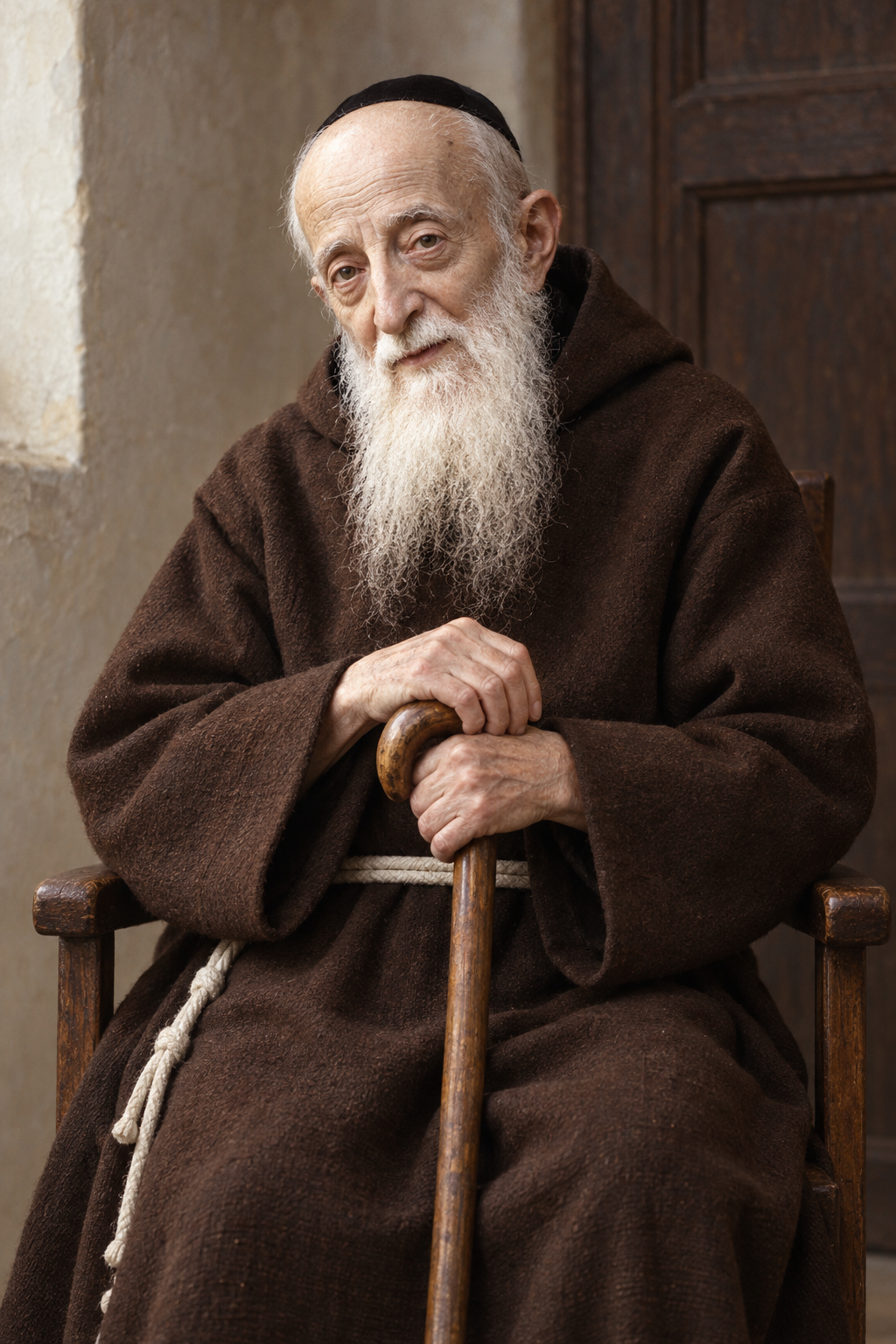
About Leopold Mandić
Leopold Mandić was a Capuchin priest remembered especially for hearing confessions in Padua. He was born on May 12, 1866, at Castelnuovo di Cattaro, now Herceg Novi in Montenegro, into a Croatian Catholic family. His baptismal name was Bogdan Ivan. The Capuchins working in his hometown helped awaken his interest in religious life, and he entered their formation program in Udine.
He received the name Leopold when he took the Capuchin habit at Bassano del Grappa in 1884. His studies continued in Padua and Venice, and he was ordained priest on September 20, 1890. The canonization decree records assignments in several houses of the Venetian province, including responsibility for the small community at Zara. His vocation developed through the ordinary appointments and obedience of a friar, rather than through an independent undertaking of his own.
One hope persisted through these changes: he wanted to work for the reunion of Eastern Christians with Rome. His own statements, preserved in the canonization decree, speak of their return to Catholic unity. That historical language matters. His aim was not the modern idea that doctrinal differences could simply be disregarded; he understood unity within the Catholic faith and offered his prayer and ministry for it.
Physical frailty and a speech difficulty limited the preaching and missionary work he hoped to undertake. John Paul II’s canonization homily presents his response as a decision to serve the people who came to him. The small room where he heard confessions became the setting of that service. The pope emphasized patient counsel, discretion and prayer, rather than public achievements, theological books or institutions founded in his name.
His gentleness was not always welcomed by others. The shrine’s biography records his work teaching the Church Fathers and directing young Capuchin students in Padua. Some considered his approach too lenient. It suggests that this criticism probably contributed to his removal from teaching in 1914, after which confession became his principal assignment. The explanation remains a probability in the source, not an established account of every superior’s motive.
The First World War interrupted his ministry. Because he retained Austrian citizenship and would not adopt Italian citizenship, he was sent into confinement in southern Italy. The canonization decree places this episode within the war and records his eventual return to Padua. The experience belongs to the political vulnerability of a friar living away from his native region, as well as to the story of his religious obedience.
The Capuchin historian Costanzo Cargnoni describes the physical demands of long days in a small confessional, uncomfortable in both winter and summer. He also preserves memories of a priest who tried to put embarrassed visitors at ease. In one reported incident, a man mistakenly sat in the friar’s chair; Leopold knelt beside him rather than drawing attention to the mistake. The story conveys the welcome remembered by his penitents, although it reaches us through a later devotional account.
Cargnoni’s account also resists an entirely gentle caricature. It recounts a severe rebuke to a man who defended his conduct, followed by an embrace when the man broke down. Such episodes reflect an older penitential culture and should not be presented as instructions for counseling vulnerable people today. The broader account joins mercy with repentance; it does not describe a ministry in which every difficult question was ignored.
Leopold died in Padua on July 30, 1942. Paul VI recalled his affection both for his Adriatic homeland and for the people among whom he had lived in Italy. At the beatification on May 2, 1976, the pope presented that double attachment as a sign of friendship rather than a reason for division. He also described Leopold’s concern for Christian unity as an anticipation of later ecumenical hopes.
John Paul II canonized him on October 16, 1983. The homily placed his life within the Church’s reflection on reconciliation and penance, then being discussed by the Synod of Bishops. The quiet work of listening was thus brought before a worldwide audience. His example was offered especially to priests whose daily service takes place without public notice.
His shrine observes his feast on May 12 and gives particular attention to the annual week of prayer for Christian unity. His tomb and the surviving confessional room remain places of pilgrimage. These practices preserve both strands of his memory: reconciliation in the life of an individual and hope for unity among divided Christians.
In 2020 the Congregation for Divine Worship confirmed him as patron of people with cancer in Italy. The decree, dated January 6, followed a request supported by the Italian bishops. The association also recalls his own esophageal cancer. Announcing the recognition, the Diocese of Padua emphasized attentive companionship for patients, families and healthcare workers. Its stated scope is Italy; it is not a promise of recovery or an alternative to medical care.
Wondering how to weigh the stories and sources? Learn how to read a saint biography.