Biography
Louis Doumain
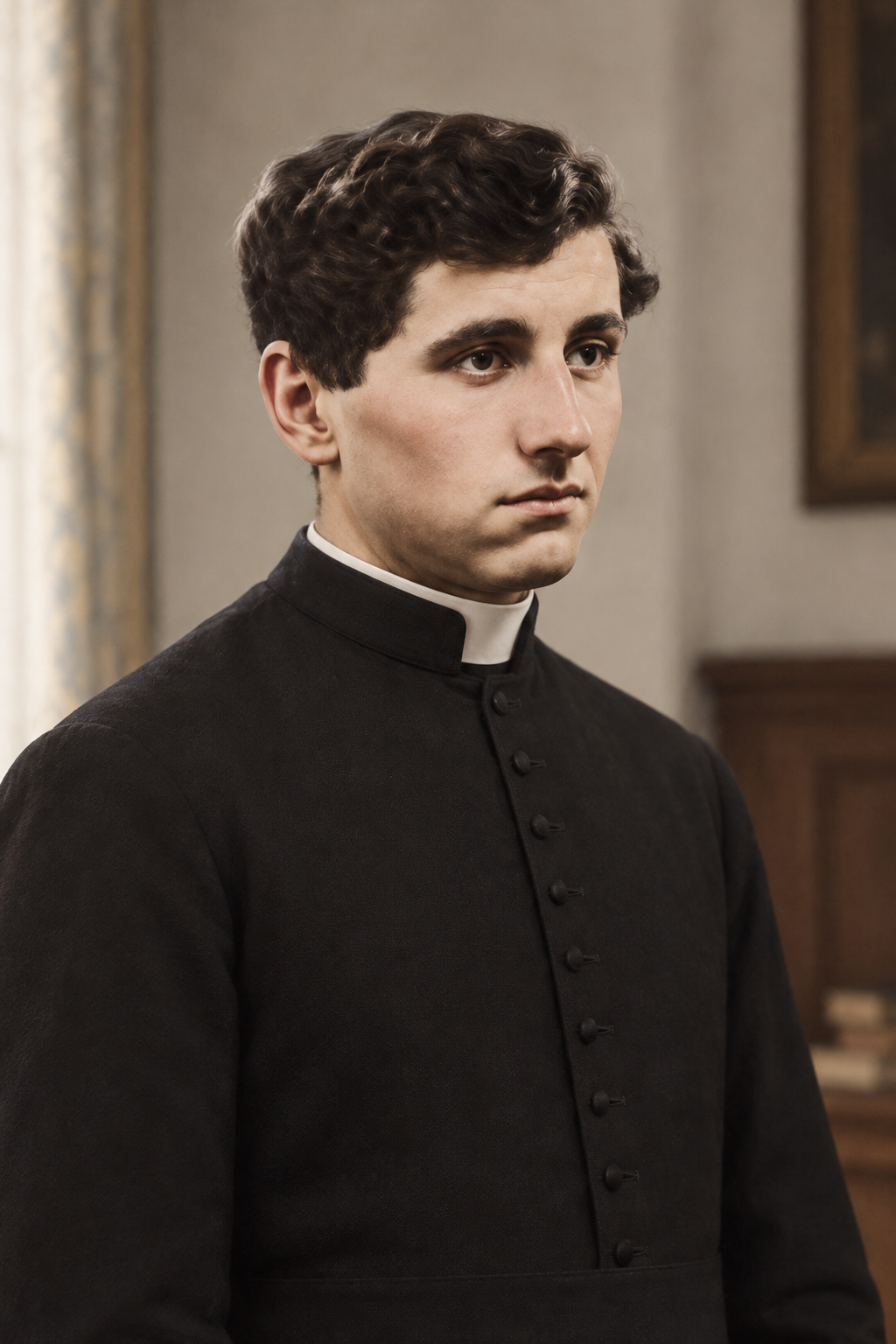
About Louis Doumain
Louis Doumain was born in Canada on February 7, 1920, to a family that had emigrated from the Ardèche in France. His parents returned to France with him in 1926. He attended the minor seminary at Aubenas and later entered the major seminary at Viviers. Ordained on December 19, 1942, he began his priestly work as a teacher and supervisor at the minor seminary in Annonay.
Doumain’s ministry belonged to a wider effort to support French workers taken to Germany under the compulsory labor system. The Dicastery for the Causes of Saints describes how young members of the Christian workers’ movement organized religious activities among their companions, sometimes with help from German clergy and religious communities. The arrival of priests in 1943 gave this work further organization. Nazi police investigated the groups during the autumn of that year, identifying participants and their activities. The resulting persecution targeted the organized French Catholic apostolate, the setting in which Doumain continued his priestly work.
In July 1943, compulsory labor service took Doumain to Germany, where he worked at an industrial plant in Bitterfeld. His ministry continued among French workers: he celebrated Mass and helped prepare people for baptism and Communion. As restrictions tightened, he celebrated in a private chapel belonging to religious sisters.
Recollections preserved by the parish of Uzège give a more personal account of his visits to the sisters in Bitterfeld. Sister Burkharda Seubert remembered his frail appearance and the demands of his work shifts, but also his daily arrival to celebrate Mass. Sister Maria-Charis Schäfer recalled that he suddenly stopped coming and that the community could not discover what had happened to him.
According to the historical account by Dominique Morin, Doumain was arrested in September 1944 after celebrating Mass in the woods. That account describes interrogations in Bitterfeld and Halle and an offer of release if he would agree to stop celebrating Mass. The Diocese of Viviers reports that he refused this condition. He was subsequently imprisoned in disciplinary camps and died in December 1944.
The diocesan accounts agree on his Canadian birth but give different localities: Paris names Morainville, while Viviers names Cardiff-Edmonton. Viviers also places his death at Spergau, whereas Paris identifies Zöschen.
A funeral report published by the Diocese of Nîmes on January 1, 1950, and later reprinted by the parish, describes the public return of his remains. It records their arrival at Saint-Quentin-la-Poterie on December 20, 1949, followed by the funeral two days later. Bishop Couderc of Viviers presided, and the church was filled with mourners and official delegations. At the cemetery, the bishop read a letter from a fellow prisoner, a novice of the Prado, recalling Doumain’s life in captivity.
The Diocese of Viviers records that his remains were returned to France in 1949 and buried at Saint-Quentin-la-Poterie. The Diocese of Paris confirms his beatification at Notre-Dame on December 13, 2025, recognizing him as a martyr killed out of hatred for the faith. His recognized status in the Catholic Church is Blessed.
His beatification also brought a local gathering at Saint-Quentin-la-Poterie, the village where he had celebrated his first Mass and where his funeral had taken place. The parish’s account describes an evening Mass attended by a nephew, two nieces, and local officials. At its conclusion, Father Bastidon and Jacques Laurent unveiled a commemorative plaque. Laurent had served Doumain’s first Mass as a boy. This remembrance joined the public recognition of his martyrdom to the family and parish community that had preserved his memory. The parish newsletter identifies May 5 as the feast of Doumain and his fellow martyrs of the apostolate.
Wondering how to weigh the stories and sources? Learn how to read a saint biography.