Biography
Lucian of Antioch
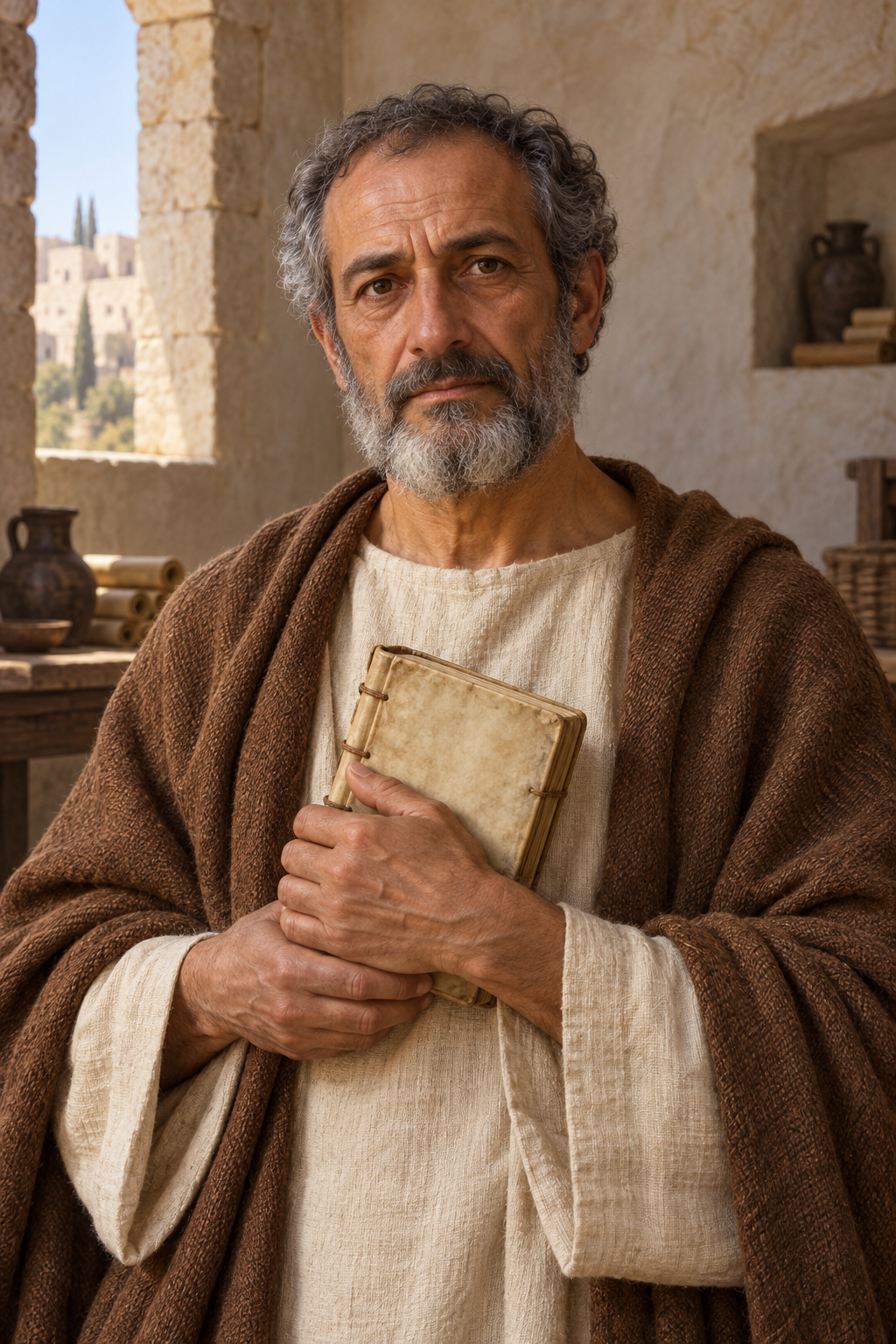
About Lucian of Antioch
Lucian of Antioch was a Christian priest remembered for his learning and his death during the persecution under Emperor Maximinus. Eusebius, writing about that persecution, describes him as a presbyter of Antioch whose disciplined life and study of sacred things had earned respect. He was taken to Nicomedia, where the emperor was staying, defended his faith before the authorities and died in prison. This brief account provides firmer ground than the fuller stories that later gathered around him.
His early life is much less certain. A tradition recorded in the Suda places his birth at Samosata and his education at Edessa under a teacher named Macarius. Patrick Healy’s Catholic Encyclopedia entry cautions that this account lacks corroboration and may confuse the priest with the earlier satirist of the same name. His birthplace and birth year therefore remain uncertain. The same reference dates his martyrdom to January 7, 312.
Jerome supplies another glimpse of his work. In On Illustrious Men, he says that some copies of Scripture still bore Lucian’s name, connecting his reputation with close attention to biblical texts. Jerome also knew writings on faith and short letters addressed to different people. His notice places Lucian’s death at Nicomedia and his burial at Helenopolis in Bithynia. It records a scholar whose books circulated, without explaining precisely how he prepared the biblical copies associated with him.
His relationship with the church at Antioch also appears in disputed accounts. Healy describes a breach of communion following the condemnation of Paul of Samosata, followed by reconciliation, perhaps around 285. That proposed chronology is not a secure sequence of dated events, and the extent of Lucian’s doctrinal agreement with Paul remains a separate question.
Later accounts gave Lucian a much larger place in the history of Christian teaching. He has often been called the founder of the Antiochene school of biblical interpretation. The scholar T. Böhm challenges that description, noting that the early sources do not make this claim and placing the school’s formation with Diodorus and Theodore. Böhm also questions attempts to reconstruct Lucian’s theology from Arius and other people called Lucianists: their views differed, and reasoning backward from them can become circular.
Similar caution applies to his biblical scholarship. Böhm observes that readings described as Lucian’s sometimes occur in earlier witnesses, making it difficult to identify a particular revision as his work. The creed associated with the Antiochene council of 341 has also been attributed to him, but its authorship is uncertain. These disputes do not erase Jerome’s testimony to Lucian’s reputation; they limit how confidently later theological systems or surviving textual forms can be assigned to him personally.
The stories of his imprisonment became a focus of devotion. The Orthodox Church in America’s traditional life describes a long confinement, a Eucharistic celebration with Lucian’s chest serving as the altar, and his repeated confession that he was a Christian. It also tells of a dolphin bringing his body ashore. These episodes belong to the received religious narrative, rather than to the short contemporary account preserved by Eusebius. The same Orthodox calendar commemorates him on October 15.
Studying the growth of this narrative, the historian Gennaro Luongo distinguishes the early testimony from the elaborate Passion preserved in a tenth-century collection. Its miraculous voyage and other motifs served to celebrate the martyr and instruct believers. He also discusses John Chrysostom’s sermon for Lucian’s feast in 387: the preacher presented steadfast confession as an example for his own congregation. Remembering Lucian thus involved moral exhortation as well as preserving information about his death.
Later images likewise reflect the history of devotion. The Orthodox account notes portrayals both in priestly clothing and with a bishop’s vestment, despite his identification in the early evidence as a presbyter. Such iconography should not be used to turn him into a bishop.
His memory took root far from Antioch. In Lusciano, an inscription dated 1666 records the gift of a head identified as belonging to a martyr named Lucian, along with other relics. Luongo explains that the associated authentication document has not been found and that the relic’s provenance cannot be established. The community’s longstanding identification of its patron with Lucian of Antioch is clear, but it does not settle the identity of the remains. Devotion and material identification require different kinds of evidence.
That local devotion continues in shared images and celebrations. A 2025 report from the Diocese of Aversa explicitly identifies Lucian of Antioch as Lusciano’s patron. It describes an exhibition at Santa Maria Assunta bringing together more than thirty images, including works from recent decades. It also recounts the custom of auctioning an image at the end of the feast’s octave and delivering it to the successful family with musical accompaniment. These practices show how households participate in remembering their patron.
His calendars preserve more than one day of remembrance: Western observance falls on January 7, while the Melkite Church commemorates him on October 15.
Wondering how to weigh the stories and sources? Learn how to read a saint biography.