Biography
Luigi Tezza
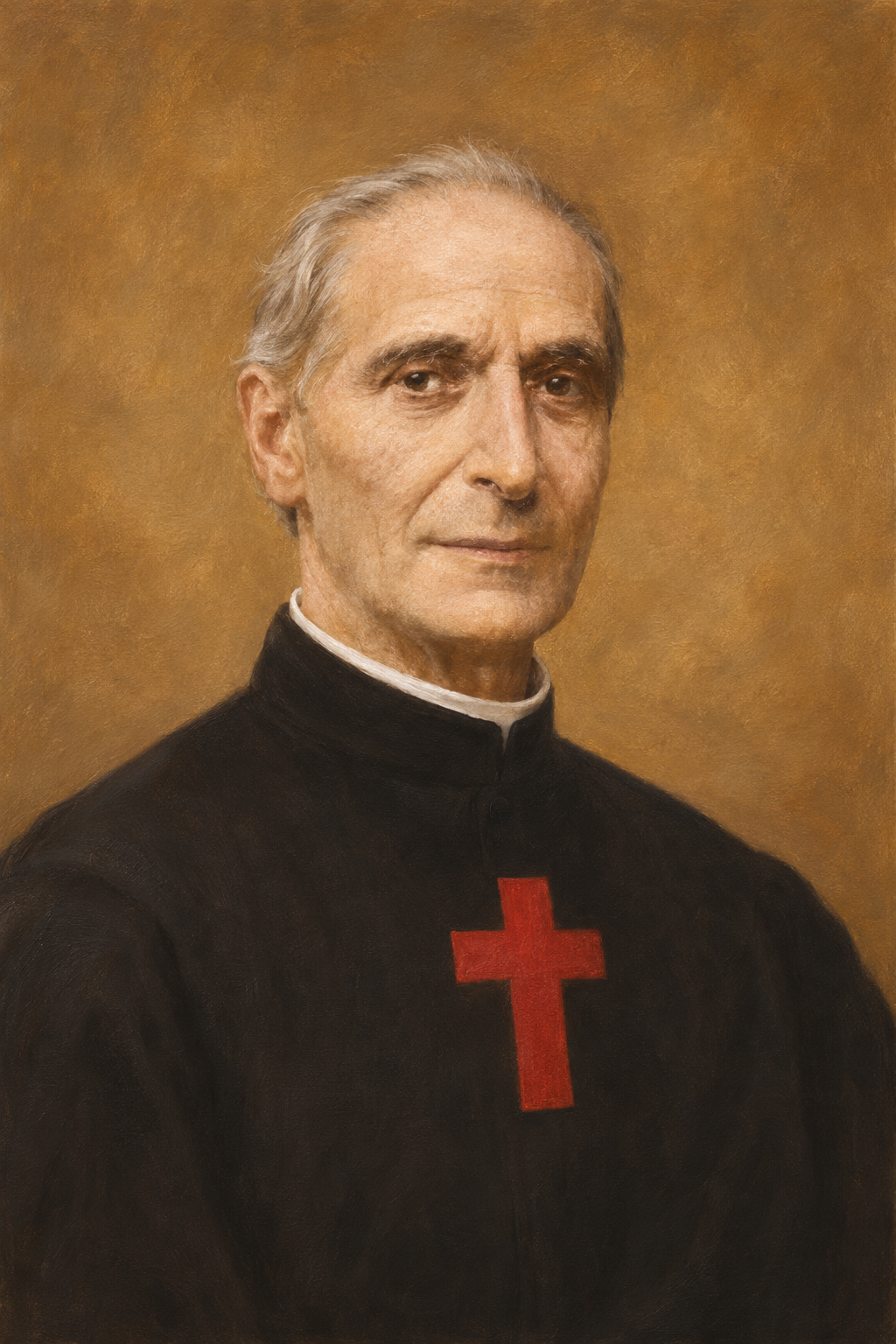
About Luigi Tezza
Luigi Tezza grew up in northern Italy before his work as a Camillian priest took him to France and Peru. He was born at Conegliano on November 1, 1841. After his father's death he moved with his mother to Padua. At fifteen he entered the Camillian community at Verona. His mother later entered the Visitation monastery. After ordination, Tezza was entrusted with the formation of young religious. A hoped-for assignment to Africa did not take place; instead he continued formation work in Rome. His vocation developed through the daily responsibilities of an established religious order before he became a founder himself.
In 1871 he was sent to France as novice master at Cuisery. The Camillian account of that period describes his involvement in a new house of care at Lyon and the growth of communities at other places, including Lille. He later became the first provincial superior of the French foundation. Political suppression of religious communities disrupted the work, but Tezza continued efforts to preserve its common life and ministry. His responsibilities eventually brought him back to Rome as a general counsellor, procurator and vicar general, joining practical government with the formation and care that had already occupied him for years.
The Daughters of Saint Camillus remember their beginning as a shared foundation of Tezza and Giuseppina Vannini. Tezza brought his experience of the Camillian tradition, with its care for people who were sick in body and spirit. Vannini received and developed that inheritance within a new women's congregation. The community's history emphasizes that this was an active, apostolic vocation in healthcare. Its religious identity was expressed through attention to the sick person, including the vulnerability that illness could create. The foundation thus gave an enduring institutional form to work Tezza had already known as a priest.
He met Vannini in Rome in 1891, while she was seeking a form of religious life. Together they began the congregation on February 2, 1892. The institute later received approval from the Holy See. Tezza's contribution included guiding the new community toward the service of sick people in the spirit of Camillus de Lellis. Its future did not remain limited to one house or to the founders' own lifetimes. The community continued to develop as a congregation with its own responsibilities, while retaining its relationship to the wider Camillian family.
A further assignment changed the final part of his life. In 1900 he went to Lima as visitor to the Camillian community, which had recently renewed its relationship with the Order's government in Rome after a long separation. Angelo Brusco's study describes a mission concerned with restoring religious observance and strengthening the community's service. Tezza drew on his experience of formation and government in Italy and France. What was intended as a limited visit became a lasting commitment. He remained in Peru for twenty-three years, until his death, and his work became closely associated with the city's sick and dying people.
Brusco records his plan for coordinated spiritual care in Lima's hospitals and hospices. The arrival of additional Camillian brothers helped make that plan possible. Ministry in institutions accompanied visits to people who were ill at home. The community's house, known as the Buenamuerte, reflected its particular concern for accompanying people near death. Tezza's work therefore included both organizing the service and participating in the encounters it made possible. The different settings placed demands on a small community whose responsibilities reached across the city, rather than remaining within the walls of its own house.
Tezza died at Lima on September 26, 1923. John Paul II beatified him on November 4, 2001. In the homily, the pope described his life through charity and mercy toward those suffering in body and spirit. He recalled the foundation of the Daughters of Saint Camillus and Tezza's teaching about trust in God. This recognition joined the priest's personal vocation with the work of the religious family he had helped establish. It also acknowledged a life whose practical responsibilities had moved between the preparation of religious, leadership of communities and direct care of people facing illness.
A century after his death, leaders of the Camillian family returned to his correspondence and the history of his service. Mother Zelia Andrighetti described work on his substantial collection of letters and the intention to publish it in full. Father Pedro Tramontin emphasized service as the setting in which his vocation had taken shape. Their messages show how the memory of the founder continued to be examined through writings and institutional history. Tezza's lasting place within that family rests on those connected forms of work: forming communities, sustaining care and making room for a new congregation devoted to sick people. The 2023 celebration involved houses of the congregation and local communities, keeping the remembrance connected with the people among whom its hospitals and ministries worked.
Wondering how to weigh the stories and sources? Learn how to read a saint biography.