Biography
Luigi Variara
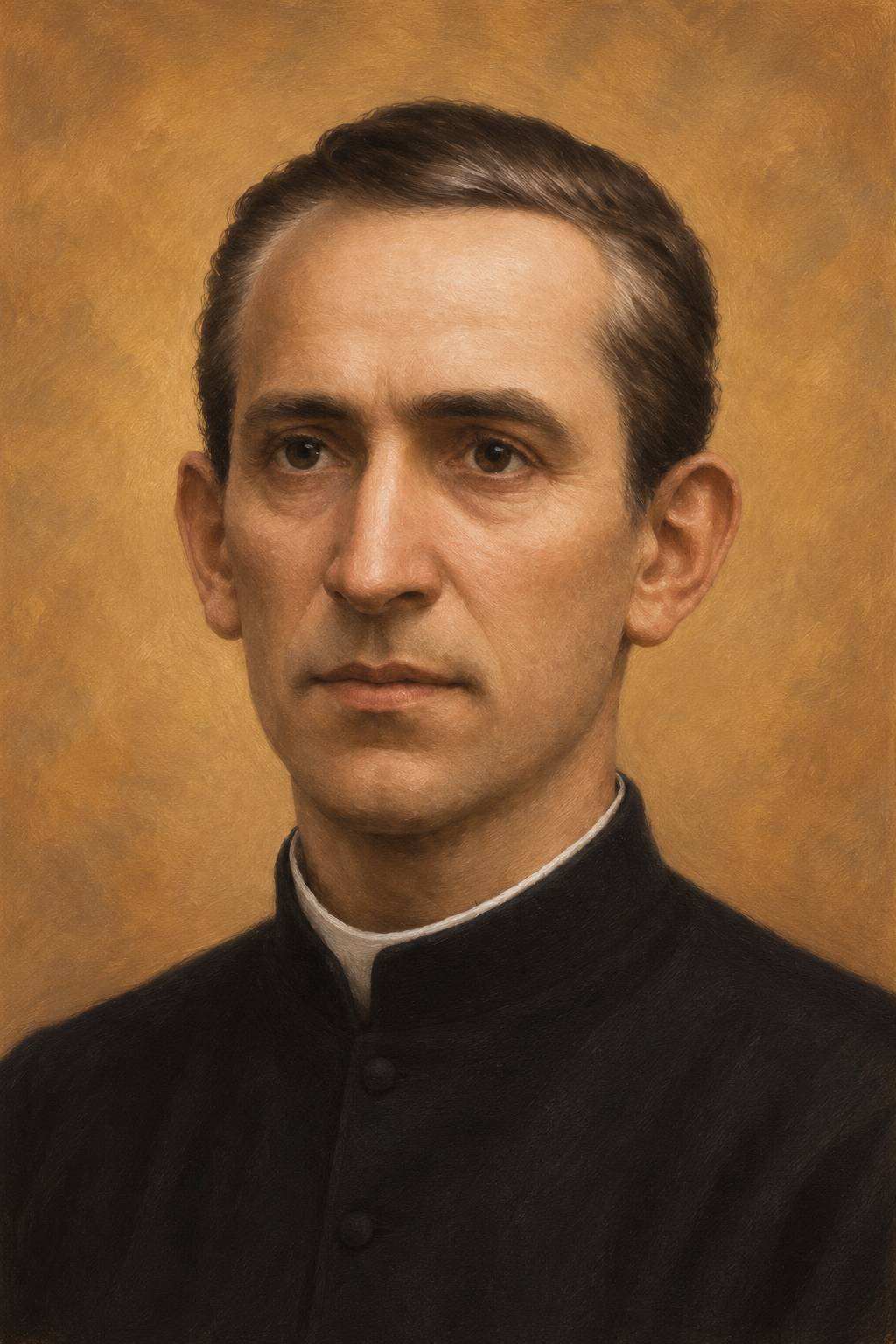
About Luigi Variara
Luigi Variara was an Italian Salesian whose ministry in Colombia opened a path to religious life for women excluded because of leprosy. He was born at Viarigi, in the province of Asti, on January 15, 1875. His father brought him to the Salesian school at Valdocco in 1887, shortly before John Bosco's death. Luigi later entered the Salesian novitiate and made religious profession under Michele Rua. While studying philosophy at Valsalice, he met Andrea Beltrami and the missionary Michele Unia. Unia's work among people with leprosy in Colombia became Luigi's own assignment. He arrived at Agua de Dios on August 6, 1894. Musical ability gave him one way to participate in the community's life, and he organized a band. On April 24, 1898, he was ordained a priest. Confession and spiritual direction brought him into close contact with young women who hoped to become religious but found existing congregations closed to them.
Work with young people included music, theater and preparation for adult life. In 1905 Variara opened the Michele Unia hostel, a place where young residents could receive elementary education and learn a useful practical trade. Its purpose joined religious formation with skills that might offer a future beyond destitution. His new congregation became responsible for care within this setting. Opposition to that foundation brought considerable suffering. Transfers took him away from Agua de Dios, and later assignments included Táriba in Venezuela. He remained in contact with the sisters through letters to their superior. His final illness brought him to Cúcuta, Colombia, where he died on February 1, 1923. The community continued preserving his memory, and his remains were eventually placed in its shrine at Agua de Dios.
The women themselves left an early account of what this opportunity meant. In a letter to Michele Rua dated February 10, 1905, Oliva Sánchez and six companions described their desire for religious life and the barriers they had faced. Some had been removed from schools when that desire became known; others had been refused admission because a family member had leprosy. They credited Variara with listening to their distress and recognizing a vocation that illness did not cancel. Their plans included a common rule, vows, care of fellow patients and responsibility for the Michele Unia home. They also appealed for Variara to remain at Agua de Dios, describing how difficult a recent absence had been. The letter preserves their voices as participants in the new community. It shows women seeking a shared religious life and shaping its purpose with the priest's assistance, rather than simply receiving a charitable service from him. They described a rule adapted to their condition and a commitment to assist other residents. Their letter sought Rua's blessing for each member and for the community they were beginning together.
The religious understanding of suffering behind the foundation drew particularly on Andrea Beltrami. Salesian postulator Pierluigi Cameroni describes the friendship formed at Valsalice with a priest living with tuberculosis. Variara later proposed to the sisters a spiritual offering of their lives, uniting their difficulties with Christ's suffering. This was a religious interpretation of illness, rather than a medical claim or a reason to withhold treatment. Cameroni also points to the place of Marian devotion in Variara's correspondence during periods of financial shortage and separation. Letters written while the Unia home was being built expressed anxiety about paying the workers and trust in Mary Help of Christians. Later correspondence continued to encourage the sisters even when he could no longer direct them in person. The foundation therefore remained bound together partly through relationships sustained at a distance. His continuing loyalty to the work coexisted with obedience to superiors whose decisions had removed him from it.
The institute began in 1905 with a small group including women with leprosy and women whose fathers had the disease. Oliva Sánchez was its first superior. Its early service concentrated on children at Agua de Dios. A 2007 Fides account traced how the congregation later accepted members without a family connection to leprosy and extended its mission beyond the original settlement. By that date it had communities in Latin America, Africa and Europe. The report recorded new work in Catatumbo, Colombia, and Corumbá, Brazil. These later developments belonged to the sisters who continued the founder's work after his death, adapting its educational and charitable responsibilities to other communities. The communities then included Ecuador, Venezuela, Mexico, Equatorial Guinea, Cameroon, Italy and Spain, alongside the original Colombian work.
John Paul II beatified Variara in Rome on April 14, 2002. He emphasized the welcome offered to women who could not enter other institutes because they had leprosy or were daughters of people with leprosy. Catholics honor him as Blessed Luigi Variara, remembering a missionary whose work recognized religious agency among people living with both illness and social exclusion.
Wondering how to weigh the stories and sources? Learn how to read a saint biography.