Biography
Margaret of Scotland
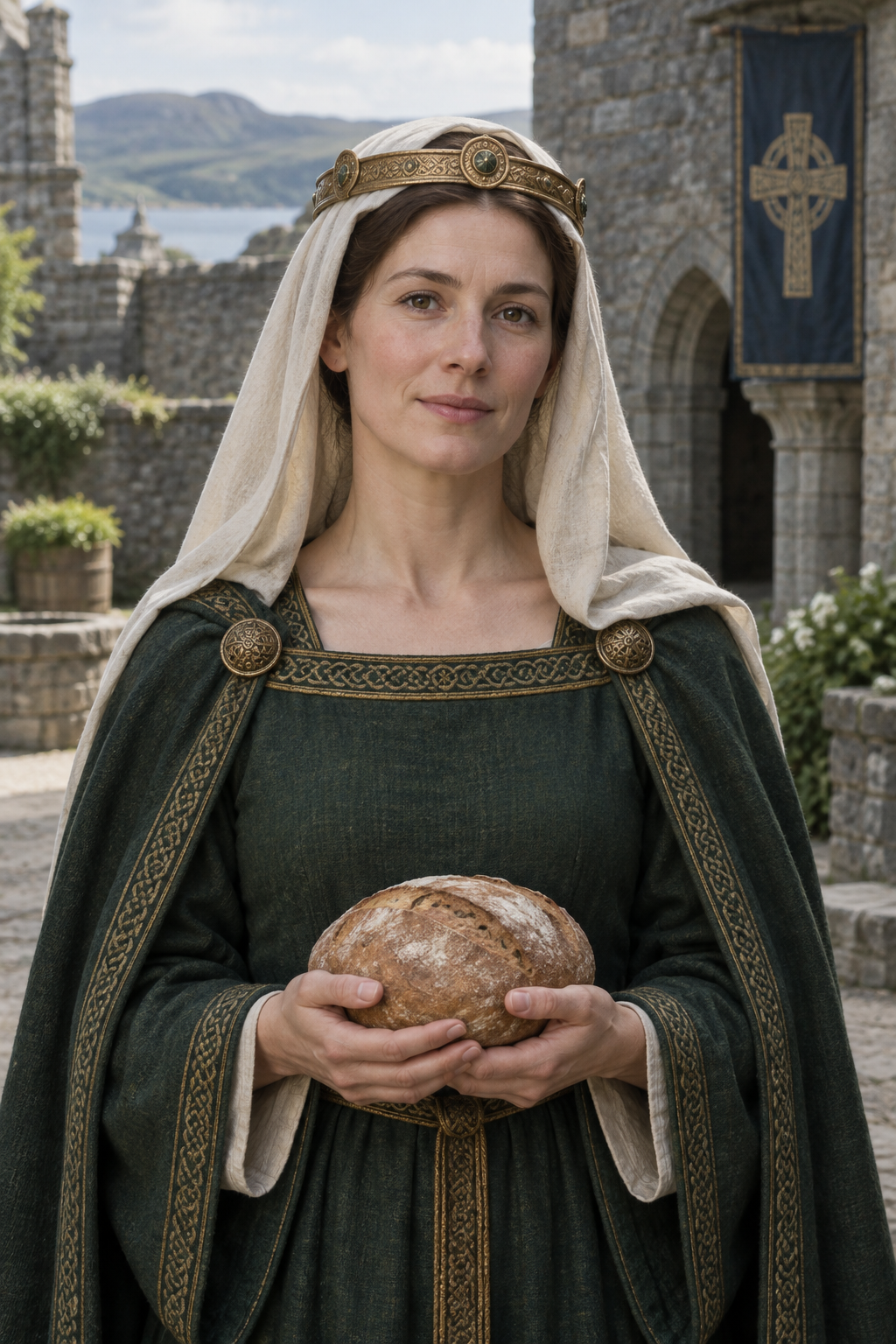
About Margaret of Scotland
Margaret of Scotland brought the experience of an exiled English royal family to her life as a queen. Born in Hungary around 1045, she came to England with her family in 1057. Her father died soon after their arrival. The Norman Conquest disrupted the family's position again, and they eventually sought protection in Scotland. A traditional story explains their arrival through a storm at sea, but that picturesque account need not carry the history of their displacement. By 1070 Margaret had married Malcolm III at Dunfermline.
Her marriage placed her within a kingdom whose politics remained closely connected with England. Malcolm supported the claim of Margaret's brother Edgar, excluded from the English succession, and repeatedly invaded England. His ambition to extend his rule southward brought conflict rather than lasting peace. Margaret's personal influence over her husband existed within this unsettled setting. It did not remove the violence of royal warfare or make the court a place apart from the struggles around it.
Margaret was more than a ceremonial presence at court. The scholarly Epistolae biography describes her involvement in administration and judicial business, as well as her learning in religion. She took part in councils and discussed difficult questions with educated churchmen. She and Malcolm had six sons and two daughters. Three sons, Edgar, Alexander and David, later ruled Scotland; her daughter Matilda married Henry I of England. Family responsibilities and public influence were intertwined, and the relationships formed around her extended across the border that had divided her own early life.
Her contact with Lanfranc, archbishop of Canterbury, survives in a letter he sent in reply to hers. She had asked him to become her spiritual father, and he accepted while asking for her prayers in return. The exchange was also practical. At her request he sent Goldwin and two other monks to assist the royal couple's work. He urged them to complete what they had begun, but hoped the monks might eventually return because Canterbury needed them. The letter shows a queen seeking both spiritual counsel and skilled help, and an archbishop negotiating how much assistance his own community could spare.
The religious changes associated with Margaret concerned specific practices rather than the introduction of Christianity into an empty religious landscape. The Catholic Encyclopedia identifies the observance of Lent, reception of communion at Easter and prohibited degrees of marriage among the matters addressed. These were questions about how Christians should worship and organize family life. Describing them precisely avoids reducing the encounter between different traditions to a claim that one people had to be civilized by another.
Turgot's account remembers a woman who sought religious books and questioned learned visitors even while occupied with affairs of state. He also describes practical generosity: poor people, widows and orphans approached her, and her attendants sometimes supplied clothing and other possessions when she had exhausted what she brought to give. His praise is the testimony of an admiring member of her circle, but its details place her charity in encounters with particular needs. The same account credits her with paying ransoms for English captives reduced to slavery in Scotland. Her remembered care therefore reached people caught in the violence between the two kingdoms.
Her interest in books left an unusually tangible trace. The Bodleian Library identifies a surviving Gospel-book with Margaret, following a connection made by the scholar Lucy Hill after the library acquired it in 1887. The manuscript contains a Latin poem telling of its recovery from water, a story also associated with Margaret's biography. The account of miraculous preservation belongs to the book's devotional history. The surviving volume itself gives a different kind of connection: a carefully made object associated with the reading and religious attention for which Margaret was remembered.
Pilgrimage also had practical needs. Margaret established a crossing of the Firth of Forth for travelers making their way to St Andrews. North and South Queensferry preserve the connection in their names. Helping people cross the water was a different expression of religious patronage from supporting a church or obtaining a book.
The Episcopal Church's account of her life emphasizes both her concern for worship and the limits of her success. It recalls her effort to encourage communion among people who felt unworthy to receive it, without suggesting that every argument persuaded its hearers. Her ambitions for closer religious cooperation did not eliminate conflict. That combination of commitment and incomplete results gives a more recognizable picture of a reformer than an account in which every effort succeeded.
Margaret died at Edinburgh on 16 November 1093 and was buried at Dunfermline. Her later recognition as a saint gave lasting public form to a memory already shaped by prayer, family and works of mercy. The available accounts preserve a queen whose influence depended not only on rank, but on reading, correspondence, gifts and personal attention to those who needed help.
Wondering how to weigh the stories and sources? Learn how to read a saint biography.
Explore similar vocations
Prayers for Margaret of Scotland
Margaret of Scotland: sourced prayer excerpt
Mercifully grant that we also may be fruitful in good works, and attain to the glorious crown of your saints