Biography
Mariano de la Mata Aparicio
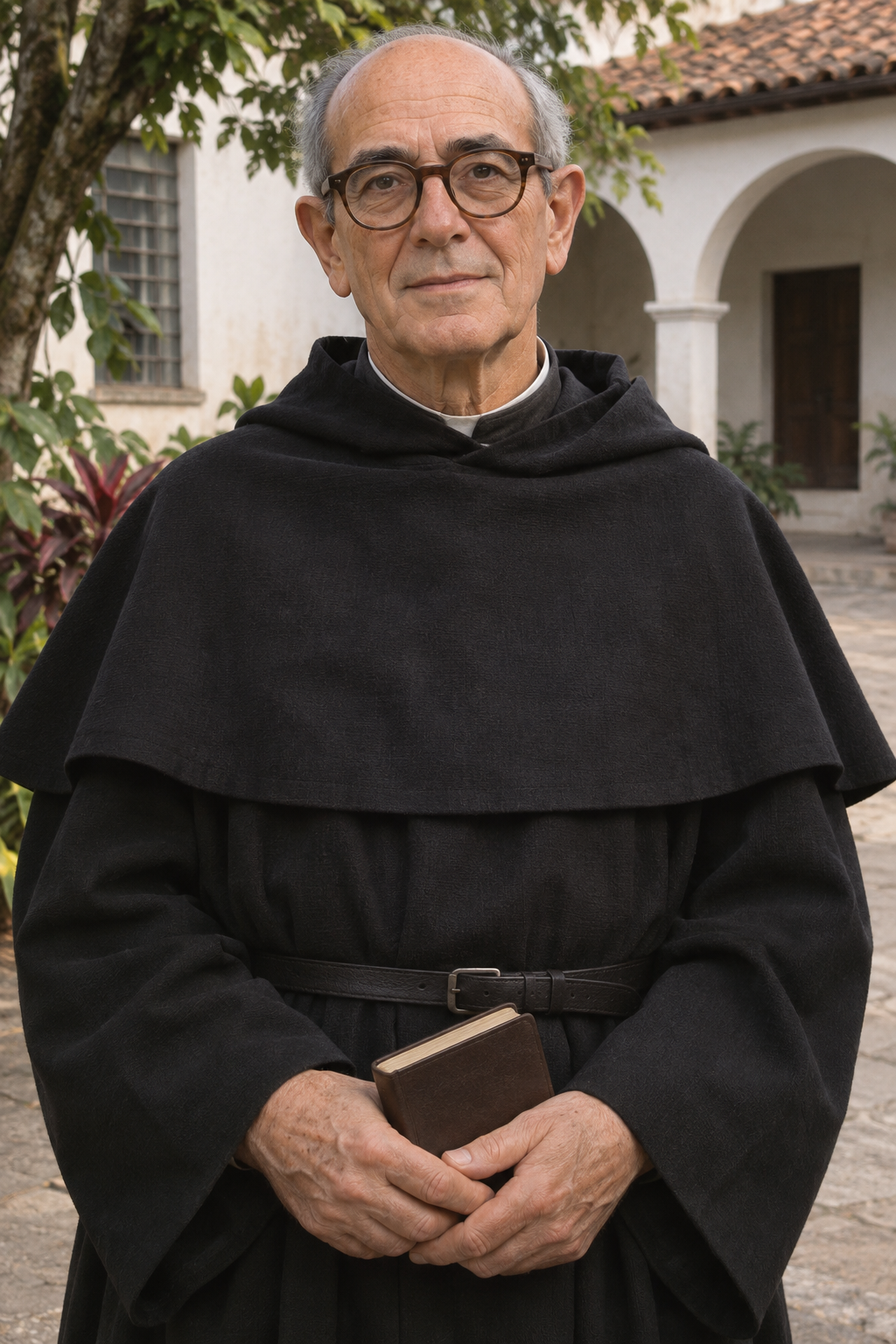
About Mariano de la Mata Aparicio
Mariano de la Mata Aparicio was born in Spain on December 31, 1905, and grew up in a family from which three of his brothers also entered the Augustinian Order. He followed them in 1921. His studies took him to Valladolid and the monastery of Santa María de la Vid before his ordination in 1930. The following year he was sent to Brazil. His first assignment was at Taquaritinga, in São Paulo state. He later taught natural sciences at Saint Augustine College and assumed responsibilities in the school's administration. Teaching and religious community formed the background to his later reputation for attentive care.
His ministry included leadership within the Order as well as classroom work. Heather Blomberg's account records his service as vice provincial from 1945 to 1948 and his work as professor and superior at the seminary in Engenheiro Schmidt. In 1961 he returned to Saint Augustine College and also became parochial vicar at the Church of Saint Augustine. He took responsibility for the spiritual direction of the Saint Rita workshops. These appointments brought teaching, pastoral care and charitable service together within a single daily ministry, rather than placing him in a role devoted to only one group of people.
The official biography preserves examples of his concern for students who were ill. For a year he visited Sergio Teixera and gave him private lessons during his illness. He also visited Horacio Gentile almost every day during a lengthy hospital stay. These were sustained commitments alongside his ordinary responsibilities. The accounts explain why former students remembered his teaching through personal presence as well as the subjects he taught: illness did not end their connection with the priest and educator who had known them at school.
People associated with the Saint Rita workshops recalled a similarly practical form of attention. In an archdiocesan remembrance, Maria Inês Magalhães Collet Silva described him distributing bread and blankets and keeping sweets for children. Maria Luísa Bloise recalled his filling a small Volkswagen with clothes and supplies, then driving to outlying neighborhoods to deliver them. Her account included muddy roads and occasions when he had to push the car. These recollections connect the workshops with particular families and journeys, showing how the priest participated in getting their work to people who needed it.
The same remembrance describes his regular visits to the sick and his care for older people and people living on the streets. Augustinian friar João Marcos Pontes Borba Filho recalled that he sometimes interrupted a meal to attend someone who was ill. He also emphasized Mariano's commitment to community life. The recollection presents a demanding balance between shared religious duties and urgent personal needs. In this account, the pattern that stood out was his repeated availability, including during his later years, when age might otherwise have reduced his visits.
The Saint Rita workshops made clothing for poor people, and Mariano served as their spiritual director. The work joined the skills of the people sewing with the needs of those who received the garments. He died on April 5, 1983, and his remains were kept at the Church of Saint Augustine in São Paulo. A Vatican Radio account published before his beatification records the opening of the diocesan process in 1997 under Cardinal Paulo Evaristo Arns. It also describes the recovery of a child injured in a traffic accident, a recovery attributed in his cause to Mariano's intercession.
The report identifies the child as João Paulo Polotto, who was injured by a truck in 1996. It describes serious skull injuries and bleeding, followed by a recovery for which relatives and friends had sought Mariano’s intercession. This was presented as a healing within his cause, rather than as an independently verified supernatural event.
Blomberg describes his service through the ordinary obligations of an Augustinian priest and missionary. He cared for other friars as well as the people he served, combining educational guidance with visits to those in need. In 1983 he was diagnosed with cancer and underwent surgery, but the illness continued. His death brought to an end more than fifty years of ministry in Brazil. The later remembrance of that life centered on consistency: the offices changed, but teaching, community responsibilities, pastoral care and assistance to poor people remained connected throughout the account.
Mariano was beatified in São Paulo's cathedral on November 5, 2006. Cardinal José Saraiva Martins placed his life within the Beatitudes, recalling his care for children, sick and elderly people, students, parishioners and workshop members. The homily also remembered his peaceful presence among his fellow Augustinians and his devotion to Our Lady of Consolation. The Church's recognition gave a public place to a form of service already known through classrooms, sickrooms and visits across the city. His continuing significance lies in that concrete record of a teacher and priest who kept making time for people whose needs could easily have remained unseen.
Wondering how to weigh the stories and sources? Learn how to read a saint biography.