Biography
Maron
About Maron
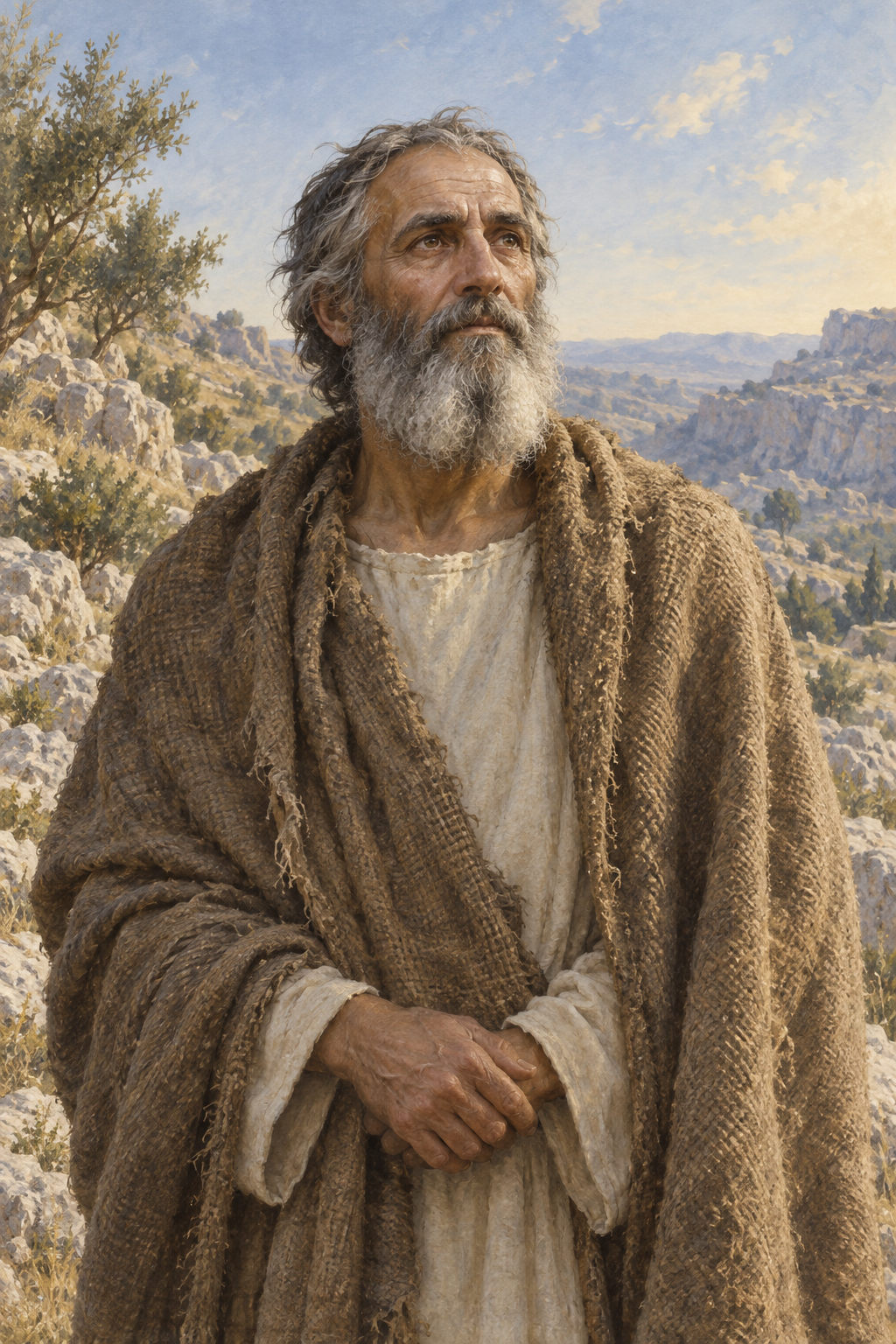
Maron is remembered as a solitary Christian ascetic. The earliest substantial account of him is in Theodoret of Cyrrhus's Religious History, a collection of exemplary lives. Theodoret says Maron chose a hill once sacred to pagan worship and dedicated its sanctuary to God. He lived mostly outdoors, keeping a small tent but making little use of it. The account presents his austere practice as a model of prayer and self-discipline. These details come through a religious biography, so they describe both the memory and ideals associated with Maron and the life attributed to him.
Theodoret portrays Maron as more than an isolated hermit. He says visitors came to him and that Maron offered counsel addressing habits such as greed, anger, intemperance, and idleness. Theodoret describes this teaching and care as forms of healing and says disciples carried his way of life into the countryside around Cyrrhus. These claims belong to a religious account; later stories of cures and exorcisms should not be treated as independently established medical or historical reports. An official Maronite eparchial history likewise summarizes Theodoret's account and locates the hermit's tradition broadly near Cyrrhus, while acknowledging that the precise location is unknown.
Modern scholarship distinguishes this hermit from the later legendary figure commonly called John Maron. Jean-Baptiste Chabot identifies Theodoret's ascetic as the historical Maron and places him in the Apamea region in the early fifth century. Chabot says Maron died before Theodoret became bishop in 423. The OCA's devotional life gives a birth location near Cyrrhus, but critical evidence reviewed here does not independently establish it. No exact death date or precise death site is securely established. A church built over Maron's tomb became a focus of later veneration, but its location does not prove where he was born or died.
The Orthodox Church in America commemorates Maron on February 14. A decree of the Maronite Eparchy of Australia, New Zealand and Oceania lists Saint Maroun on February 9 as an immovable feast day of obligation in that jurisdiction. These are distinct liturgical observances; neither date establishes Maron's day of death.
Wondering how to weigh the stories and sources? Learn how to read a saint biography.