Biography
Martin of the Ascension
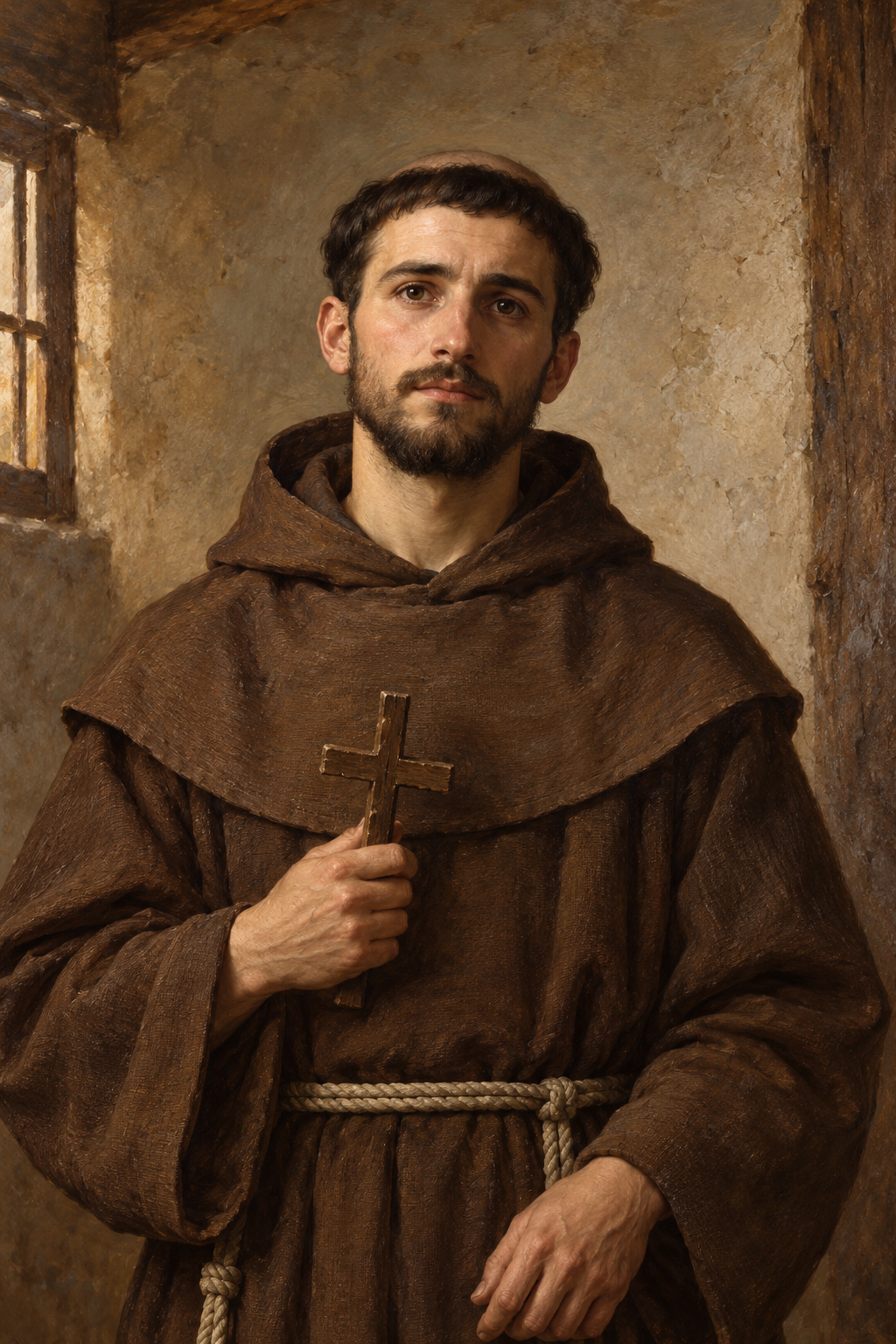
About Martin of the Ascension
Martin of the Ascension was a Basque Franciscan priest who worked in Japan during the last year of his life. He was among the twenty-six Christians executed at Nagasaki on February 5, 1597. His religious work took place amid disputes about missionary authority, overseas trade and European power. His own arguments reveal how closely he could connect the spread of Christianity with the claims of the Castilian crown.
His origins have been disputed for centuries. The Basque Museum in Bilbao preserves three printed documents concerning his birthplace and surname. They include competing claims from the eighteenth century and rival letters published in 1862, the year of his canonization. The documents show that local traditions about his identity were contested long before modern summaries of his life. A precise birthplace and family name should therefore not be presented as settled facts.
The Diocese of San Sebastián describes his studies at Alcalá and his entry into the Franciscans in 1585. He made his religious profession the following year and later taught. An attempted overseas journey in 1592 ended after a storm and illness. He eventually traveled through Mexico and the Philippines before reaching Japan in 1596. The diocesan account associates him with the mission at Osaka, language learning and care for sick people.
Historian Hélène Vu Thanh places the mission within a wider struggle. Jesuits and Franciscans competed over authority, while Portuguese interests at Macau and Spanish interests at Manila shaped their relations. Japan’s ruler, Toyotomi Hideyoshi, was also consolidating power. Religious communities and foreign connections could appear threatening within that process. These circumstances help explain the growing danger without reducing it to a sudden personal dislike of Christianity.
The arrival of the damaged Spanish ship San Felipe at Tosa in October 1596 added to these tensions. Vu Thanh explains that its captain sought Franciscan help with negotiations and translation. Japanese officials’ concerns about European conquest drew on knowledge of events in the Americas and the Philippines. Later missionary accounts interpreted the crisis differently, often defending their own religious order. Their disagreements are part of the evidence that historians must weigh.
Martin’s position was not simply detached from imperial politics. Pedro Lage Correia examines arguments attributed to him in the Jesuit Alessandro Valignano’s response. Martin defended papal authority and Castilian rights to conduct missions. The argument allowed royal armed force, including seizure of property and killing when considered necessary, against those obstructing conversion. This is evidence of a coercive political theology, transmitted through an opponent’s account; it does not establish that Martin personally carried out such violence.
A different account presents him in prison at Osaka during Christmas 1596. Juan Ruiz de Larrinaga reproduced a narrative associated with the voyage of the San Felipe. It describes sailors visiting the imprisoned friar on Christmas Eve and his distress at their cold and bare feet. They received the sacraments, and the account recalls a midnight Mass. This scene comes through a written testimony about the encounter, rather than a surviving record composed by Martin himself.
The same account says that Martin used Basque in letters so that people intercepting them would not understand their contents. Larrinaga drew attention to this evidence of his language, but acknowledged that the letters had not been located. Their reported existence should not be confused with preserved manuscripts that can now be read. The episode also shows why a shared language could matter practically between people far from home.
Martin died with the other victims at Nagasaki. Catholic remembrance honors him as a martyr, and the Diocese of San Sebastián lists his feast on February 6. It records his canonization in June 1862. His religious memory thus belongs both to the story of the Japanese martyrs and to the communities in the Basque country that have continued to honor him. Their local celebrations do not all fall on the same date.
Beasain explicitly honors him as its patron under the name San Martín de Loinaz. Its programme for February 5, 2026 included Mass, a floral offering and an aurresku, alongside music, communal meals and recognition of older residents. These observances combine worship with town life. They document a continuing local patronage, while the town’s preferred form of his name remains part of the disputed history of his origins. The public programme makes clear that this remembrance extends beyond a church service: it brings together residents through music, food and recognition of service within the community.
Bergara also names Martin as a patron. The municipality records his appointment alongside Saint Roch on May 29, 1758, and describes a local festival on September 16, with an agricultural fair on the preceding Saturday. This is a town celebration, not evidence that September 16 is his universal liturgical feast. His patronage of both towns can be documented without choosing between their competing traditions about where his life began.
Wondering how to weigh the stories and sources? Learn how to read a saint biography.