Biography
Mary Magdalene de' Pazzi
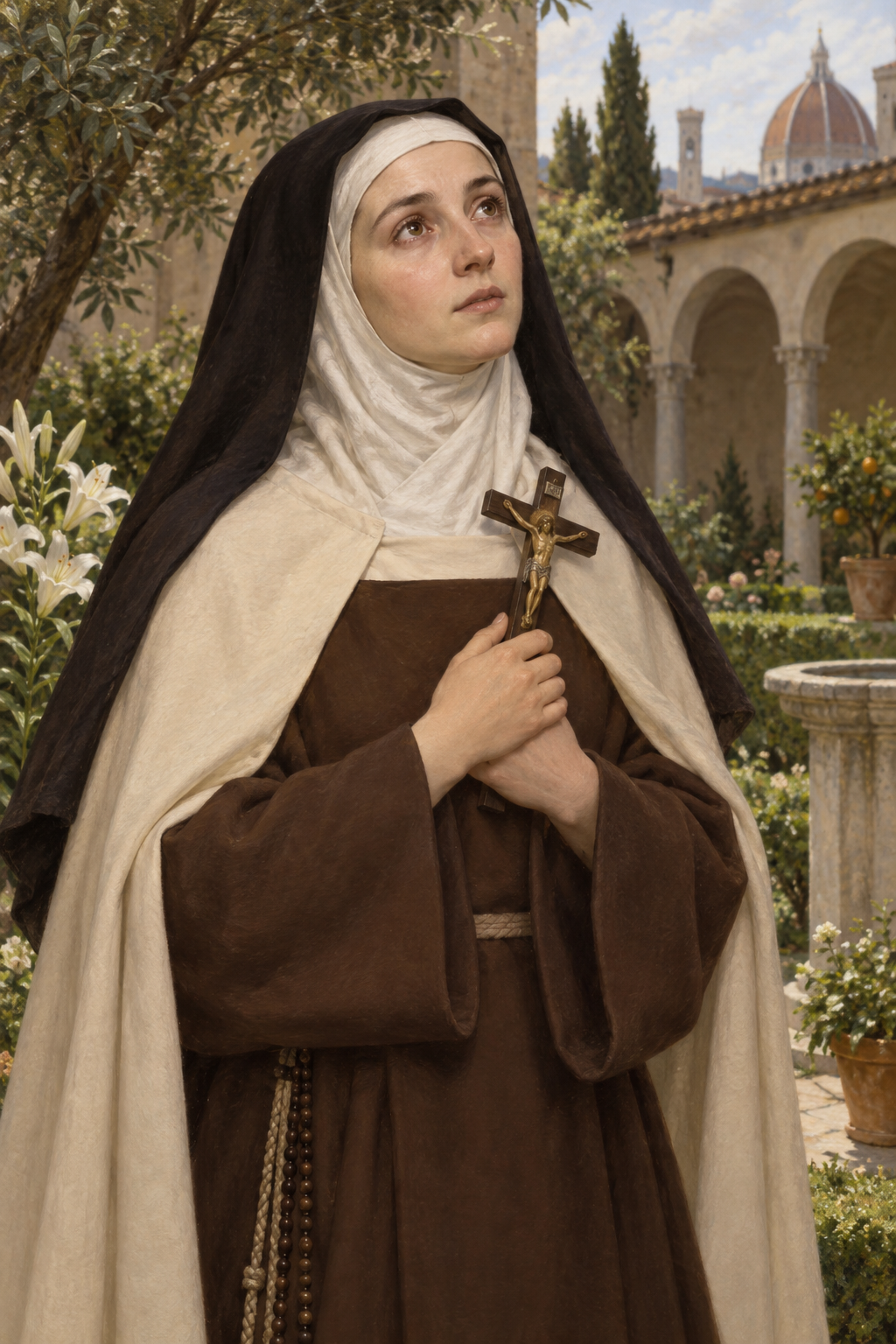
About Mary Magdalene de' Pazzi
Caterina de’ Pazzi was born in Florence on 2 April 1566 and baptized at the font of the Baptistery of St John. Her family belonged to the Florentine nobility. Benedict XVI’s account says that her education was entrusted to the Dames of Malta, where she received First Communion in 1576 and made a promise of virginity soon afterward. Returning to her family’s home, she continued to develop a life of prayer with the assistance of Jesuit priests who visited the household. Caterina chose the Carmel of St Mary of the Angels in the Borgo San Frediano district of Florence. She entered in 1582 and received the Carmelite habit and the name Mary Magdalene on 30 January 1583. In March of the next year she became gravely ill. On 27 May 1584, after a grave illness, she made her profession while lying on a pallet in the chapel. The years after profession brought experiences of prayer that the convent recorded in manuscripts. Benedict XVI names several collections, including The Forty Days, The Colloquies, and Revelations and Intelligences. These accounts describe episodes of ecstasy and theological reflection. In 1586 she dictated letters urging renewal to the pope, cardinals, her archbishop and other church figures. Benedict XVI notes that the twelve letters may never have been sent, but they survive as testimony to her concern for reform. The Forty Days concerns the summer of 1584, while The Colloquies records a further period in the first half of 1585. Revelations and Intelligences recounts eight days from the vigil of Pentecost to Trinity Sunday in 1585. These were not autobiographical books prepared for publication by Mary Magdalene; they were accounts preserved by the sisters who lived with her. After the intense experiences of 1584 and 1585, Mary Magdalene entered a period of spiritual trial that lasted about five years. Benedict XVI says she later described this interval in a work called The Probation. The letter presents this time as one in which she felt deprived of consolation and struggled with temptation. In 1590, at Pentecost, she promised to devote her energies to the community and especially to the formation of novices. The Carmelites came to regard her as a mother and a point of reference. Her final illness gradually removed her from ordinary communal life. Benedict XVI describes the last three years as marked by severe physical and spiritual suffering and identifies consumption as the illness that became evident. She died in Florence on 25 May 1607. Urban VIII beatified her in 1626, and Clement IX canonized her in 1669. In the final years of her life she suffered from consumption and increasing physical and spiritual pain, eventually withdrawing from community life. She died on 25 May 1607 in the monastery.
Wondering how to weigh the stories and sources? Learn how to read a saint biography.