Biography
Michał Tomaszek
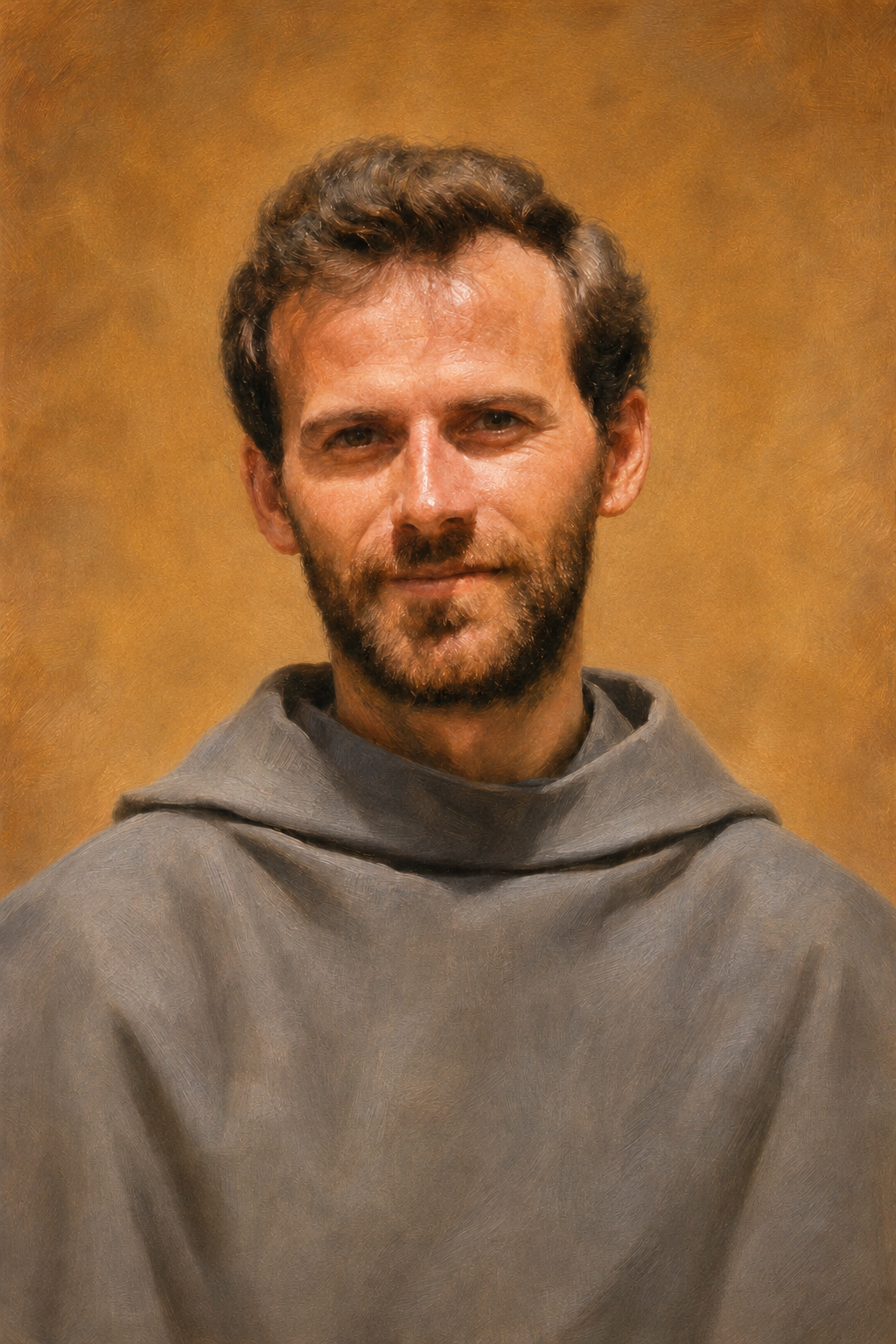
About Michał Tomaszek
Michał Tomaszek was born at Łękawica, near Żywiec in Poland, on September 23, 1960. He grew up with two sisters and his twin brother. His father died in 1969, leaving their mother responsible for the four children. Michał served at the altar and went with his family to the Franciscan Marian sanctuary at Rychwałd. After elementary school he studied at the Franciscan minor seminary in Legnica. He entered the Conventual Franciscans in 1980 and made his first religious profession in 1981. He studied philosophy and theology in Kraków and made his lifelong profession on December 8, 1985. Ordained a priest on May 23, 1987, he began parish work at Pieńsk. There he taught catechism, including classes for children with disabilities. He asked to join the mission begun by fellow friars in Peru and went there in July 1989.
Music and singing helped him gather young people for catechesis, prayer and recreation in Peru. His religious training had included a novitiate at Smardzewice. He received the Franciscan habit on the feast of Saint Francis, October 4, 1980.
Historian Zdzisław Gogola describes a student who had to work through academic difficulties. During his years at Legnica, Tomaszek repeated a class before completing his secondary studies successfully. In Kraków he combined charitable activities with theological training. His master's work examined the family role of women in the speeches and writings of Cardinal Stefan Wyszyński. On arriving in Peru he first became acquainted with Pariacoto, then went to Lima for further Spanish study. Language preparation formed part of learning to serve a community far from his Polish home.
His friend Tadeusz Pobiedziński remembered both determination and a hearty laugh. In a 2006 account he described Tomaszek's particular sensitivity to children and to suffering. During seminary years Michał participated in Faith and Light, the movement bringing people with intellectual disabilities together with relatives and friends. Pobiedziński recalled his evident happiness in this work. When Michał left for Peru, the friend organized children in Kraków to pray for him and his ministry. These recollections place his later work with young parishioners within a commitment already visible during his training in Poland.
Jarosław Wysoczański, his companion in Peru, remembered how seriously Michał took learning Spanish. Their conversations were brief because he returned quickly to his books. Back in Pariacoto before Christmas 1989, he also attended to the ordinary needs of their house. He arranged plants and replaced window screens against mosquitoes. Wysoczański's portrait gives particular attention to children and families. Sunday gatherings for children grew rapidly. Michał led prayer and recreation and learned how to hold a large group's attention. Several times a week he visited family groups meeting in their homes for reflection and prayer. Once a month the groups came together for a Mass they helped prepare. Growing youth groups also troubled him because increasing numbers could make relationships anonymous. His companion remembered their evening discussions about finding better ways to accompany young people. Excursions and pilgrimages were among the approaches he tried. At the end of the day he prayed the rosary in the chapel or garden. The remembered details show a missionary concerned with personal contact, household work and a community's prayer.
His family remembered the distance differently. In recollections published by Aleksandra Polewska, his brother Marek described anxiety about the mission's dangers and the additional worry their mother might face. The siblings also remembered arranging a rare telephone connection with Pariacoto as a surprise for her. News of Michał's death brought shock and grief. Their testimony describes the difficulty of telling their mother what had happened. In 2000 Marek accompanied her to Peru. She prayed at her son's tomb in Pariacoto and visited the place where he had been killed. The account preserves the family's continuing sorrow alongside their religious trust. It also recalls their mother's example of pilgrimage and prayer during the children's early years. For those closest to him, the missionary remained a son and brother whose absence could not be replaced by public honors.
On August 9, 1991, members of Sendero Luminoso abducted Tomaszek and Zbigniew Strzałkowski after the evening Eucharist at Pariacoto. The two friars were killed at Pueblo Viejo, nearby. Their remains were buried in the parish church.
Tomaszek was beatified at Chimbote on December 5, 2015. At the thirtieth anniversary of his death, Bishop Roman Pindel celebrated Mass in his home parish at Łękawica. The bishop recalled the family's loss and the priest's decision to remain with threatened parishioners. He presented that fidelity through the Christian image of a shepherd staying with his flock. After the liturgy, relatives and parishioners prayed at the memorial grave beside the church. Pindel also visited the room preserving Michał's memory in the family home. The commemoration joined public recognition of a blessed martyr to remembrance in the community where his life began.
Wondering how to weigh the stories and sources? Learn how to read a saint biography.