Biography
Miguel Agustín Pro
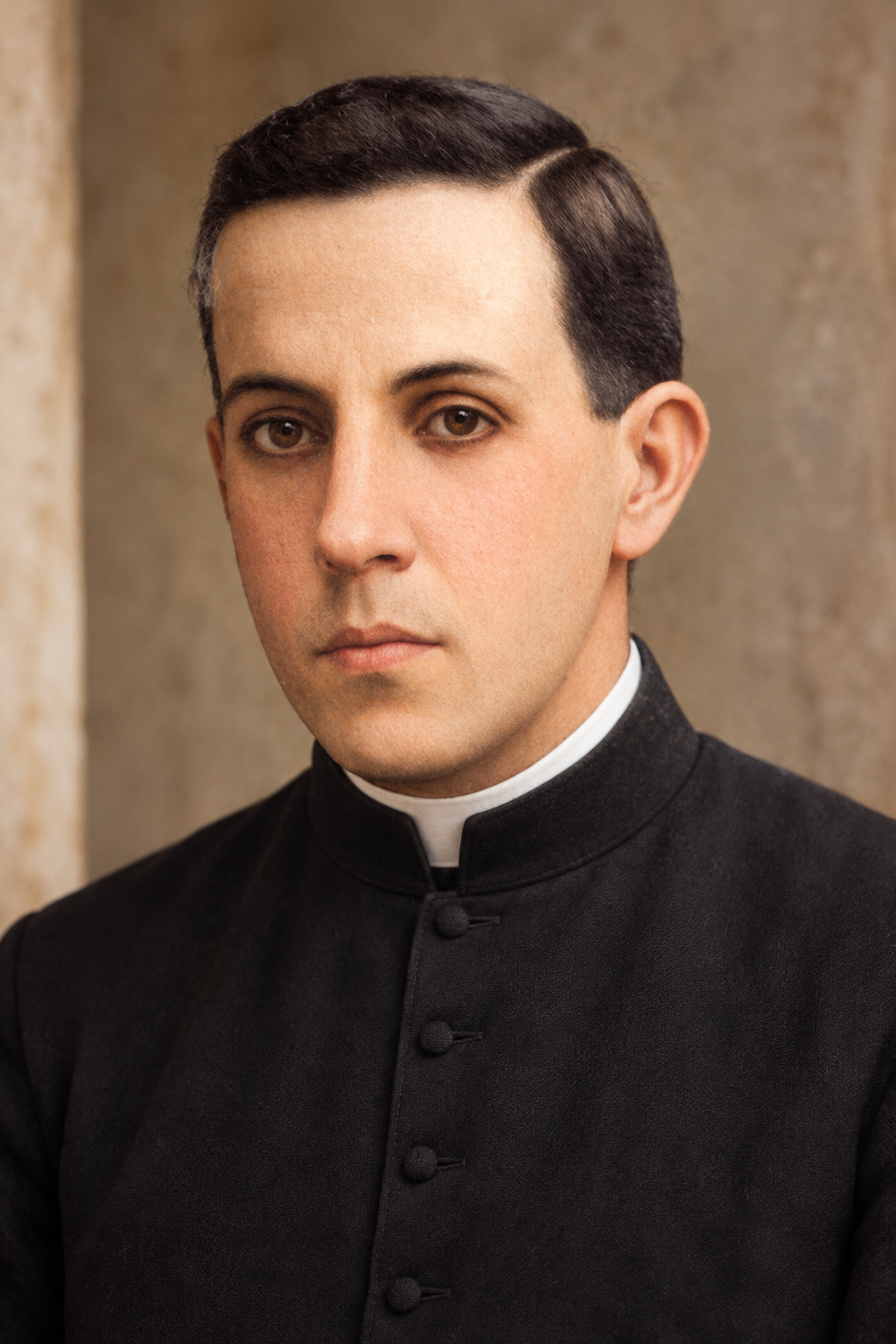
About Miguel Agustín Pro
Miguel Agustín Pro grew up in a Mexican mining family and became a Jesuit priest. His father was a mining engineer, and much of his early education came from tutors. When he entered religious formation, he had not finished secondary school and found the academic work difficult.
His youth included practical experience in his father’s work. Sigrid María Louvier Nava’s historical account describes him helping with the mining agency’s paperwork after leaving school. She also records his mother’s charitable activity and his assistance in feeding people in need. His older sisters’ decisions to enter religious life, and a conversation with their congregation’s founder, Julia Navarrete, helped him consider his own vocation. He then discussed joining the Jesuits with his confessor.
He joined the Jesuit novitiate at El Llano in Michoacán in 1911.
Political violence disrupted his training. In 1914, after soldiers attacked the novitiate, its community dispersed. Pro made his way to Los Gatos, California, and later continued his studies in Spain. He taught in Nicaragua before returning to Europe for theology. In Belgium, he also studied social questions in preparation for work with laborers in Mexico.
After ordination, he visited Action Populaire in France to learn more about Catholic social work. The cause’s timeline describes time spent reading in its library, consulting Jesuits and compiling a bibliography on social questions. This study formed part of his preparation for returning to Mexico.
He was ordained in August 1925. Recurring stomach illness required operations and interrupted his studies. He left Europe in June 1926 and reached Veracruz in July, then travelled to Mexico City. That month, Mexico’s bishops withdrew public worship in response to government restrictions on the Church.
His preparation for social ministry had a specific purpose. Louvier Nava cites the Jesuit provincial Camilo Crivelli’s wish to prepare him for work among Mexican industrial workers, particularly in Orizaba. The provincial wanted someone who could speak naturally with workers, understand their concerns and gain their confidence. After Pro returned to Mexico, the proposed assignment changed. He helped at the provincial office, and plans to send him to a school in Chihuahua were overtaken by the conflict. He also resumed his interrupted theological studies and completed examinations while carrying out his ministry.
Pro continued his ministry through meetings in private homes where people could receive Communion. At his beatification, John Paul II singled out these Eucharistic stations as a central part of his work.
His pastoral activity also included assistance to unmarried mothers and women involved in prostitution.
His letters give a more detailed picture of the relief work. In correspondence reproduced by his early biographer Antonio Dragon, Pro described volunteers collecting, storing and distributing provisions. A February 1927 letter to his provincial reported supplies for eighteen families for two months. He found lodging as well as food and relied on other people to carry out much of the collecting. The letters describe gifts of sugar, rice, coffee and other staples, together with the constant difficulty of meeting new requests. He also raised money by raffling donated objects.
Writing to a cousin shortly before his death, he described women and unemployed men helping with this work. He distinguished his regular families from district committees receiving surplus supplies. Food was only one need: families also required rent, clothing, shoes and treatment when they were ill. He sought doctors willing to work without payment and property owners willing to lend houses. His humor did not conceal the strain of repeatedly asking for help; in another letter he admitted how embarrassing it could be. These translated excerpts show him presenting charity as organized, shared work sustained by faith, rather than as an achievement he could claim for himself.
In November 1927, Pro and his brothers were arrested in connection with an attempt to kill Álvaro Obregón. The authorities interrogated the prisoners, but no court issued a death sentence. Pro was executed on November 23 in the courtyard of the Federal District police headquarters. His brother Humberto was also killed; their younger brother Roberto survived after his execution was halted. Photographers and journalists witnessed the shootings. Images of Pro praying and facing the firing squad with his arms outstretched circulated widely. Historian Marisol López Menéndez examines how these photographs helped shape his reputation as a martyr beyond Mexico. She also distinguishes the documented press presence from unverified accounts that foreign diplomats attended.
John Paul II beatified Pro on September 25, 1988. The pope remembered his perseverance through illness and dangerous pastoral work, emphasizing the joy he brought to his ministry.
His remains were transferred to Mexico City’s Sagrada Familia parish in 1984. A museum beside the parish opened in 2010, preserving objects associated with his life, including clothing and a portable altar.
The Catholic calendar for the United States includes an optional memorial of Pro on November 23.
Wondering how to weigh the stories and sources? Learn how to read a saint biography.