Biography
Miguel de la Mora
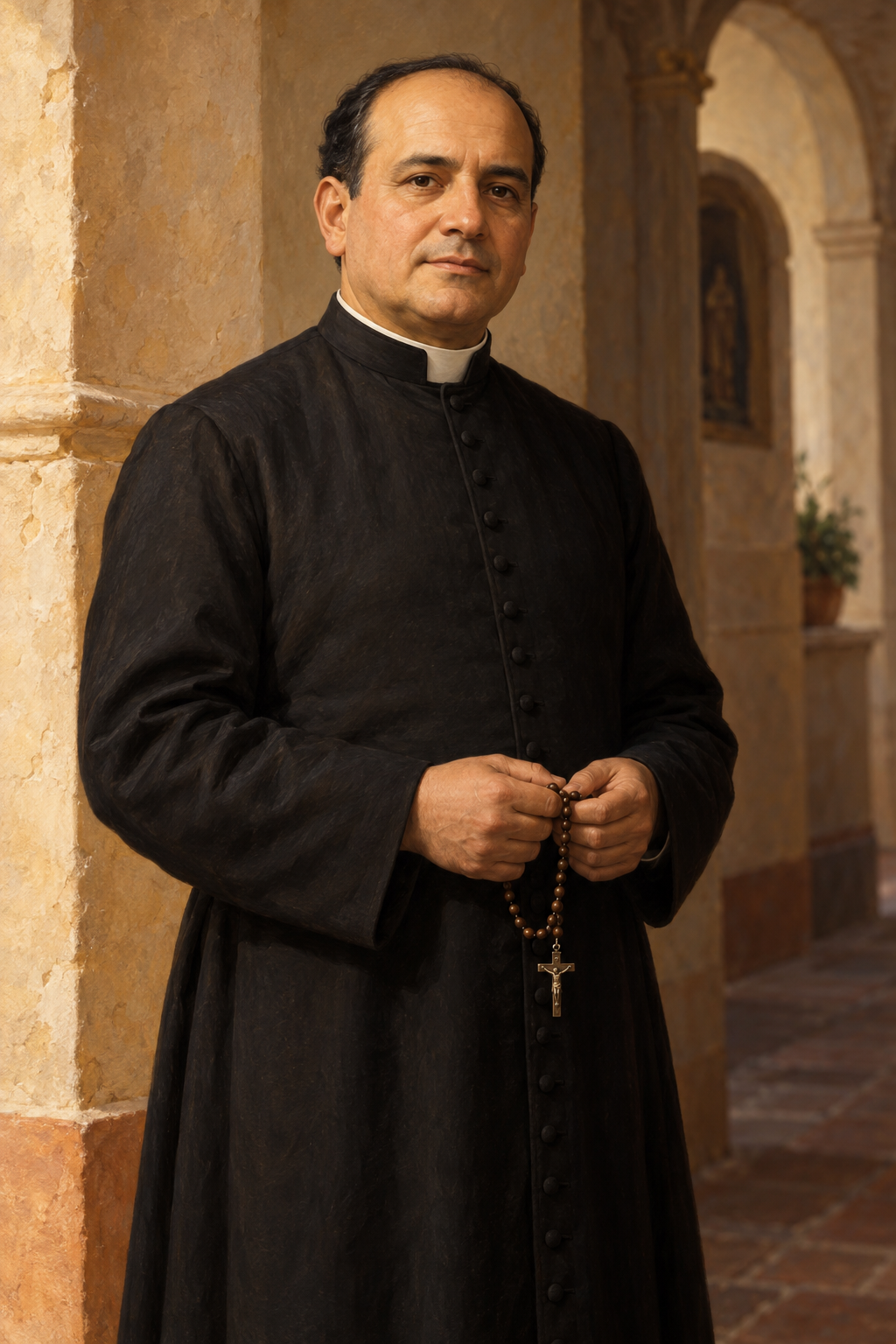
About Miguel de la Mora
Miguel de la Mora was a Mexican priest from Tecalitlán in Jalisco. He grew up helping his family with farming and livestock at Rincón del Tigre. After his father died, his elder brother Regino helped him enter the seminary at Colima. The historian Fidel González Fernández dates his ordination to 1906, while noting the loss of diocesan records and the importance of family testimony for this part of his life.
His ministry took him to Tomatlán, the cathedral at Colima, the Hacienda de San Antonio and Zapotitlán. He returned to the cathedral in 1918. Alongside its daily worship, he heard confessions, visited sick people and taught catechism. He also directed the diocesan work of the Propagation of the Faith and provided spiritual direction at La Paz school for girls.
The Vatican’s account remembers him as an unassuming, orderly priest who was attentive to poor people. That ordinary ministry became dangerous during the conflict between the Mexican government and the Catholic Church. Colima’s authorities required priests to register for permission to exercise their ministry. The bishop and clergy rejected the demand, and the government responded with prosecution and expulsion. Miguel remained in hiding so that he could continue serving the faithful.
After he was discovered, the authorities threatened him with imprisonment unless he reopened public worship at the cathedral against his bishop’s instructions. The pressure placed him between the demands of the military authorities and his commitment to the Church’s leadership. He eventually decided to leave the city.
The narrative published under the name Spectator describes his release on bail, with an obligation to report daily to the military headquarters. It recounts his departure before dawn on August 7, 1927, hoping to reach a ranch where relatives and friends could shelter him. Another priest, Crispiniano Sandoval, accompanied him. At Cardona the travelers stopped for food and were recognized and arrested.
In that account, Sandoval fell behind the soldiers on the return journey and escaped by turning down a side street. Miguel, already identified, was taken to the military headquarters. General Flores ordered his execution. The account depicts him forgiving his executioners and blessing them with a crucifix. These details belong to a devotional narrative of his death and are best read as part of its transmitted remembrance.
The Knights of Columbus recalls that Miguel belonged to Council 2140 in Zacatecas and had signed a protest against the religious laws in 1926. Its account of his final hours says that he was executed without trial while praying the rosary. His brother Regino witnessed the shooting and survived. The family’s loss should not be enlarged by mistakenly including Regino among those killed.
Miguel died at Colima on August 7, 1927. He was beatified in 1992 and canonized by John Paul II on May 21, 2000.
His remains are kept in the cathedral’s chapel of the martyrs. Carlos Villa Roiz’s account of the cathedral dates their arrival there to December 9, 1942. The place where Miguel had served thus also became a place of remembrance for him.
His devotion continues as part of the life of the Diocese of Colima, whose patron he is. In 2025, cathedral rector Osiris Juan Pablo Aguilar described a novena involving young people, family groups, missionaries and other lay associations. It concluded on August 7, the anniversary of Miguel’s death, with a solemn Mass. The rector emphasized confession and reconciliation during the observance, connecting remembrance of the martyr with the community’s present worship.
The Knights of Columbus also includes him in its novena for the Mexican martyrs. The prayer for his day asks for wisdom and courage for families and other Christians living their faith in society. This is a contemporary prayer intention, rather than a claim that Miguel is formally patron of all families.
Wondering how to weigh the stories and sources? Learn how to read a saint biography.