Biography
Moisés Lira Serafín
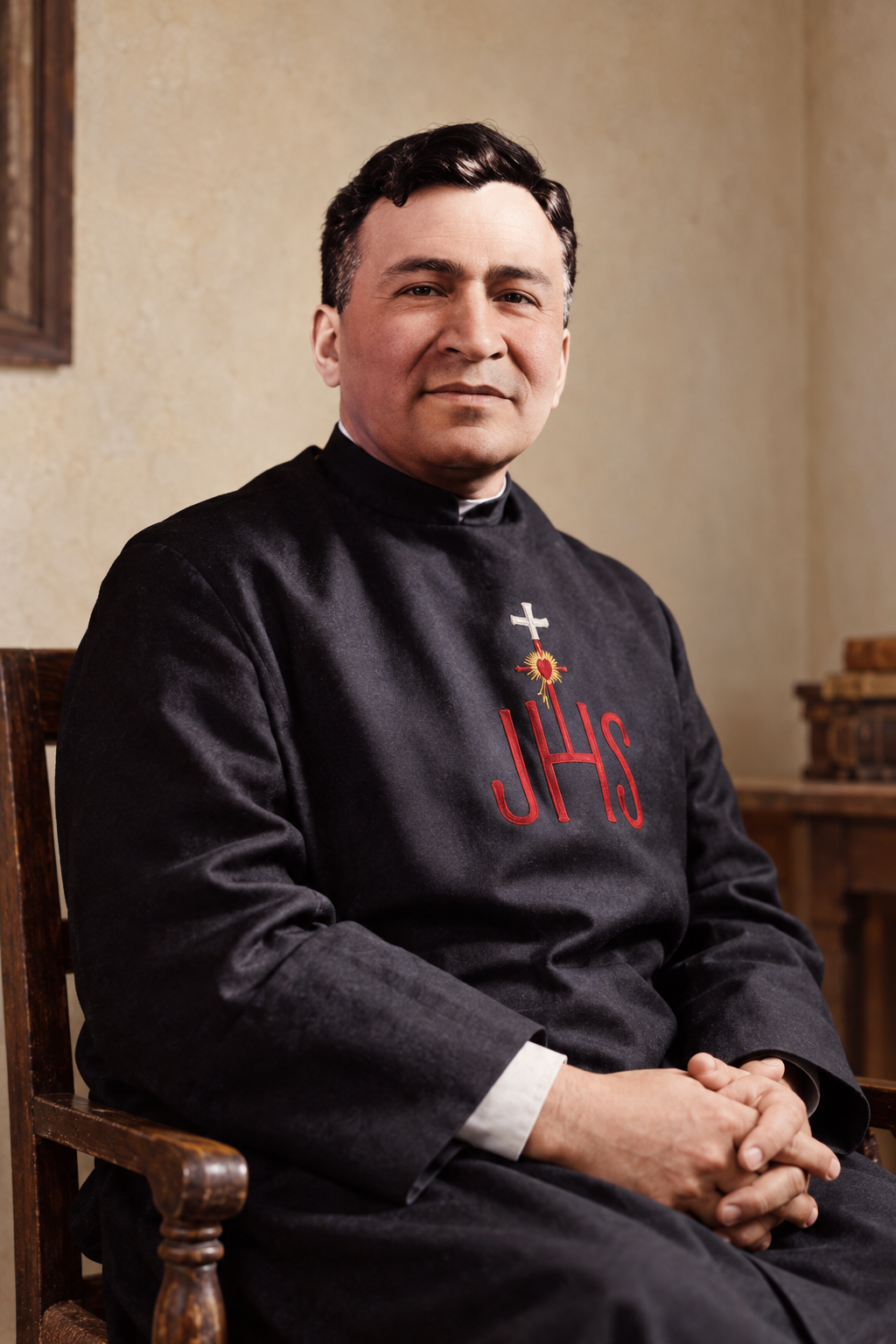
About Moisés Lira Serafín
Moisés Lira Serafín grew up in Puebla, Mexico, in a family whose circumstances changed repeatedly during his childhood. His mother died while he was young, and his father’s work as a teacher took him from place to place. Mother Victoria helped him pursue his wish to become a priest, while Petra Munive provided a home and financial support in Puebla.
He entered the Palafoxian Seminary as an external student in 1911 and studied Latin. Spiritual exercises helped him confirm his desire for priesthood and religious life. In 1914 he met Félix de Jesús Rougier and became the first member to enter the new Missionaries of the Holy Spirit. He made his religious profession in 1917 and continued his theological studies in Mexico City and Morelia.
A letter from Morelia, dated May 8, 1921, gives a more personal view of his formation. Writing to Rougier, Lira reported that he had returned to classes after nearly two weeks away and that his fever had subsided. He also described crying alone in his room during periods of sadness. These admissions stand beside repeated expressions of peace and willingness to accept what he understood as God’s will. He asked Rougier to remember him in prayer and expressed affection for the other members of the congregation. The letter shows how closely he linked his personal struggles with his attachment to this religious family. It is his own account to a trusted spiritual guide, preserved in the published cause biography, rather than an outside observer’s assessment of his health or emotions.
He was ordained a priest in Morelia in 1922. His early ministry included visiting sick soldiers at a lazaretto, where he contracted smallpox and became seriously ill. Religious persecution later disrupted his ministry, and he was sent to Rome for further study.
The Pontifical Gregorian University records that he enrolled in its Faculty of Theology in 1927 to study biblical Greek.
His Roman years also brought a crisis in his vocation. Sister Beatriz Ruiz’s account describes his response as a renewed commitment to trust God, expressed in a vow of abandonment. After returning to Mexico, he devoted his ministry to spiritual direction and confession. He organized groups of altar servers, encouraged catechesis and helped young people consider religious vocations. His care also extended to prisoners and people in hospital.
In 1934 he began the charitable work that became the Missionaries of Charity of Mary Immaculate. Amalia Garduño and Teresa Martínez were his first collaborators. When transferred to Celaya, he continued guiding the sisters through correspondence. The Dicastery reports that both later left amid disagreements over becoming a religious institute. The institute received diocesan approval in 1949.
His correspondence with Rougier continued as Lira took on wider responsibilities. In May 1937 he wrote to congratulate Rougier ahead of his fiftieth anniversary of priestly ordination. His promised gifts were spiritual: prayer, daily struggles, and the work of his ministry. He acknowledged Rougier’s suffering and reaffirmed his attachment to him as both founder and spiritual father.
A letter from Rougier in October 1937 addressed Lira’s new responsibility for the house at Celaya. The founder urged him to combine gentleness with firmness in governing the community. He also encouraged an atmosphere of joy alongside fidelity to religious observance. His practical instructions included gathering the priests and brothers for a consecration to the Sacred Heart, preparing a short written formula, and offering the house’s keys to the Virgin Mary. These were recommendations to the new superior, not evidence that every ceremony was carried out exactly as proposed. The letter places Lira within a community where leadership involved common prayer, daily discipline, and care for the people entrusted to him.
His teaching emphasized spiritual childhood: a relationship with God marked by the trust of a child in a loving parent. At his beatification, Cardinal Marcello Semeraro linked this confidence with Lira’s ability to accompany others. The homily recalls witnesses who remembered his warmth and humor, including during serious illness. It also describes a ministry that extended beyond hearing confessions to helping people discern their choices in life. Semeraro described him as spending six to eight hours a day hearing confessions.
His health deteriorated during his final years, and he died in Mexico City in 1950.
The Catholic Church beatified him in Mexico City in September 2024. The following day, Pope Francis acknowledged the ceremony and remembered his work helping others grow in faith.
The Missionaries of the Holy Spirit continue to commemorate him on June 25. A report from their Rome community describes a celebration shared with members of the congregation he founded, recalling his years in Rome and his spirituality of trust.
Semeraro’s homily identified listening and personal accompaniment as a particular part of Lira’s legacy. It presented his spiritual direction as a source of encouragement for people seeking guidance, connecting his language of childhood with a pastoral responsibility to care for others.
Wondering how to weigh the stories and sources? Learn how to read a saint biography.