Biography
Nicanor Ascanio Soria
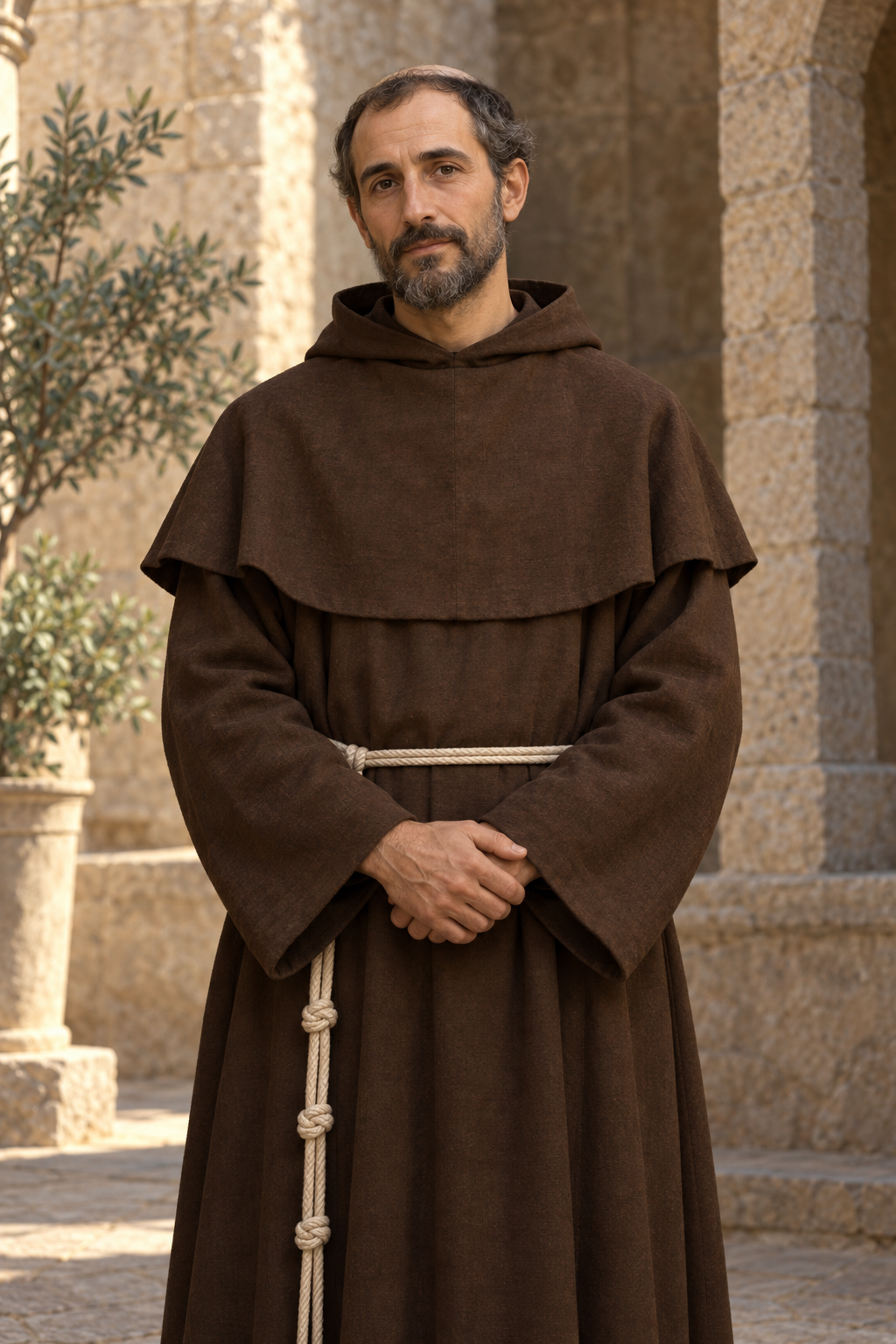
About Nicanor Ascanio Soria
Nicanor Ascanio Soria was a Spanish priest who spent many years in ministry in Spain before joining the Franciscan community in Damascus. He was killed there with other friars and three Maronite brothers in July 1860.
He came from Villarejo de Salvanés and entered the Franciscan convent of La Salceda as a teenager. After being forced to leave religious community life, he returned home and was ordained for the Diocese of Toledo. His ministry included service in Villarejo’s parish and the sanctuary of Our Lady of the Victory of Lepanto. He also served in Valdaracete, and the diocesan account records preaching and novenas in Perales de Tajuña and Tielmes. He became chaplain to the Conceptionist nuns in Aranjuez.
A report by Silvia Giuliano, drawing on an interview with vicepostulator Ulises Zarza, describes his longstanding desire for missionary service and martyrdom. According to that devotional account, he consulted the nun María de los Dolores y Patrocinio about an impulse to go to the Holy Land. Her encouragement belongs to the reported history of his discernment; it is not independent proof of a supernatural prediction.
He joined the missionary college at Priego and traveled to the Holy Land in 1859. Assigned to Damascus to study Arabic, he subsequently received an appointment to Saint Saviour’s parish in Jerusalem. Violence made travel dangerous. The Custodian instructed him to follow his immediate superior’s judgment while remaining ready to leave when conditions allowed. Nicanor therefore remained in Damascus. The same report attributes to him a refusal to abandon Christianity when attackers entered the convent, followed by his death from a knife wound.
Historian Eugene Rogan places the attack within the wider destruction of the Christian quarter. The friars had trusted the monastery’s defenses and declined an offered escort to safety. Rogan identifies the Christian layman Mitri Qara as the surviving eyewitness to the assault. The later accounts of individual words and final gestures should be read within that limited testimony, rather than as complete transcripts of the killings.
Nicanor’s memory remained visible in his hometown through a named street, a plaque marking his birthplace, and a statue and relic associated with the Damascus martyrs in the parish church. These memorials express local devotion; they do not by themselves establish a formal patronage.
He was canonized with the Damascus martyrs on October 20, 2024.
A Madrid parish calendar lists his commemoration on July 10.
Wondering how to weigh the stories and sources? Learn how to read a saint biography.