Biography
Nicetas Stethatos
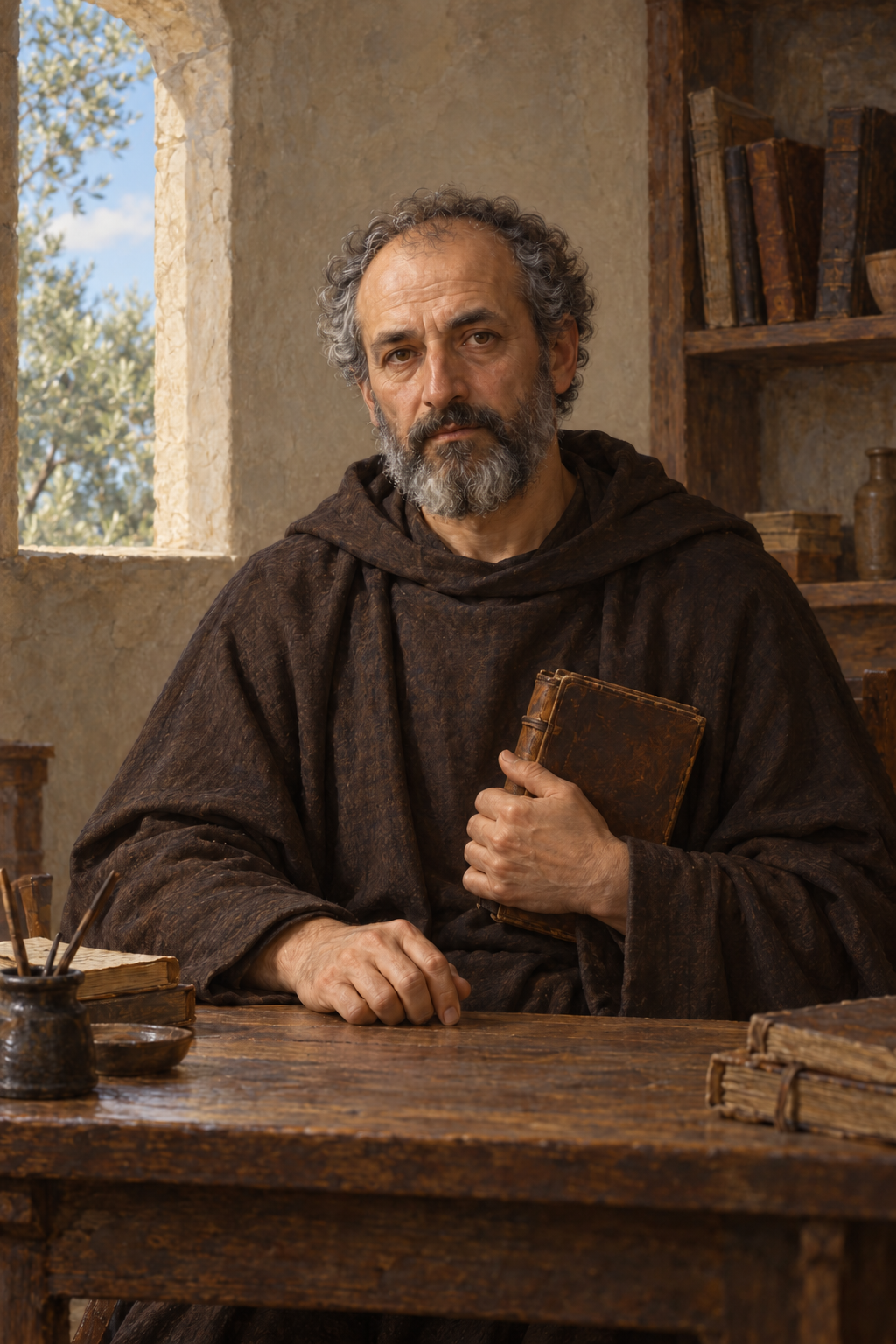
About Nicetas Stethatos
Nicetas Stethatos appears to have spent his monastic life at the Stoudios monastery in Constantinople. An eleventh-century writer and eventual superior of that community, he helped preserve the work of Symeon the New Theologian while developing a substantial body of spiritual teaching of his own.
The Orthodox Encyclopedia does not regard either his birth date or birthplace as established. Chios is a possible identification, dependent on whether a reference in Michael Psellos concerns this Nicetas. His own account says he entered monastic life at fourteen.
As a young monk he copied Symeon’s writings. His contact with the older teacher was necessarily limited, since Symeon died in 1022. Nicetas later described a visitation from his deceased mentor that prompted renewed attention to the task of writing his life.
He became an editor as well as a biographer, collecting and publishing Symeon’s Discourses and Hymns. He also helped arrange the return of Symeon’s relics to Constantinople.
The resulting Life is a committed defense of Symeon and of Symeon’s own spiritual father, Symeon Eulabes. Stephanos Efthymiadis stresses that Nicetas was answering opponents and intervening in the church’s disputes. His narrative was written at least thirty years after his teacher’s death and after the translation of the relics in 1052.
The work also preserves Nicetas’s statements about writings now lost, including a longer Life of Symeon. Its detailed scenes and named participants make it valuable for the study of Byzantine monastic life, even where its claims call for historical caution. Its accounts of visions and miracles belong to the devotional purposes of the biography.
Nicetas was involved in the bitter disputes surrounding the papal embassy of 1054. He challenged Latin practices concerning Eucharistic bread, Saturday fasting, priestly marriage and the Lenten liturgy. Cardinal Humbert reported that Nicetas withdrew his criticism and entered communion with the legates.
His polemical writing also targeted Armenians and Jews. In his spiritual works, he emphasized tears of repentance and the guidance of a spiritual father. His account of heavenly and earthly hierarchy drew on the writings attributed to Dionysius the Areopagite.
The opening of his First Century of Practical Chapters explains writing as a responsibility: someone entrusted with understanding should not keep it unused. He connects faith with perseverance and love, and distinguishes the arrival of an unwanted thought from actually committing a wrongful act.
He also turns the language of the senses inward. Seeing, hearing and touch become images for understanding, discernment and an attentive heart. The aim is a transformed inner life directed toward God.
Late in life he became abbot of Stoudios. The Orthodox Encyclopedia places his death after 1081 and before 1092. It also rejects the familiar story that Stethatos was a nickname earned by confronting the emperor; it was probably a family name.
Pemptousia identifies him as a venerable saint when publishing his spiritual chapters.
Three collections of a hundred chapters were included in the Philokalia.
Wondering how to weigh the stories and sources? Learn how to read a saint biography.