Biography
Nicholas of Tolentino
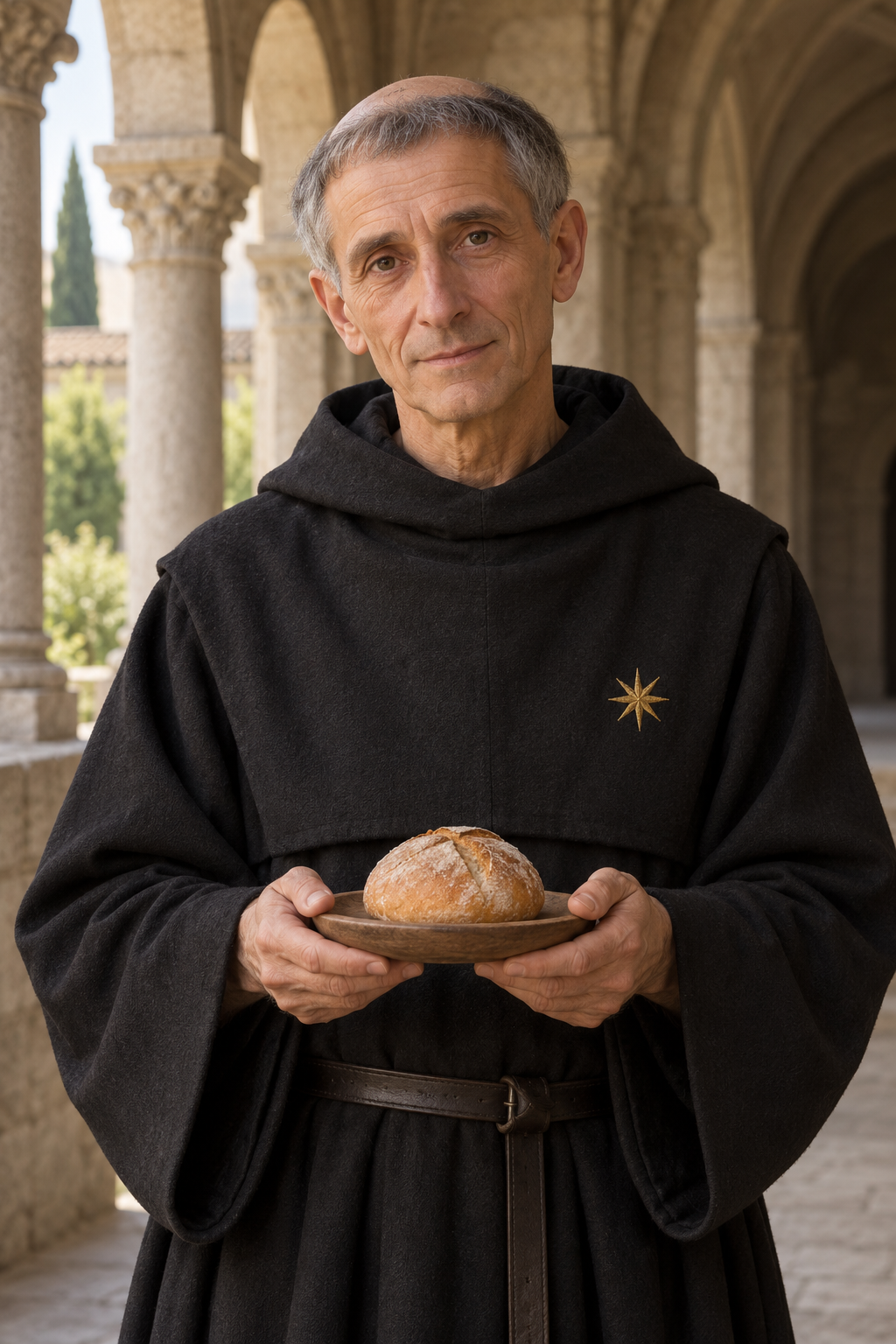
About Nicholas of Tolentino
Nicholas of Tolentino was an Italian Augustinian priest whose ministry joined prayer with care for the people around him. The Augustinian account remembers a confessor who welcomed those seeking help, visited the sick and served people in poverty. He spent the last thirty years of his life at Tolentino. Within his community, his reputation rested on a life of prayer and charity rather than public office. He became the first member of the Augustinian Order to be canonized.
His concern extended to the dead. The Augustinians connect his title as patron of souls in purgatory with prayer for their salvation. This remembrance remains part of the order’s account of his spiritual life.
He was born in 1245 at Castel Sant’Angelo, now Sant’Angelo in Pontano. Giovanna Casagrande’s biographical study places his attraction to religious life after a sermon by the Augustinian Reginaldo. His early formation is less certain than later devotional accounts sometimes suggest. The study places his priestly ordination probably in the early 1270s and his arrival at Tolentino in 1275. There he heard confessions, visited people who were ill and helped reconcile disagreements, including disputes within marriages. He died on September 10, 1305. His canonization ceremony took place on June 5, 1446; the corresponding bull followed in February 1447.
The records also require careful reading. Casagrande distinguishes Peter of Monterubbiano’s life of Nicholas from testimony gathered for the canonization inquiry. Stories of demonic attacks in the life do not receive comparable support in the depositions. The campaign for recognition also belonged to the political and religious circumstances of the Marches, involving the order, towns and papal interests.
The historian Didier Lett examines another difficulty in the evidence: how an inquiry organized around miracles recorded the work of physicians. His published chapter summary describes 371 depositions from 365 witnesses, collected during three months in five towns in 1325. Doctors formed the largest professional group among witnesses. Yet the stories preserved occasions when their treatments had failed, because recovery beyond medical help strengthened a proposed miracle. Their appearance in such accounts cannot fairly establish that they were generally incompetent. The inquiry’s purpose shaped the evidence it retained. Lett also observes that physicians enjoyed social standing that made them useful witnesses. His analysis helps explain why testimony can be valuable without serving as a neutral record of everything that happened. The depositions illuminate the process of recognition as well as the people and events they describe.
Pietro Bellini, writing for the Maltese Augustinian province, presents Nicholas as a model for an order formed from earlier communities of hermits. His account joins contemplation to service, and poverty to attention to others. Bellini describes the saint’s familiar star attribute and the gentle appearance given him in early paintings. Such images express a remembered character, without establishing an authenticated likeness. He also records invocation of Nicholas against plague and fires. These associations belong to the history of devotion; they do not demonstrate protection from illness or disaster. For Bellini, Nicholas’ example holds together the search for God and concern for human difficulties, rather than treating prayer and practical service as separate lives.
The sanctuary at Tolentino preserves a different form of remembrance in its blessed bread. Its account traces the custom to a story that Mary appeared to Nicholas during illness and instructed him to obtain bread from a woman and eat it with water. Recovery belongs to that devotional narrative, rather than a medically verified account. The blessing rite places the bread within biblical memories: Elijah and the widow, and the feeding of the multitude in John’s Gospel. The sanctuary describes a hymn and prayers accompanying the blessing. It specifies small breads made from wheat flour and water, without yeast, and baked. The practice gives a material form to prayer and remembrance, while its healing stories remain expressions of religious belief.
The sanctuary also recounts a procession during plague at Córdoba in 1602, when Augustinians distributed blessed bread. Its account attributes recovery to Nicholas’ intercession and describes an annual act of thanksgiving. This later story records the devotion’s reach beyond Italy.
Nicholas’ shrine has also faced damage in modern times. An Augustinian report published in September 2023 describes the effects of the 2016 earthquake on the basilica, cloister and chapel containing his tomb. Temporary work allowed the church to remain open while fuller restoration was awaited. That account describes the situation in 2023, without establishing the present condition of the buildings. In the accompanying interview, the Italian provincial prior, Giustino Casciano, discusses the connection between contemplative life and ministry. The report identifies Nicholas and Rita of Cascia as copatrons of the Italian Augustinian province and records prayer to Nicholas for sick children. The damaged shrine’s continuing religious life adds a recent chapter to a devotion whose best-known associations also include prayer for the dead.
Wondering how to weigh the stories and sources? Learn how to read a saint biography.