Biography
Nicholas Poppel
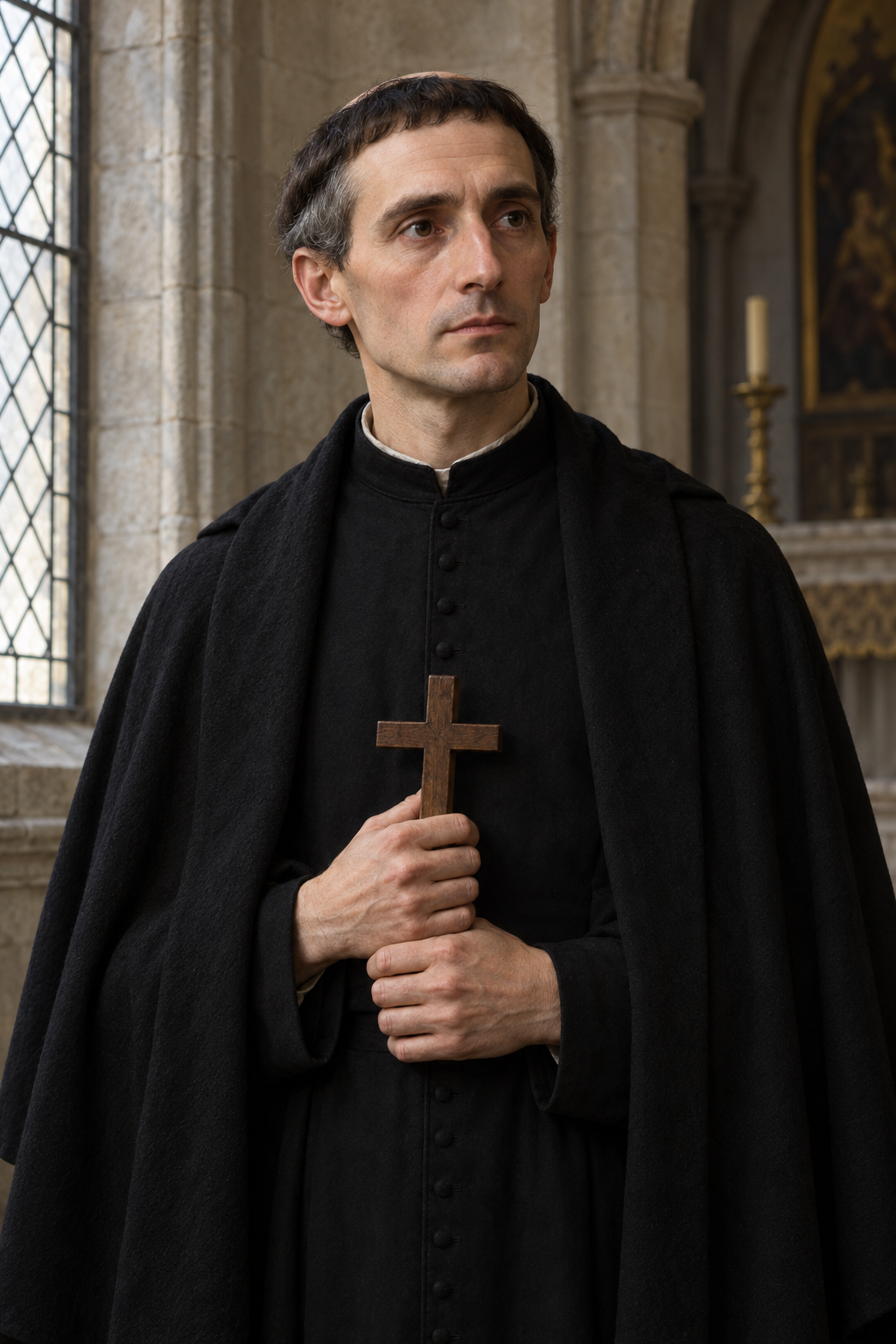
About Nicholas Poppel
Nicholas Poppel was a diocesan priest who served at Gorkum alongside Leonard van Veghel. He was among the nineteen clergy and religious executed at Brielle on July 9, 1572. They were canonized in 1867.
He was born around 1532, but Poppel and Weelde both claimed him. Marc Vermeeren’s study favors Poppel while explaining why university records associated him with Weelde. The same study distinguishes his family name from a patronymic: the recorded form indicates Nicholas, son of Jan Willems, rather than establishing Janssen as his surname. Vermeeren identifies a record of his ordination as deacon at Aalst on June 11, 1557. The date of his priestly ordination remains uncertain.
He entered Leuven University in 1553 and received his philosophy qualification in 1556. In 1559 he began parish work at Gorkum. Vermeeren describes a priest remembered for tireless service, including catechism teaching. His religious zeal also had a coercive edge: the study recounts Estius’ description of Nicholas rebuking people who failed to show reverence during Eucharistic processions. That feature belongs alongside the accounts of his service, rather than being omitted from his portrait.
The Franciscan historian Henrik Roelvink places him among the educated diocesan priests who took part in discussions during captivity and encouraged their companions. Nicholas was a secular priest, despite later popular descriptions that mistakenly call him a Franciscan. The group united people from different forms of clerical and religious life.
His remembrance took a particularly visible form in the region that claimed him. The Flemish heritage inventory records a chapel dedicated to Nicolaus Poppelius at Hegge in Weelde. Its building inscription dates the structure to 1904. Inside stands a painted statue blessed in September 1867, after his canonization, and later moved from Saint Michael’s Church. A memorial inscription identifies Hegge as his birthplace, but the inventory presents that identification as local tradition. The distinction is significant: a commemorative inscription records what a community remembers, without resolving a disputed birth record.
The statue continues to receive practical care. A local report from July 2022 describes its restoration by Jos Timmermans, then ninety years old. The work concerned the image in the Hegge chapel, a place associated with the patron of the local pastoral unit. Such care preserves a devotional object for those who continue to visit it.
The pastoral unit bearing his name was established by Bishop Johan Bonny on December 8, 2017. Its official account identifies communities in Arendonk, Ravels, Weelde, Poppel and Baarle-Hertog. It presents his perseverance in difficult circumstances as an encouragement for their common life. The name thus links the older local devotion to a wider network of parishes.
A more specific association is recorded by Marie-José Wouters: Nicholas was remembered as patron of Amsterdam’s curates. This historical patronage connects his name and his parish role. It is distinct from the broader collective dedications shared by the Martyrs of Gorcum.
Wondering how to weigh the stories and sources? Learn how to read a saint biography.