Biography
Nikanor of Zavorda
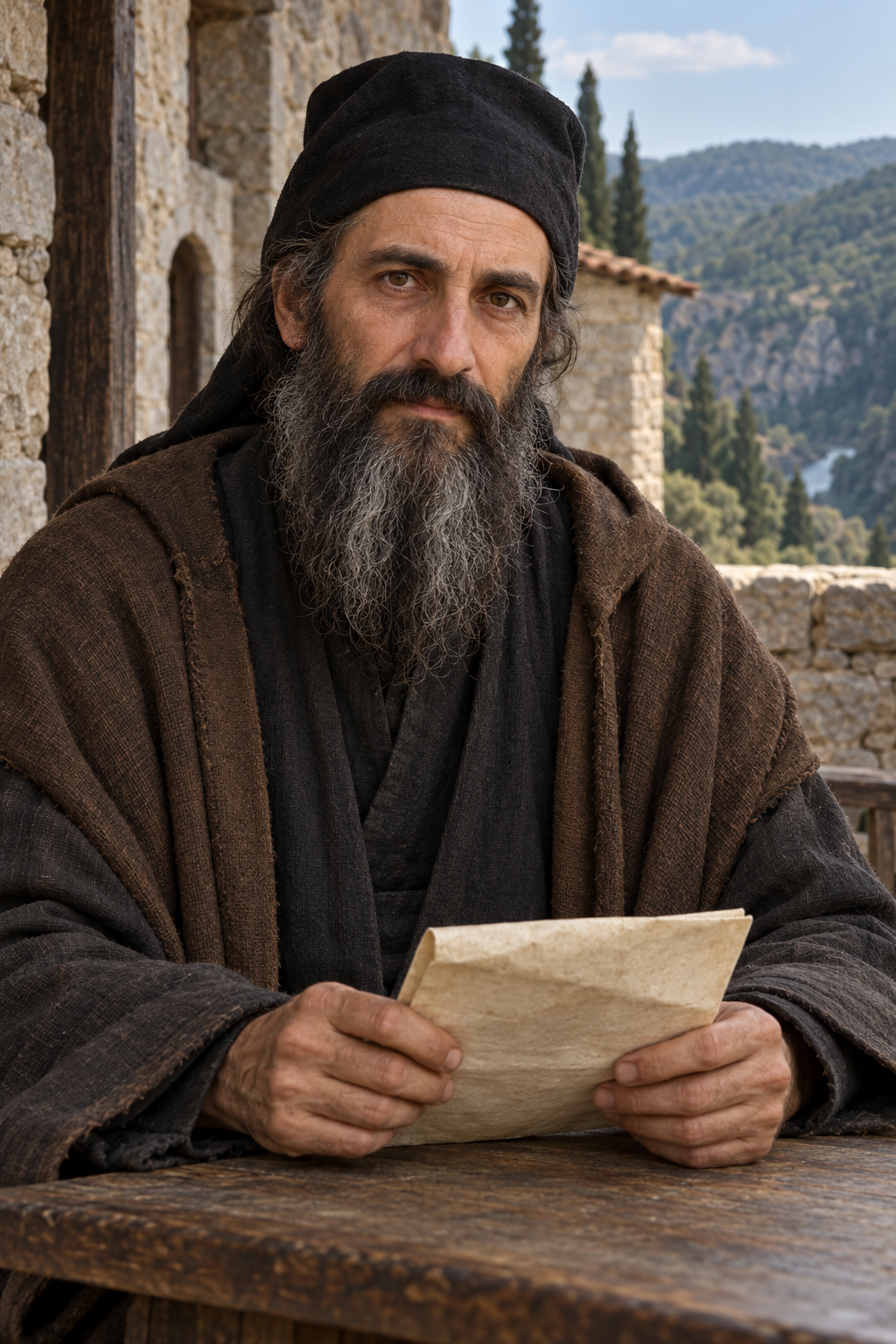
About Nikanor of Zavorda
Nikanor of Zavorda was a monk and priest from Thessaloniki who founded a community dedicated to the Transfiguration on Mount Kallistratos. The Orthodox Encyclopedia places his life between 1491 and 1549, while noting that other dates occur in the literature. He was baptized Nicholas and came from a prosperous family. According to the church tradition, after his parents died he gave away his inheritance and entered monastic life.
The local biography describes a period of priestly service in Thessaloniki before his departure for the mountains. It presents that departure as a response to a divine command heard during prayer. The account then describes years of solitude before other people gathered around him.
A cave on Mount Kallistratos became associated with his early ascetic life. The Orthodox Encyclopedia also records his friendship with Dionysios of Olympus and tells how two of Dionysios’s followers asked to join him. As more disciples arrived, Nikanor needed buildings for a community rather than only a solitary retreat. The monastery that developed there took the name Zavorda from a nearby village.
The date of construction is disputed. The Municipality of Deskati gives 1534 and describes a fortified monastery whose buildings and position offered protection. It places the complex above the Aliakmon River, with steep approaches on most sides. The landscape helps explain the combination of seclusion and substantial communal buildings that visitors encounter there.
Nikanor’s testament offers a more direct account of his work. In the text published by Nikolaos Delialis, he describes renewing the monastery of Saint George, finding an icon among ruined foundations, and building a church with cells, a refectory and other facilities. Delialis reads an appended foundation inscription as 1532 rather than the commonly repeated 1534; that remains an editorial interpretation.
The testament requires common ownership of food, clothing and money, regular work, and an abbot capable of teaching Scripture and church law. It forbids violence between monks. Its discipline also includes restrictive rules: women and new entrants aged eighteen or younger were excluded, and clergy were told to avoid close social contact with Muslims and Latins.
For a suitable successor, the community could look to Meteora, Varlaam or Dionysios’s monastery at Veria. A visiting abbot would hand over the staff and testament. The arrangements show Nikanor planning for his community’s life beyond his own leadership.
The local church account places his death on August 7, 1549, and his burial in a chapel of the monastery. It also recounts healings associated with his relics. Such stories explain his veneration as a wonderworker; they are statements of devotional tradition, not medical evidence.
His memory continued to shape the monastery’s art and worship. The municipal guide describes nineteenth-century paintings in the narthex depicting his life and miracles. It also records a regional custom in which riders bring his relics to their villages in January. Processions and visits to homes follow, before the relics return to the monastery on Holy Thursday.
The monastery celebrates the Transfiguration on August 6 and Nikanor on August 7. The two adjacent observances honor different subjects, even though they form part of the same local festival.
A contemporary report from the Metropolis of Grevena explicitly identifies Nikanor as the monastery’s patron and protector. Its account of the 2026 celebration describes services at the monastery and its Saint Demetrios dependency, with pilgrims venerating his relics.
Wondering how to weigh the stories and sources? Learn how to read a saint biography.