Biography
Norbert of Xanten
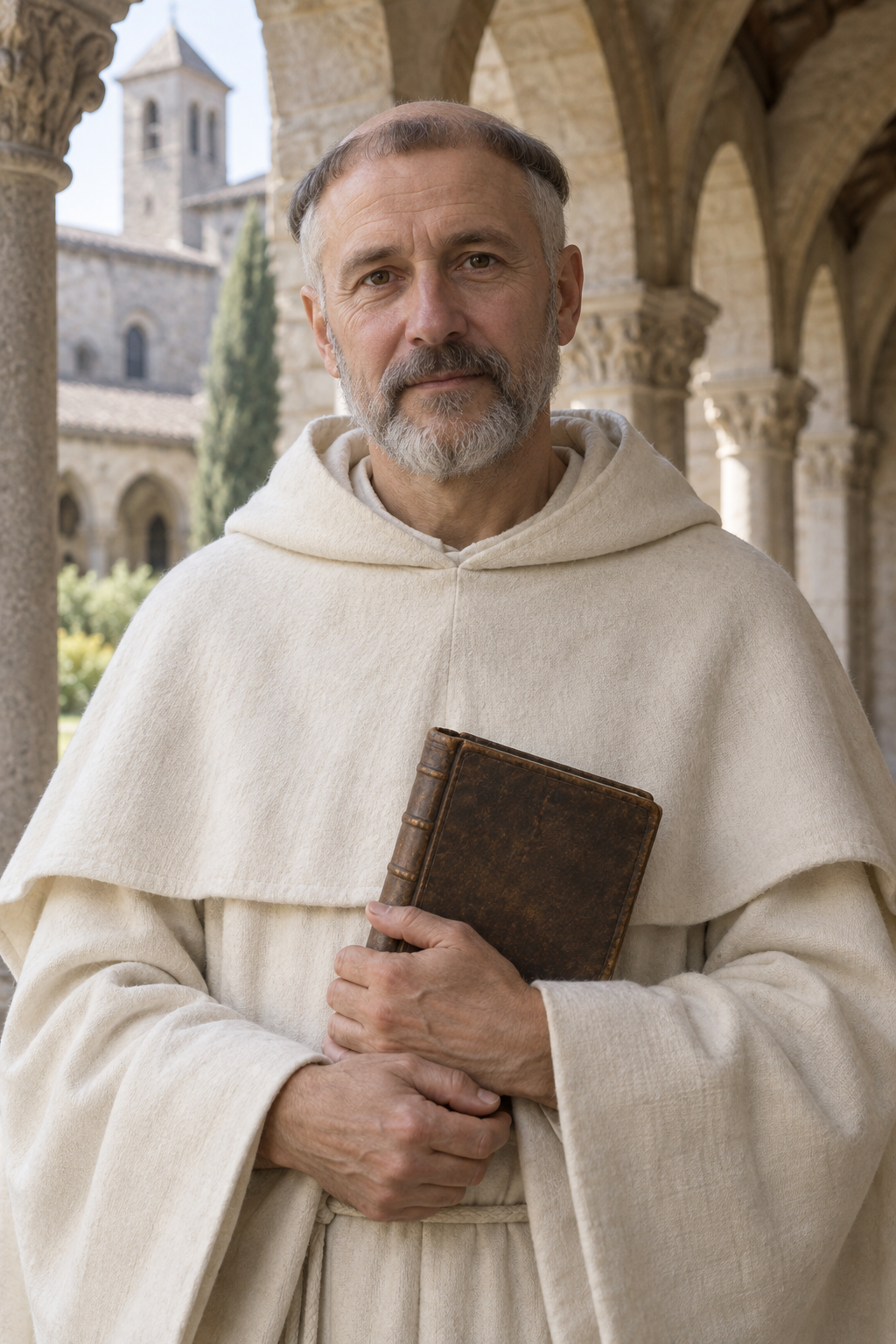
About Norbert of Xanten
Norbert of Xanten knew the privileges of a clerical career before he chose a much less comfortable path. He came from a noble family and entered the community of Saint Victor at Xanten. His service brought him into the world of royal politics, where a churchman could find both influence and security. The Diocese of Magdeburg's account connects his growing distance from Henry V with the king's coercive treatment of the pope during the journey to Italy. Reform would become more than a cause to support: it would change the way Norbert lived.
His birth cannot be assigned an exact year or a certain town. Hubertus Seibert places it between 1080 and 1085, at Xanten or Gennep. As a subdeacon with considerable benefices, he served the archbishop of Cologne before becoming close to Henry V. He declined an appointment to Cambrai and turned toward a life of personal poverty and penance. His first effort to persuade the canons of Saint Victor to follow his new ideals failed. He then sought guidance at religious houses and from a hermit rather than simply relying on his own enthusiasm.
A famous story makes his conversion vivid: lightning startles his horse, and the fallen rider rises determined to change his life. The Catholic Encyclopedia repeats this devotional account, which should not be mistaken for a contemporary record of the storm. It also remembers Norbert seeking the counsel of Cono, abbot of Siegburg. The story's lasting place in his memory lies in its picture of a man interrupted on the road, no longer content to continue as before. His commitment then took the form of priestly ministry, preaching and a deliberately austere way of life.
His preaching soon brought him into conflict with church authorities. At Fritzlar in 1118 he had to answer criticism of a way of life considered unsuitable for a canon. He gave up his benefices and property, and travelled south to seek permission to preach. After illness, he continued with a few companions in northern France and the Meuse region. Men and women were drawn to his message. Bishop Bartholomew of Laon urged him to settle in his diocese, but an attempt to reform an existing community there also failed. Only then did a new foundation become the way forward.
Prémontré offered a home for the movement. Pope Francis's centenary letter distinguishes the settlement in 1120 from the community's profession under the rule of Saint Augustine at Christmas 1121. Prayer and shared life were joined to hospitality for poor people and pilgrims. Norbert later resigned leadership of the communities, and Hugh of Fosses became their first abbot. Hugh's work helped give the expanding movement a durable organization. Norbert's personal initiative thus became a common undertaking that could continue without his daily presence.
The community's own remembrance emphasizes the relationship between common prayer and pastoral work. St. Norbert Abbey describes the early foundation as austere and poor, with an intense liturgical life. Its members followed Augustine's rule rather than a new rule written by Norbert. His calling was not confined to withdrawal from other people. Preaching and reconciling enemies also belonged to the work. This combination helps explain the identity of the Premonstratensians as canons regular: a community of religious life whose service could extend beyond its own household.
Not everyone who sought Norbert's advice was meant to enter his community. The Catholic Encyclopedia tells how Theobald, count of Champagne, wanted to join, but Norbert encouraged him to marry and do good in the world. The account presents religious commitment as something that could shape a household and public life, not only a life inside the order.
In 1126 Norbert became archbishop of Magdeburg. The change brought responsibility for a much larger community and placed his reforming ambitions within the demanding work of episcopal government. St. Norbert Abbey recalls his efforts to defend the Church's freedom against secular princes and his support for Innocent II during the papal division. The wandering preacher had not left public affairs behind permanently; he now faced them from an office of substantial authority.
Norbert's reforms met determined resistance, and for a time he had to leave Magdeburg. His return did not bring a retreat from church affairs. He travelled with Lothar III to Rome and came home ill. He died in Magdeburg on 6 June 1134.
The church of Our Lady in Magdeburg preserves a material connection with his work. In 1129 he had entrusted its community to the Premonstratensians. He was buried there after his death, before his remains were moved within the church and eventually taken to Strahov in Prague. The museum now occupying the former monastery describes the surviving stone coffin and the alterations surrounding it. This is a history of successive changes, not an untouched burial setting. His memory remained bound to a community and a place that continued to change long after his lifetime.
Wondering how to weigh the stories and sources? Learn how to read a saint biography.
Explore similar vocations
Prayers for Norbert of Xanten
Norbert of Xanten: sourced prayer excerpt
Fa’ che, per sua intercessione, il gregge dei fedeli trovi sempre pastori secondo il tuo cuore e pascoli di salvezza eterna.