Biography
Antoine Daveluy
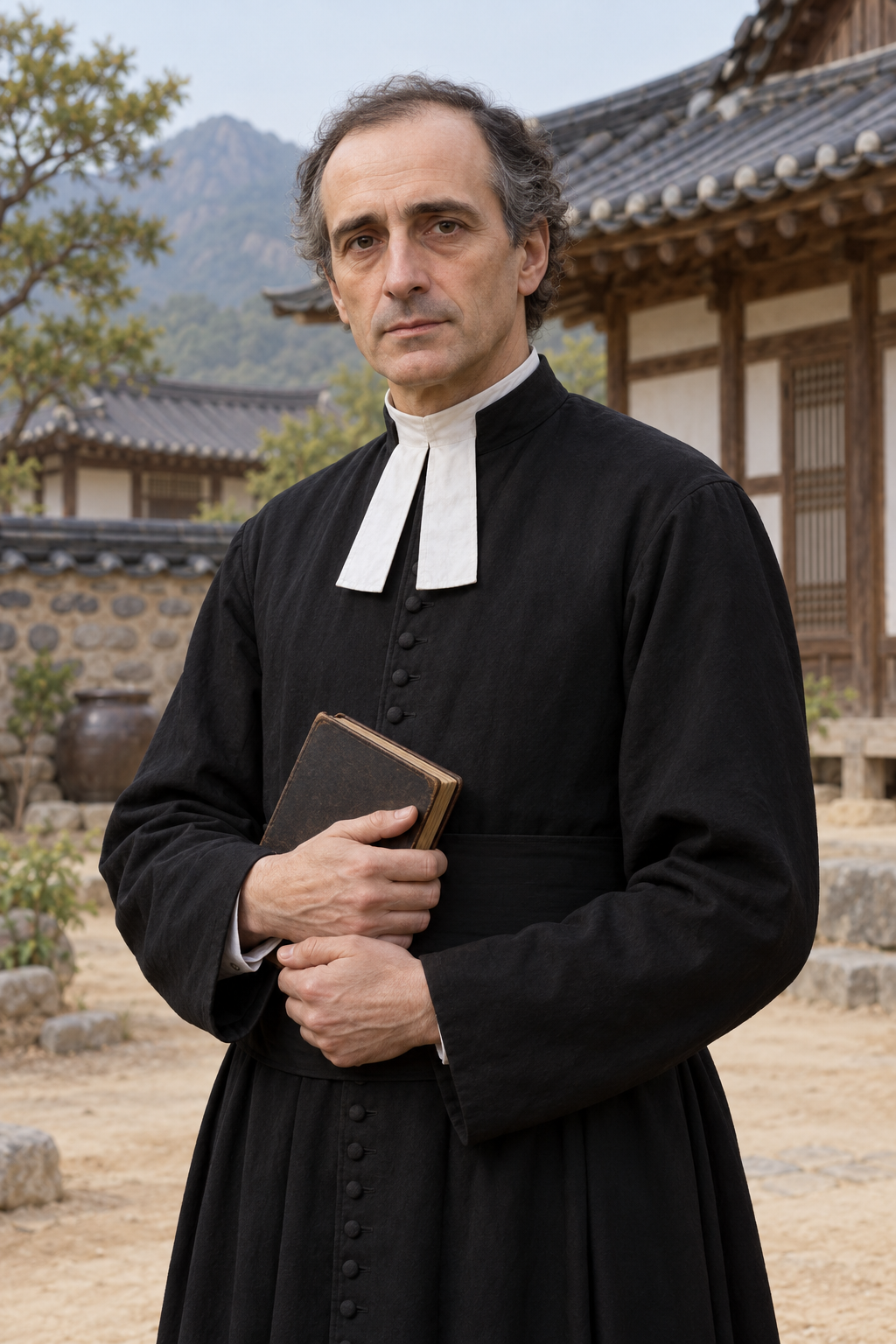
About Antoine Daveluy
Antoine Daveluy began his priestly ministry as an assistant at the parish of Roye in France. After his health improved, he entered the Paris Foreign Missions Society in October 1843. He left Europe the following year, initially assigned to the Ryukyu Islands. While he waited in Macao, Bishop Jean-Joseph Ferréol asked that he be sent instead to the Catholic mission in Korea.
Daveluy’s letter of August 1845 describes the preparations for that journey. Andrew Kim Tae-gon, then a Korean deacon, had obtained a boat and brought it to Shanghai to carry Ferréol into Korea. The boat had lost its rudder on the way and needed help to reach port. Daveluy joined Ferréol there. Before they departed, Ferréol ordained Andrew Kim in a chapel used by Chinese Christians. Daveluy described the small group of priests present and Andrew’s first Mass at a Jesuit seminary. The letter was written while they were still preparing to sail, and records the meetings that brought the three travelers together.
By October 1847, Daveluy was writing to his family about the difficulties of visiting Korean Catholics. He had intended to travel to a distant community, but police activity made the routes unsafe. After a delay of about a month, some of its members undertook the journey to him instead. He described people walking for weeks, including older believers and families carrying young children. These visits brought him into contact with Catholics who had survived earlier persecution. In the same letter, he explained that he was collecting accounts of the martyrs of 1839. The stories he recorded included families displaced from their homes and people struggling to find shelter and food. His account also emphasized the work of Korean Catholics in teaching others while the missionary remained concealed. He credited these believers with sustaining instruction and conversion during the preceding year’s persecution.
In October 1852, Daveluy described a year in which several responsibilities overlapped. He had been assigned to direct a small school, an arrangement intended to let him work while resting his weakened health. Communication with the outside world remained uncertain. Couriers arrived too late to exchange letters across the frontier, so the mission missed a message announcing Father Maistre’s planned rendezvous. Two students were sent to look for him, but returned without meeting him. A later attempt also failed before Maistre eventually entered Korea. During these delays, Ferréol became seriously ill. Daveluy went to Seoul to administer the sacraments and care for him, while also visiting Catholic communities in the bishop’s place. He wrote that combining these duties with his usual work had been exhausting. At the time of writing, he was himself suffering from dysentery. The letter connects the small school, disrupted correspondence and pastoral journeys with the practical burdens of caring for an ailing colleague.
The following September, Daveluy reported Ferréol’s death. He recalled having repeatedly asked to return to the bishop while serving communities near Seoul. Ferréol had directed him to finish those visits first. Daveluy finally hurried back, but arrived after the bishop had died on February 3, 1853. He described the grief of the household and the need to conceal the death from outsiders to avoid attracting suspicion. The body was moved at night to another house, where he celebrated Mass the next day. Snow and ice delayed burial. In April, Daveluy presided over the funeral near Andrew Kim’s grave. He then resumed his ministry. The same letter describes the arrest and release of a Catholic host whose house he had used, alongside continued baptisms and local threats. Writing about his own condition, he reported that his health had improved and that he hoped to begin another round of visits after a retreat.
Daveluy’s research continued alongside these journeys. In a letter of February 1855, he sent the mission’s superior a translated account of Paul Yi’s martyrdom in 1798. He explained that he had worked from an earlier written record and translated it during the limited free time left by his ministry. This introduction identifies his role as a collector and translator of received accounts, rather than an eyewitness to those earlier events.
In 1857, Bishop Siméon Berneux consecrated Daveluy as his coadjutor, with the right to succeed him. Daveluy also prepared religious books and continued gathering historical material. The mission archive’s biography records a three-month journey in 1859 to interview surviving witnesses of the persecution of 1801. In 1862, he sent his historical work to the society’s seminary in Paris. Charles Dallet later drew extensively on these materials for his history of the Korean Church.
Daveluy was arrested in March 1866 and taken to prison in Seoul with the missionaries Pierre Aumaître and Martin Huin. Following interrogation and torture, the three were condemned to death and sent to Galmaemot. They were executed there on March 30, 1866. His collection of biographies and historical records preserved testimony about earlier Korean Catholics as well as the mission he served.
Wondering how to weigh the stories and sources? Learn how to read a saint biography.