Biography
Oliver Plunkett
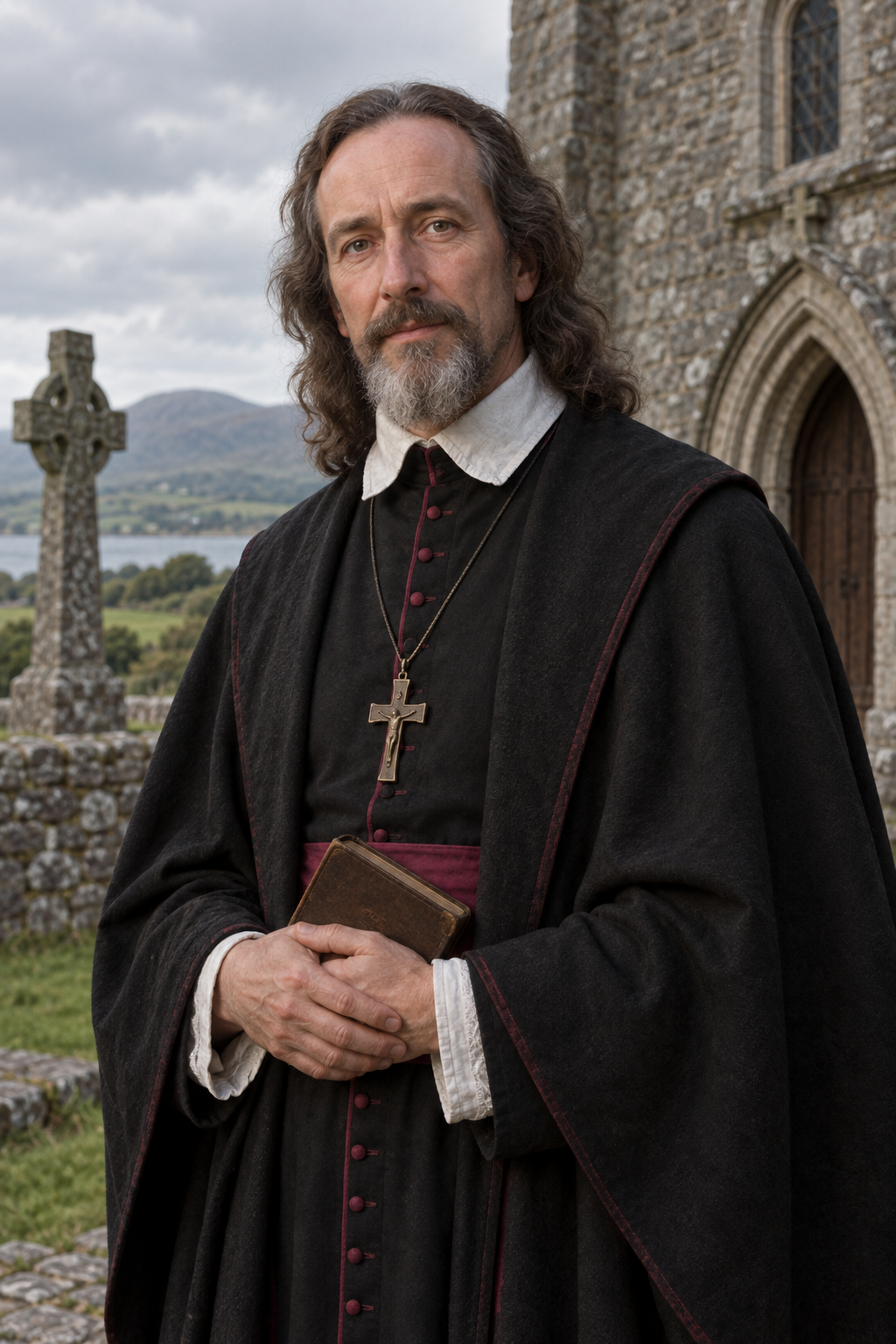
About Oliver Plunkett
Oliver Plunkett was born at Loughcrew in County Meath on November 1, 1625. The Archdiocese of Armagh traces his family to the Anglo-Irish Plunketts and places his youth amid the upheavals of seventeenth-century Ireland. He traveled to Rome in 1647 and entered the Irish College there. The years that followed connected his education to a church struggling to maintain clergy and institutions at home.
Plunkett was ordained a priest in Rome in 1654. He served as an Oratorian chaplain, studied law, and later taught theology at the College of Propaganda Fide. Paul VI’s canonization homily remembers his service to sick people at the Hospital of the Holy Spirit and his years as a teacher. This period of teaching and pastoral work lasted much longer than the final months for which later accounts often remember him.
In 1669 Plunkett was appointed to the see of Armagh and returned to Ireland the next year. The archdiocese describes his work to renew the formation of clergy, visit communities, and strengthen schools. Paul VI later singled out Christian instruction of young people and the care of priests as characteristic parts of his episcopal service. The practical work of an archbishop in this setting was carried out under changing restrictions and recurring suspicion.
A recent Armagh anniversary account describes a school in Drogheda for boys and a college for the retraining of priests. It remembers an archbishop who remained active during years when Catholic leadership had been disrupted. These institutions did not remove the pressures around him, but they show why education and trained clergy mattered to the communities he served. The record of his work is therefore broader than the criminal accusation that later consumed his public life.
Plunkett was caught in the climate of the Popish Plot, a supposed Catholic conspiracy that fueled prosecutions in England and Ireland. A Cambridge study describes a failed attempt to try him at Dundalk in 1680 after witnesses did not appear. His later trial took place at Westminster Hall on June 8, 1681, on an accusation that he had conspired to raise rebellion in Ireland with French support. The charge must be described as an allegation rather than presented as established history.
The Archdiocese of Armagh says the London proceeding did not allow time for Plunkett’s witnesses to travel from Ireland. He was convicted of treason and sentenced to death. The trial shows how questions of religion, government, and evidence could converge in a capital case. Readers can understand the injustice claimed by church sources without imagining details beyond the surviving trial record.
Plunkett was executed at Tyburn in London in 1681. Paul VI recalled words of forgiveness attributed to him from the scaffold, placing reconciliation at the center of the Church’s later remembrance. The French bishops’ calendar note explains the apparently conflicting day: July 1 on the old English calendar corresponds to July 11 Gregorian. This profile stores July 1, the day used for his Irish feast, while explicitly noting the calendar conversion rather than silently treating the dates as separate deaths.
Plunkett was beatified in 1920 and canonized by Paul VI on October 12, 1975. His head is preserved for veneration at St Peter’s Church in Drogheda, according to the archdiocese’s shrine account. The same account describes an annual July 1 commemoration there. The enduring picture is of a bishop whose teaching and local pastoral work preceded a treason trial and whose later memory is tied to both religious liberty and forgiveness.
Wondering how to weigh the stories and sources? Learn how to read a saint biography.