Biography
Pambo of Nitria
About Pambo of Nitria
Pambo of Nitria belonged to the early generations of Egyptian desert monks. Historian Tim Vivian places him among the companions of Amoun and identifies him as a teacher of the monks later known as the Tall Brothers. His reputation centered on careful speech, manual work and a refusal to measure religious authority by wealth.
Socrates tells how Pambo began learning a psalm about guarding his tongue. Instead of proceeding to the next verse, he left to practice the first. When questioned later, he admitted that putting those words into action remained difficult. The story makes learning a matter of conduct rather than quick recitation.
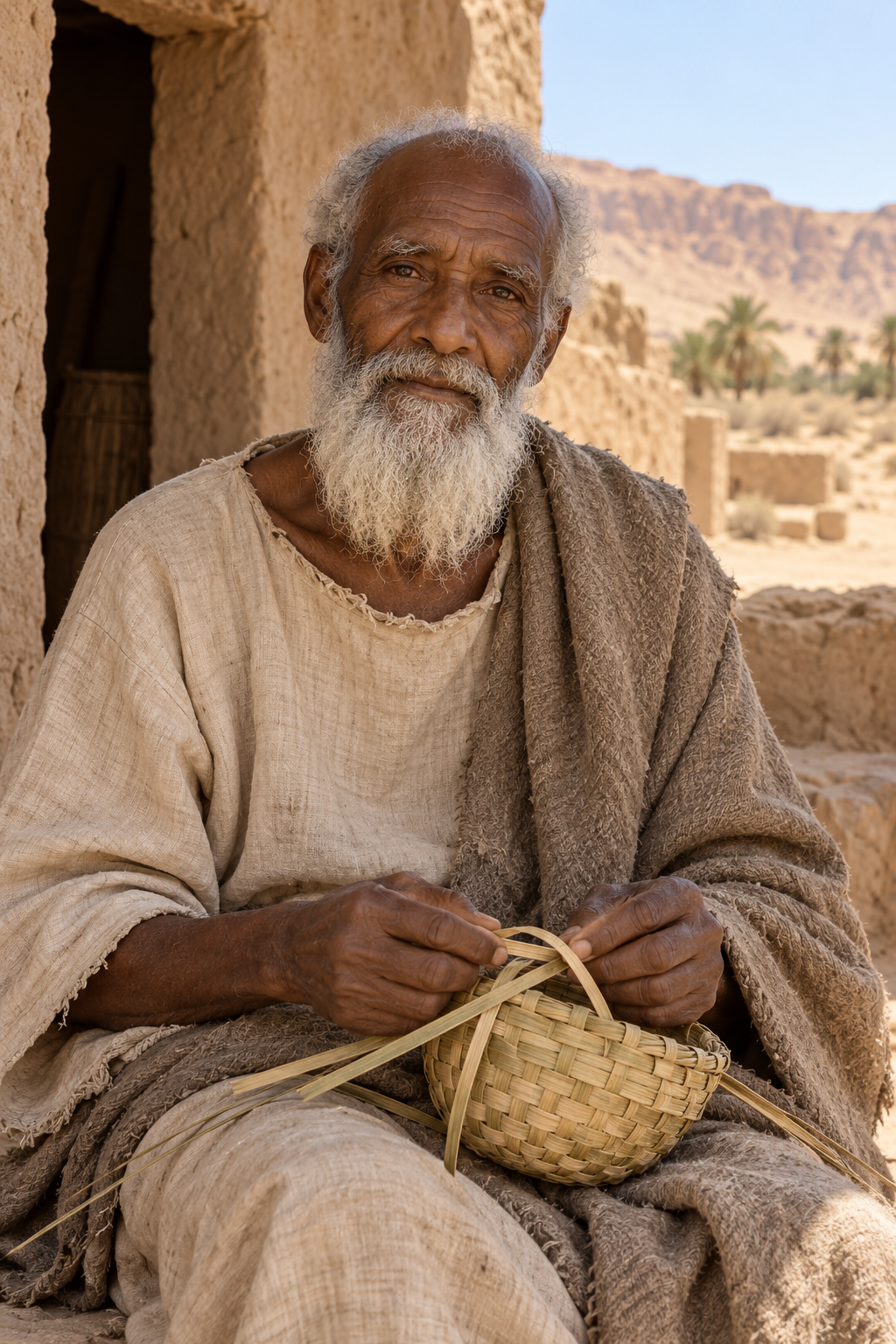
Palladius preserves another account through Melania, who brought a substantial gift of silver to Pambo while he was weaving palm leaves. Pambo continued working and directed his steward to distribute the gift to poorer monastic communities. When Melania emphasized its value, he redirected attention from the donor’s recognition to the purpose of the gift. The episode presents wealth as something entrusted for others rather than an occasion for flattery.
The same account describes his reluctance to answer questions hastily. His companions remembered waiting for his responses about Scripture and practical matters. Palladius also tells how, near death, Pambo gave Melania a basket as a keepsake. She arranged his burial and retained the basket. His handmade work thus becomes the story’s final reminder of their friendship.
Vivian’s study shows that the Greek and Coptic versions do not always name the same disciples and attendants. He considers an earlier form of Palladius’s writing as a possible explanation, without treating that reconstruction as certain. His chronology places Pambo’s death in 373–374.
The French Catholic calendar Nominis gives an approximate death date of 375 and lists a local feast on July 18.
His remembrance also continues in Coptic communities. A New Jersey Coptic parish marks his feast on the eleventh of Epep and, in a 2025 reflection, draws on his stories when discussing silence, humility and honest labor. Its use of these accounts shows how the desert tradition remains part of contemporary parish teaching.
Wondering how to weigh the stories and sources? Learn how to read a saint biography.