Biography
Pantagathus of Vienne
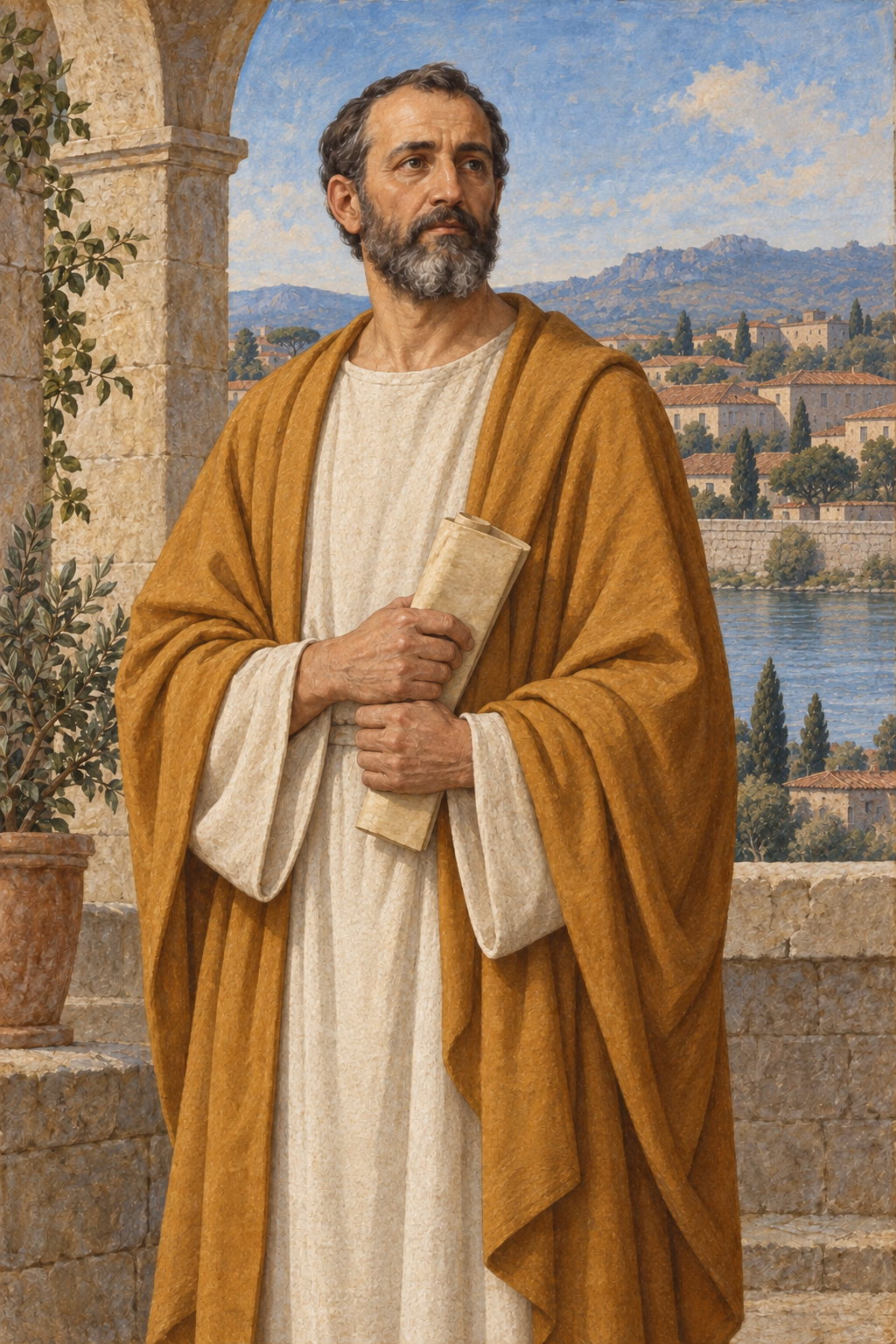
About Pantagathus of Vienne
Pantagathus served as bishop of Vienne, a city on the Rhône in sixth-century Gaul. His name appears in an older Roman martyrology on April 17, and a longer hagiographic compilation preserves material about his episcopate. The clearest historical point is a subscription to the Third Council of Orléans. There he names himself bishop of the church of Vienne and signs with the other bishops. A modern scholarly reference dates that council to May 538 and includes one participant from Vienne among its regional representation. This establishes Pantagathus's office at that moment. It does not tell us exactly when he was chosen, how he was educated, or what he said in the council's discussions.The council met at a time when bishops from several regions of Gaul worked together on questions of church order and social life. A scholarly account lists representatives from Vienne, Lyon, Sens, Bourges, Tours, and Rouen, and discusses the council's canons. Pantagathus's signature shows participation in this shared episcopal work; it should not be turned into personal authorship of any particular rule. Older biographies sometimes make a bishop the leading voice in a council merely because his name appears there. The surviving evidence here supports a more modest account. His place among the signatories connects Vienne's church to the wider deliberations of 538, but it does not preserve an individual speech, vote, pastoral letter, or decree by Pantagathus.Later witnesses describe Pantagathus as a man of high civil standing before his episcopate and praise his humility as a bishop. The hagiographic compilation discusses an epitaph that gives a short period of service, often read as five years. Such material helps explain the respect in which his memory was held, but the chronology is not straightforward. Its editors consider alternative lengths of tenure and struggle to reconcile later dating formulas. A modern French church directory gives a death year of about 540, while other reconstructions place it differently. An exact 540 or 541 date would present a disputed calculation as a settled fact. The birth date is still less certain. Neither should be entered into a life-date field without a firmer witness.Pantagathus's commemoration has its own history. The older Roman martyrology lists him on April 17 as bishop of Vienne, and *Acta Sanctorum* notes that Vienne liturgical books honored him. Those sources establish the day on which communities remembered him, not the day on which a contemporary record says he died. His memory has sometimes been accompanied by elaborate accounts of court service, diplomacy, church building, and private acts of charity. The reviewed witnesses do not securely document those episodes, so they do not belong in this profile as biography. What can be retained is the combination of a named bishop at a dated council and a later local and Roman tradition of veneration.The short record leaves large parts of Pantagathus's life open. We do not know his birthplace, the exact year he took office, or a verified death date. He was more than a name in a calendar: his council subscription anchors him to the church of Vienne in 538. Yet it would be misleading to build a detailed story out of the general responsibilities of a bishop or the canons agreed by a group of bishops. The April 17 feast preserves a community's regard for him; the signed act provides the firmer historical point. Keeping those forms of evidence distinct allows his brief life to be told clearly without losing either its concrete anchor or its honest uncertainty.
Wondering how to weigh the stories and sources? Learn how to read a saint biography.